

This is the second of three New England blogs. Maine and Vermont were State Capitols 26 and 27 on our bucket list, covered in Part 1. In this blog you will read about the two New England Capitols of New Hampshire and Massachusetts. You will hear some unique stories of statehood, at least two ways New Hampshire is both number one and number fifty in the nation, the role Paul Revere played in the Statehouse of Massachusetts, and why Tim almost didn’t get to tour that one. Part 3 will cover the last two New England states of Rhode Island and Connecticut.
September 11, 2025. Concord New Hampshire State Capitol
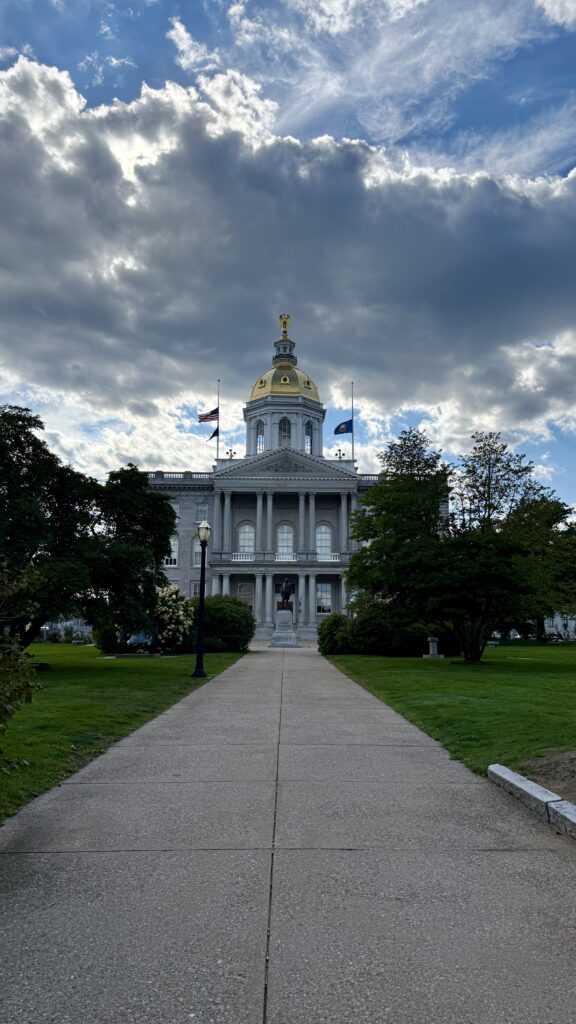
Welcome to the New Hampshire State Capitol, home of the “oldest continuously used legislative chambers in America”! That’s how the trifold paper brochure begins; they seem to be proud of this heritage. The building opened in 1819, was enlarged in 1864 and again in 1910. This Capitol is #28 on our bucket list adventure. The sign behind Tim reminds us this is the nation’s oldest State Capitol in which a legislature meets in its original chambers. Step inside the story behind New Hampshire’s iconic State House and discover its fascinating roots!
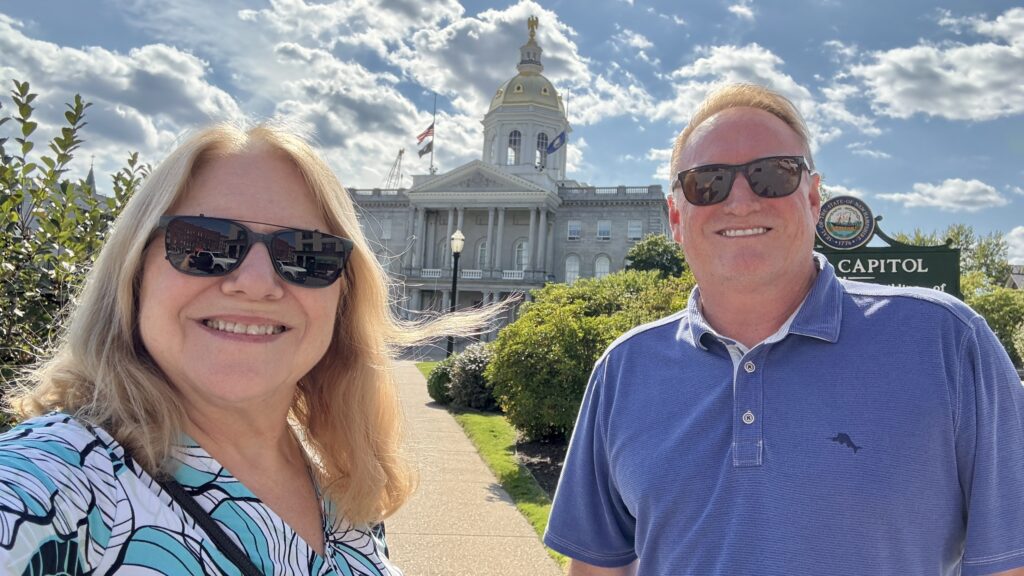
Crafted in the striking Greek Revival style by architect Stuart Park, this landmark didn’t just take shape overnight. It cost a hefty $82,000 to build back in the day. But here’s a twist that sets it apart: the elegant three-story facade, built from local gray granite, was actually quarried and shaped by prison inmates, adding historical intrigue and uniqueness. This historic building is part of the Concord Civic District and is listed in the National Register of Historic Places. It’s a significant site for those interested in the history and governance of New Hampshire, or for traveler’s like us who are checking off a bucket list.
Unveiling the Sparkling Story of New Hampshire’s Golden Dome
Perched above the New Hampshire State House in Concord, the shimmering gold dome crowned with a proud eagle is more than just a pretty sight—it’s a vibrant piece of the state’s history. Originally topped by a wooden “War Eagle” in 1818, symbolizing strength during turbulent times, the statue was later replaced in 1957 by a gold-gilded copper eagle facing right, representing peace. Today, the original wooden eagle rests inside the New Hampshire Historical Society for all to see.
The dome’s signature golden glint was first achieved in 1993, using 16 pounds of gold. However, the real transformation came in 2016, when artisans gilded the dome with 23.75-karat gold leaf, carefully hand-applying delicate 3×3-inch sheets (without ever touching the gold directly!) at a cost of $2.6 million. This sparkling symbol is a must-see for history buffs and curious travelers alike.
The Visitor’s Center
Since 1920, New Hampshire has held the first presidential primary in the United States. Campaigners drop off their buttons and stickers in hopes of gaining momentum. New Hampshire’s first-in-the-nation primary status, unique voting system, and the media spotlight make it a critical battleground for presidential candidates, setting the tone for the rest of the election cycle. This exhibit is in the Visitor Center where we started our tour. Most of these buttons are from those who didn’t win.


This picture of Christa McAuliffe is surrounded by all the campaign buttons and swag. Remember her? I forgot she was from New Hampshire. (She was the teacher on the Challenger when it exploded.)
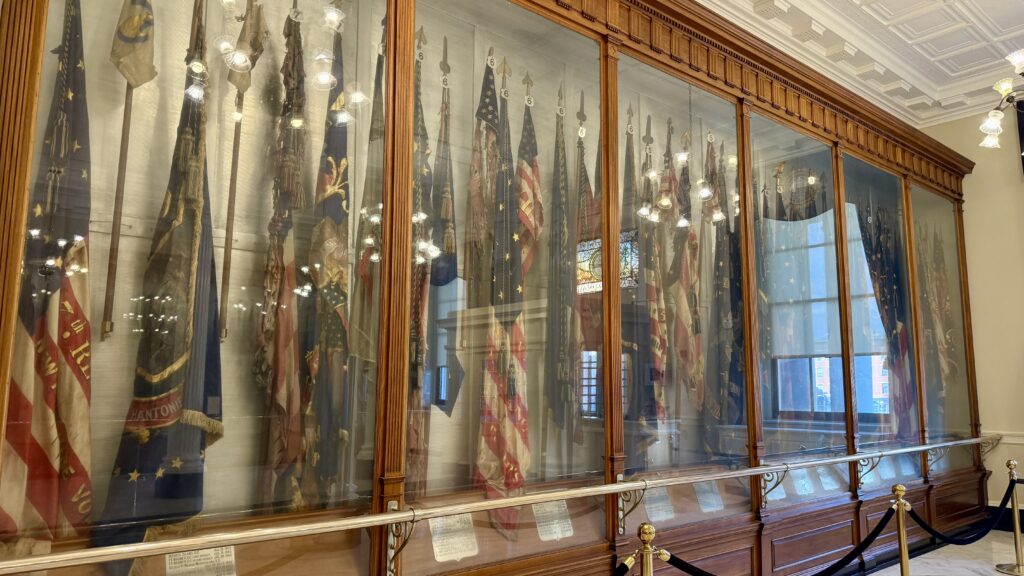
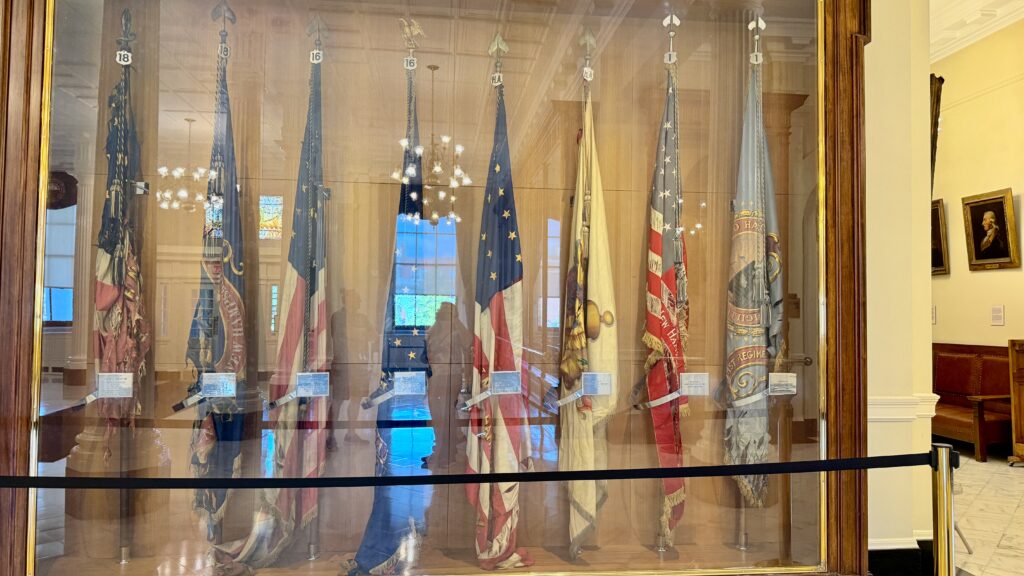
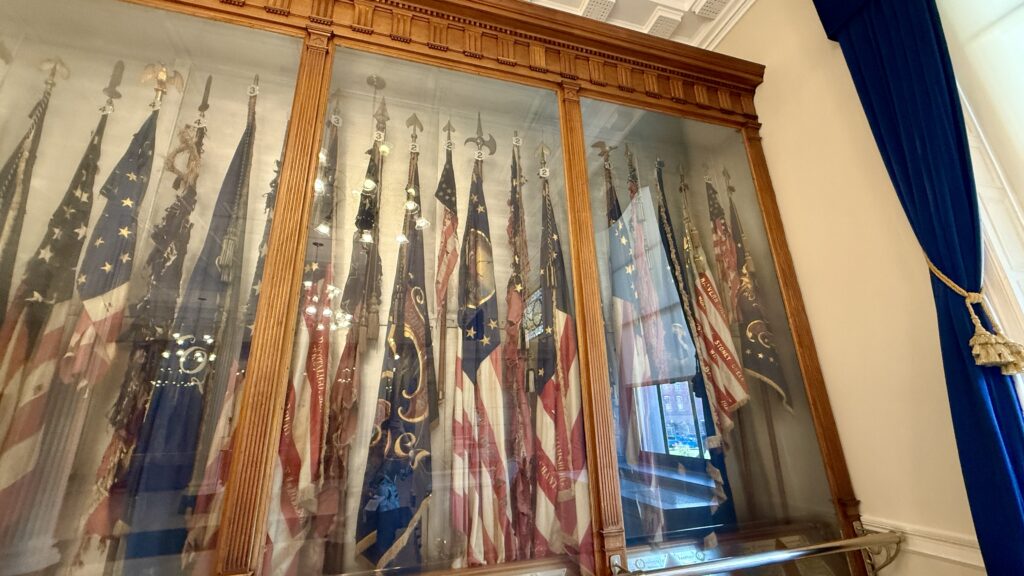
Hall of Flags.
New Hampshire holds the largest collection of Civil War flags in the world. The docent told us some great stories about how they obtained all of these flags. Watch the two brief videos below (1 minute total) to hear our tour guide tell us a story about a free black page and his contribution to this collection.
Artwork in NH Statehouse.
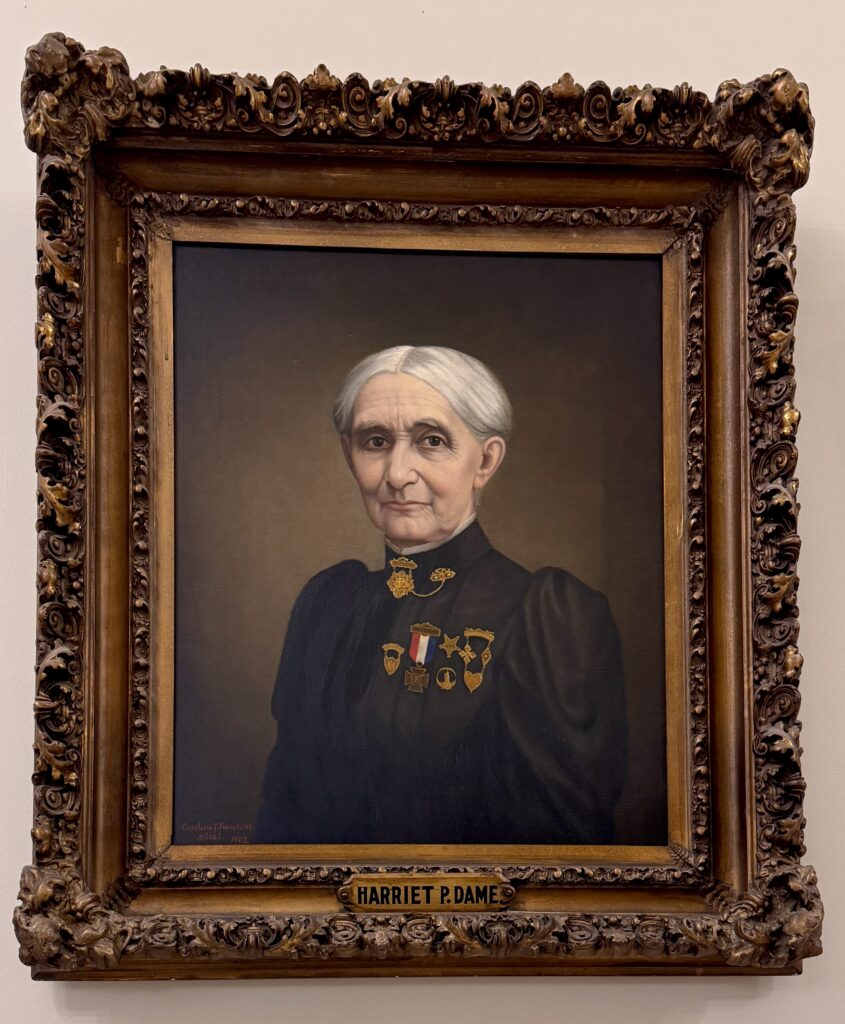
Did you know that nestled among more than 200 paintings in the Capitol, only nine feature famous women? One of the first remarkable women you’ll encounter is Harriet Patience Dame. Defying the odds, Harriet fought tirelessly to join the war effort—even after being repeatedly told, “That’s no place for a woman.” But she never backed down. Her remarkable story was recently immortalized in a new book, and I can’t help but wonder if my book club would be captivated by her courage and legacy.
Harriet joined the war as a nurse out of urgent need and quickly became a hero, earning a chestful of medals. She braved battles like Bull Run and Gettysburg, caring for both Union and Confederate wounded, and stayed with the 2nd NH Regiment for nearly five years without ever taking leave. Captured twice but released for her compassion, Harriet witnessed loss and courage on the front lines. After the war, she worked decades at the Treasury Department. Honored with a full military burial at 85, her portrait now hangs in the Hall of Flags.
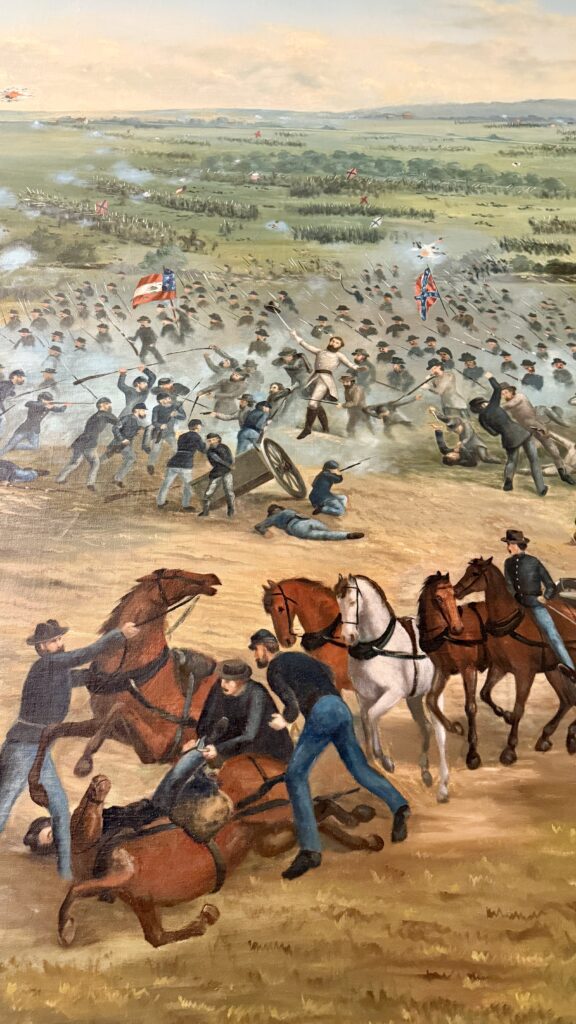
The Battle of Vicksburg. This is just a section of a very large landscape painting 25 inches high by 60 inches wide. It’s a reproduction of The Battle of Vicksburg found in Gettysburg, but this artist wanted to “correct” a few things to make it more accurate. For example, in the center he included the hat on a sword which was carried as they marched into battle.
- Artist: James Walker
- Year: 1884
- Medium: Oil on canvas
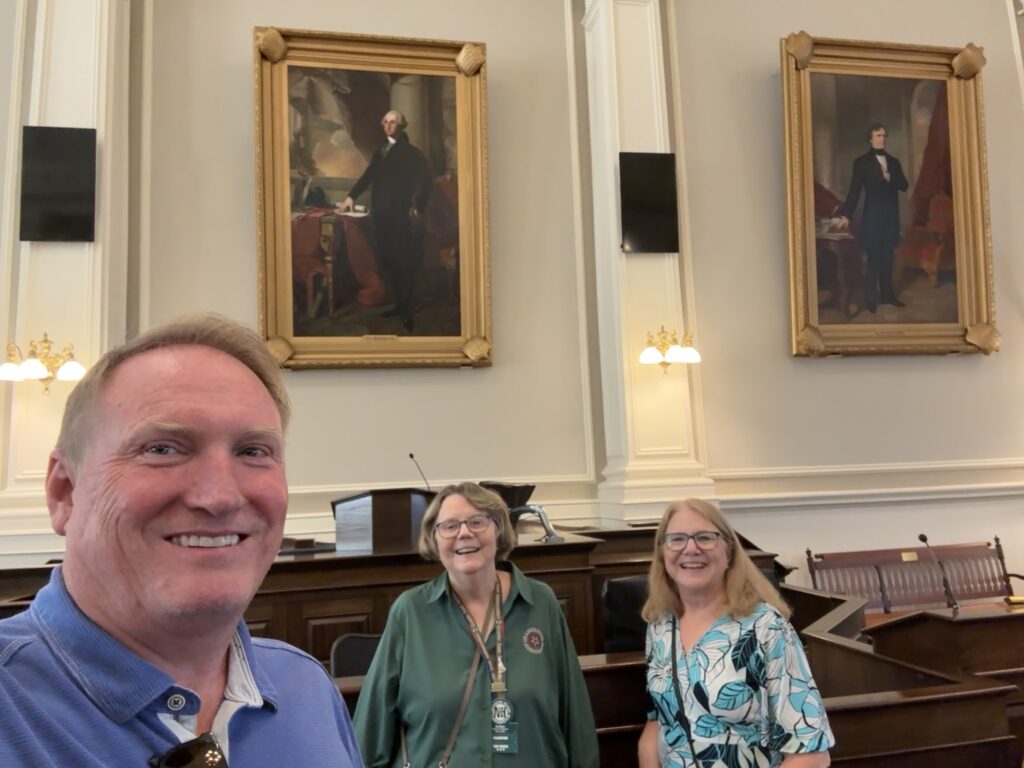
New Hampshire House of Representatives.
One might expect a small state to have a small House. Not so! New Hampshire’s state house is packed with 400 representatives serve a population of just 1.4 million, each representing about 3,300 people. It’s the largest state house in the U.S. and the fourth biggest English-speaking legislature worldwide. With a $100 annual salary and eligibility starting at age 18, it’s truly a citizen’s legislature—no desks, no frills, just democracy in action! When the guide told us they can start serving as young as 18, Tim laughed with, “they’re not even old enough to drink!” To which our guide immediately quipped, “yeah, but they can vote on it!”
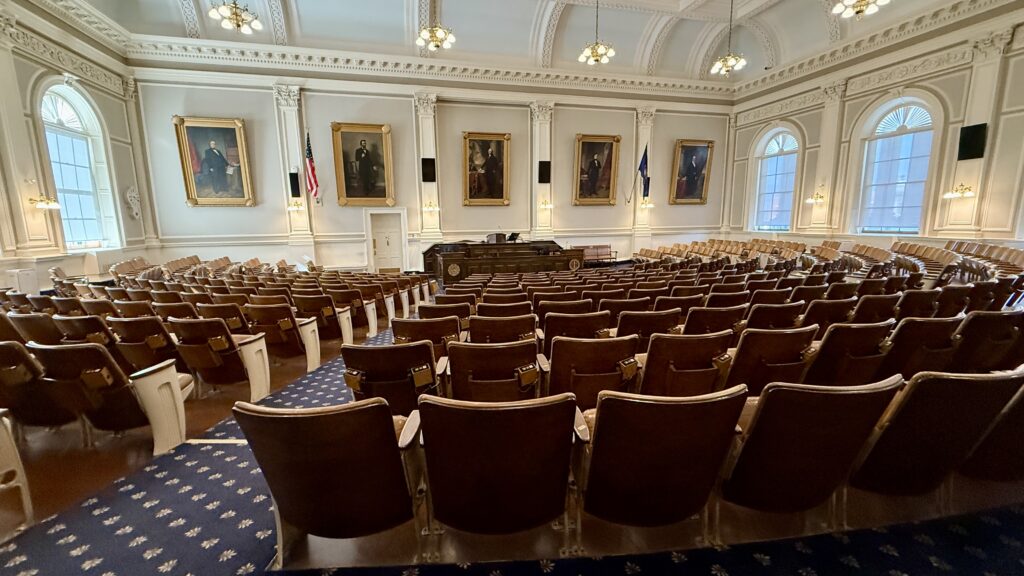
Fun Fact: If the men want to take off their jackets, they must have a woman recommend it, e.g. a woman has to make a proposal for the men to remove their jackets. This odd rule dates back many years, with men wearing jackets to sessions due to tradition and decorum.
Here’s a fun Capitol story: George Washington’s portrait was the first to hang on the front wall, but when a group of fourth graders touring the building noticed Lincoln’s portrait was missing, they sprang into action. They started a “pennies for the portrait” drive, collecting enough money to buy and install Lincoln’s portrait themselves. It’s amazing what determined kids can accomplish!
Among the Capitol’s portraits, you’ll spot Franklin Pierce—the only U.S. President from New Hampshire; Daniel Webster, a legendary lawyer and electrifying speaker who drew crowds like a rock star; and John Hale, the first U.S. Senator to boldly oppose slavery and launch a presidential campaign on an anti-slavery platform. Their stories bring New Hampshire’s history to life in vivid color.
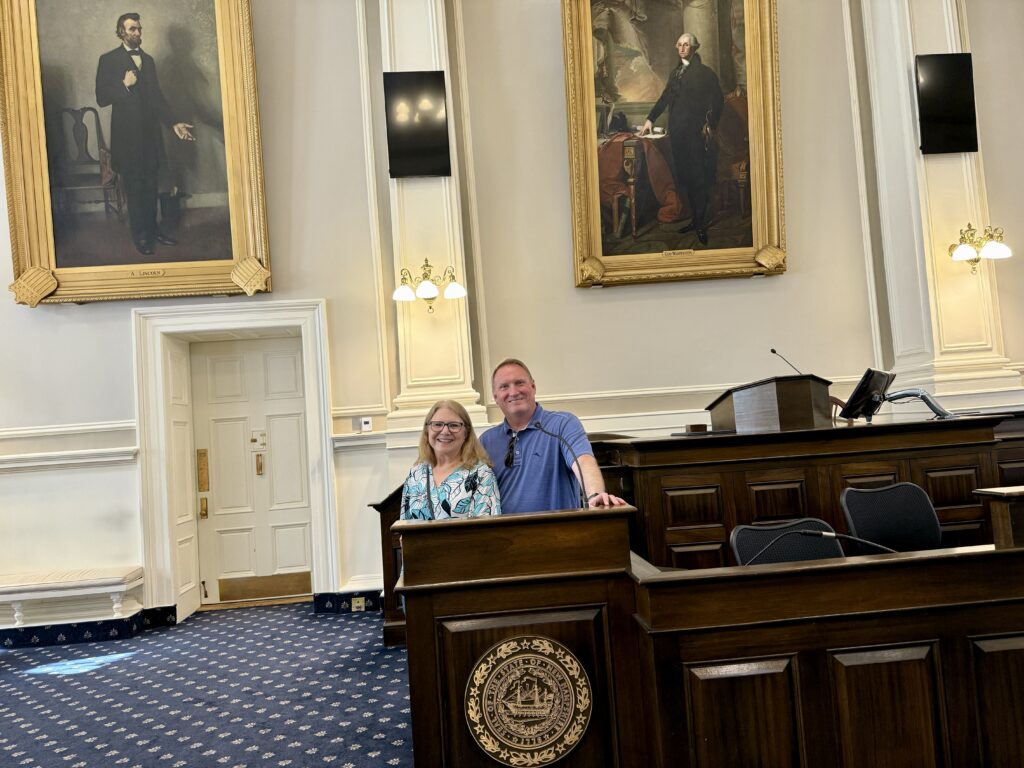
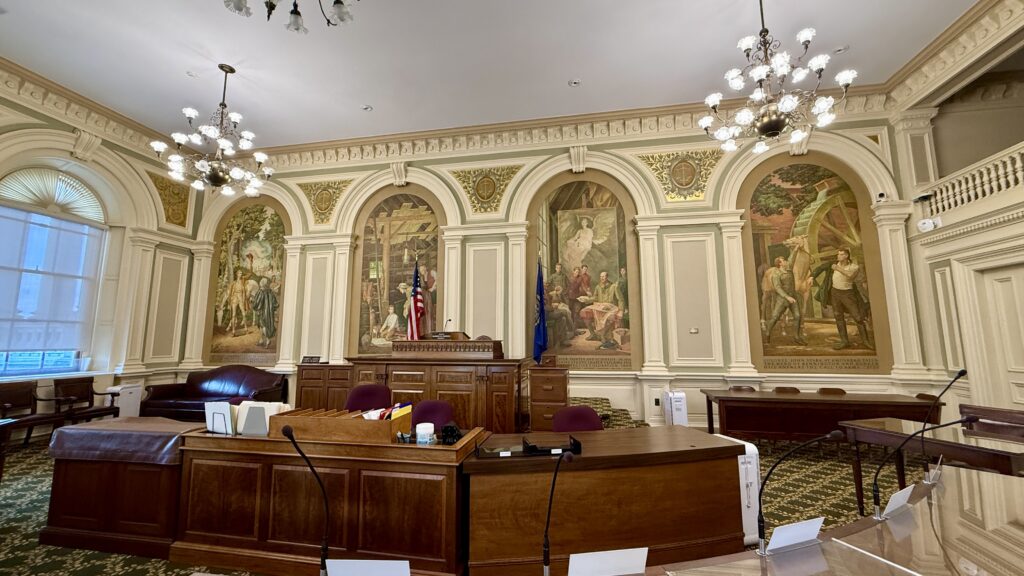
New Hampshire State Senate.
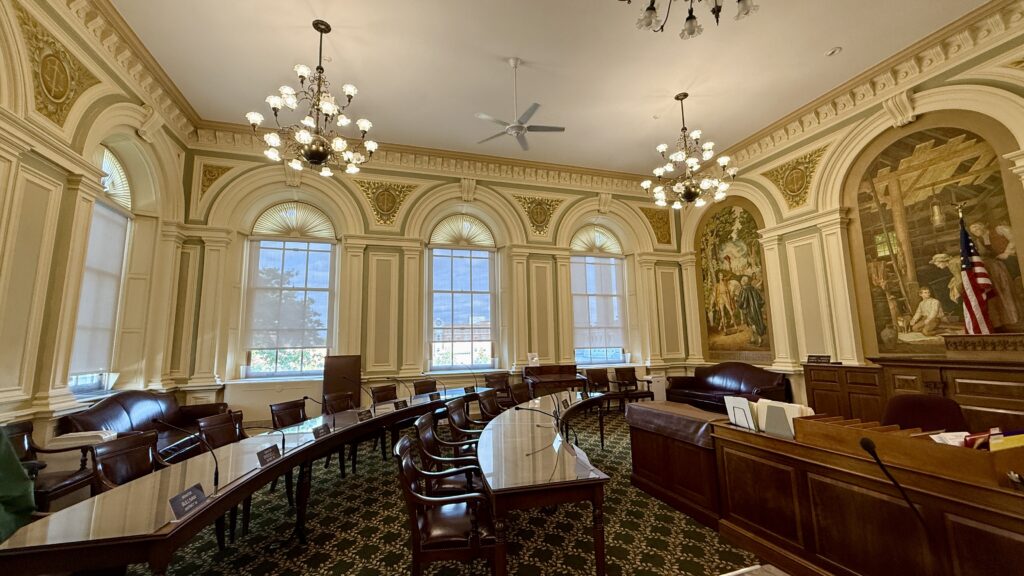
Unlike the House of Representatives, New Hampshire has the fourth smallest state Senate in the US, with only 24 members. Senators are also paid $100 per year for their service, so no preference here. As you may have guessed, New Hampshire has the lowest paid legislatures of all 50 states. If you are interested in learning more about how state legislative salaries are calculated, check out this interesting website.
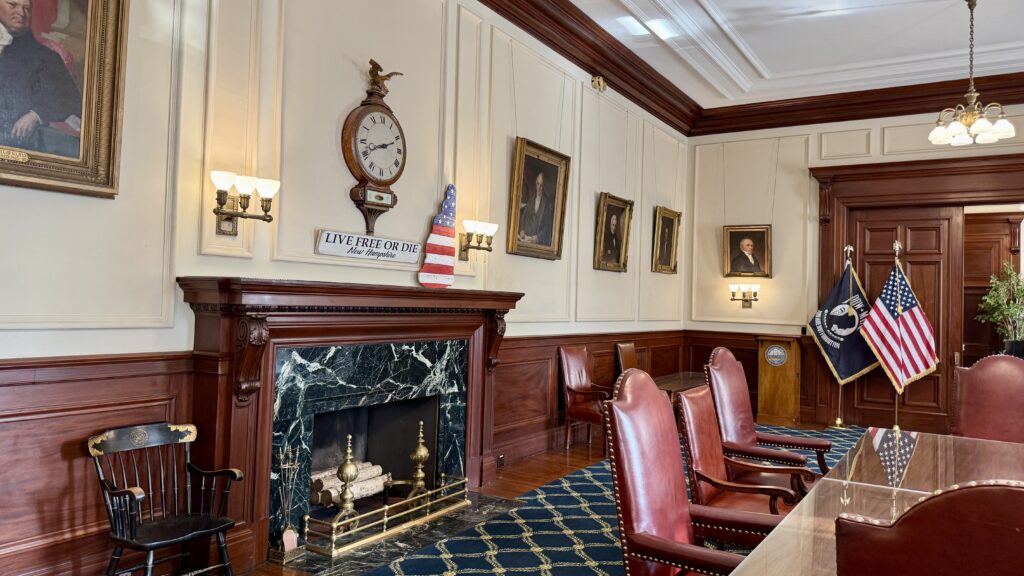
Governor’s Executive Council Room.
If you think New Hampshire does things its own way, you’d be right; the Executive Council is a prime example. I was fascinated to learn this five-member group, sometimes called “The Governor’s Council,” isn’t just there to rubber-stamp decisions. They actually help steer the ship by advising the governor on nearly everything and serve as a real check on executive power. While the governor can veto laws and lead the National Guard, the Executive Council has the final say on big-ticket contracts over $10,000, pardons, and key appointments. That’s not something you see in most states! Their chambers have been part of the State House since 1909, although the idea of an Executive Council dates back to the Colonial Era when King Charles II issued a 3,438 word commission, in 1679. The Royal Commission separated the territory of New Hampshire from Massachusetts. Unlike other states like Massachusetts–where the council is mostly just advisory–New Hampshire’s council shares the actual workload and responsibilities. It’s democracy with a twist, and I found it surprisingly refreshing compared to what I expected.
Statues and Grounds.
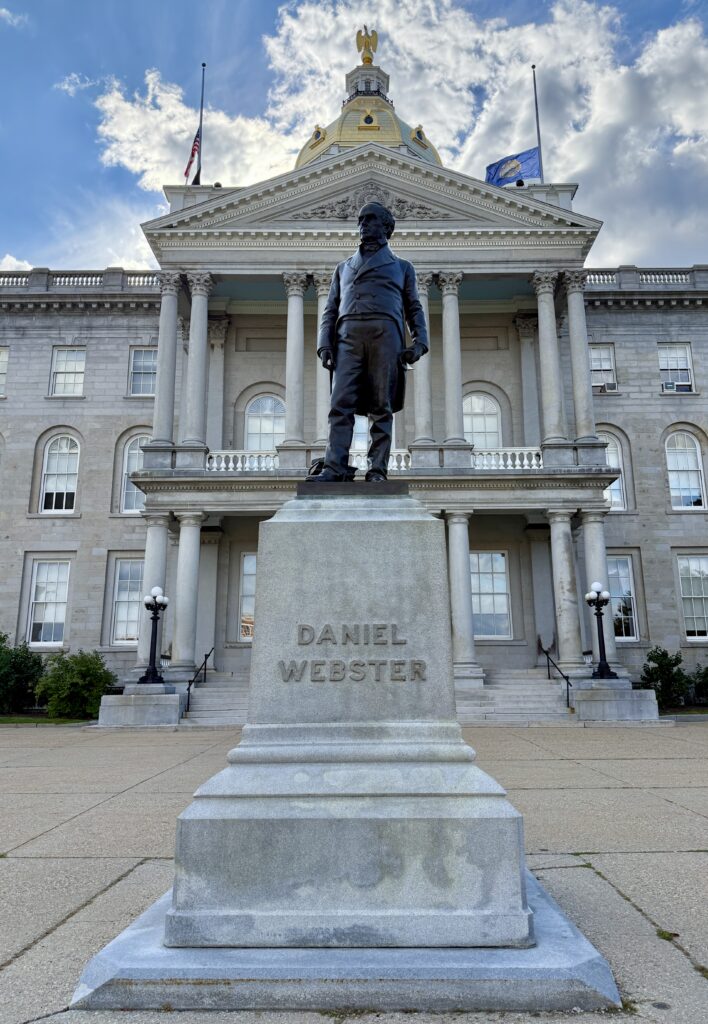
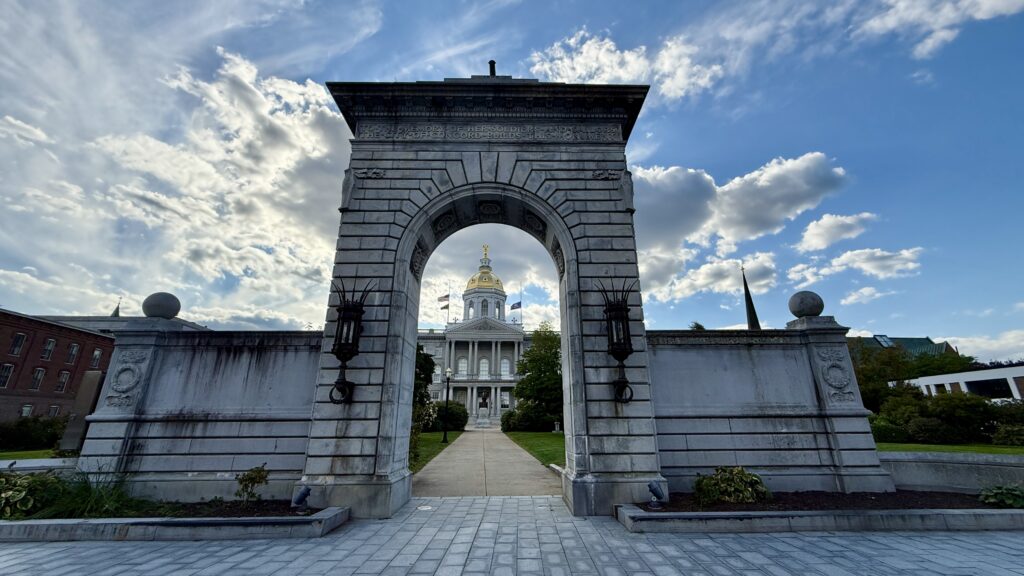
Stroll through the New Hampshire State House grounds and you’ll discover a treasure trove of striking sculptures and memorials, many crafted from locally quarried granite. When Concord became the state capital in 1808, townspeople generously donated the land, creating the roomy State House Park out front. Over time, the site’s original wooden fence gave way to cast iron. In 1915, a sturdy granite retaining wall enclosed the grounds. The first statue, honoring Daniel Webster, was unveiled in 1886, soon joined by other monuments and an elegant memorial arch celebrating Concord’s soldiers and sailors. More recently, new tributes have appeared for veterans and law enforcement, demonstrating remembrance and local pride.

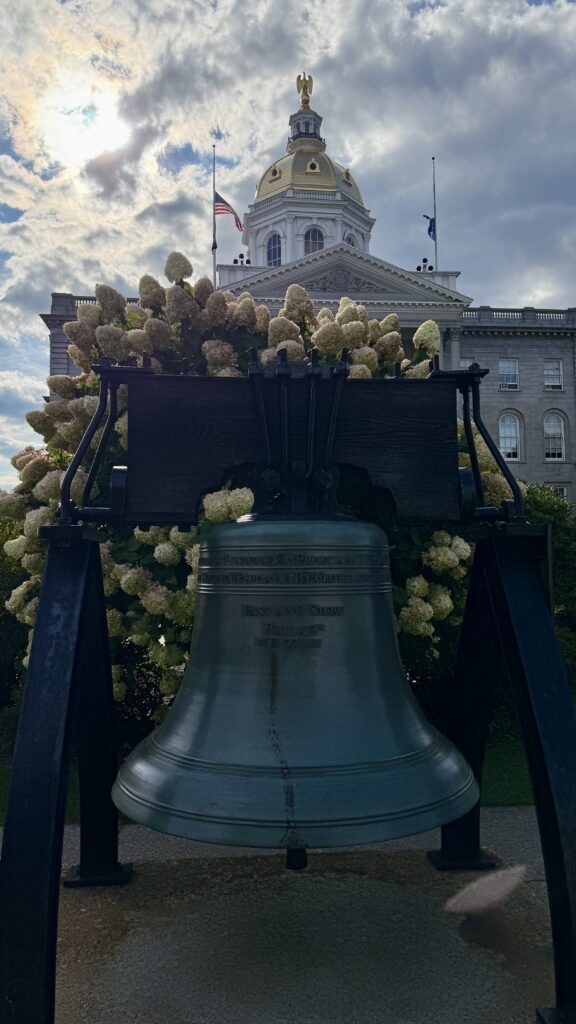
FUN FACT: Meet New Hampshire’s very own Liberty Bell—a full-size replica, complete with its famous crack! This bell isn’t just ringing for show; it’s one of fifty-three that the U.S. Treasury rolled out in 1950 with a little help from six American mining companies and the Ford Motor Company, who delivered these bells to every state like the ultimate road trip. Why? To launch a whirlwind seven-week savings-bond campaign! The original Liberty Bell lives in Philadelphia’s Independence National Historical Park, shining as a timeless symbol of freedom since 1753. Hmmm, could this turn into another bucket list?
You’ll always find one hanging around the Capitol buildings somewhere!
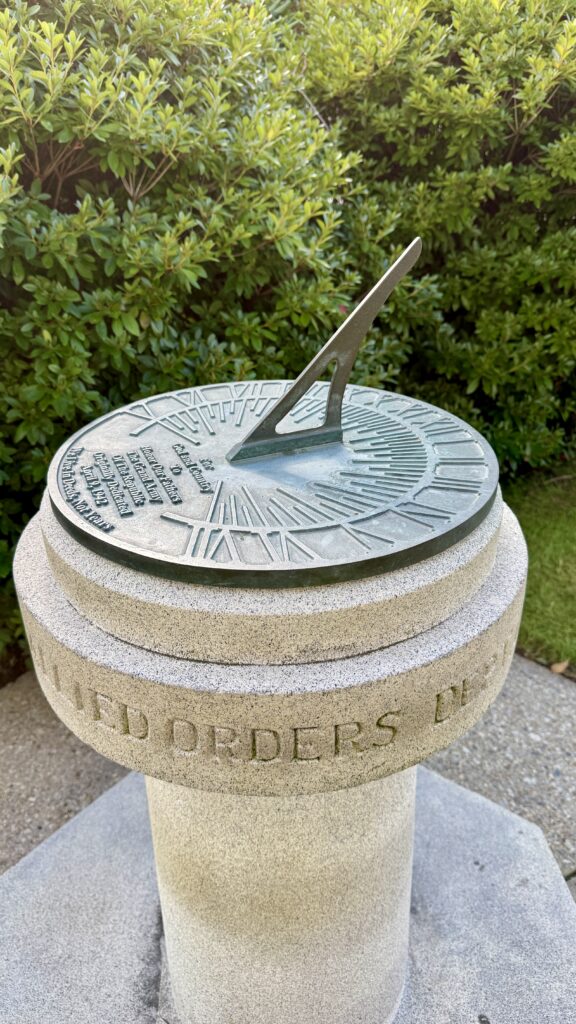

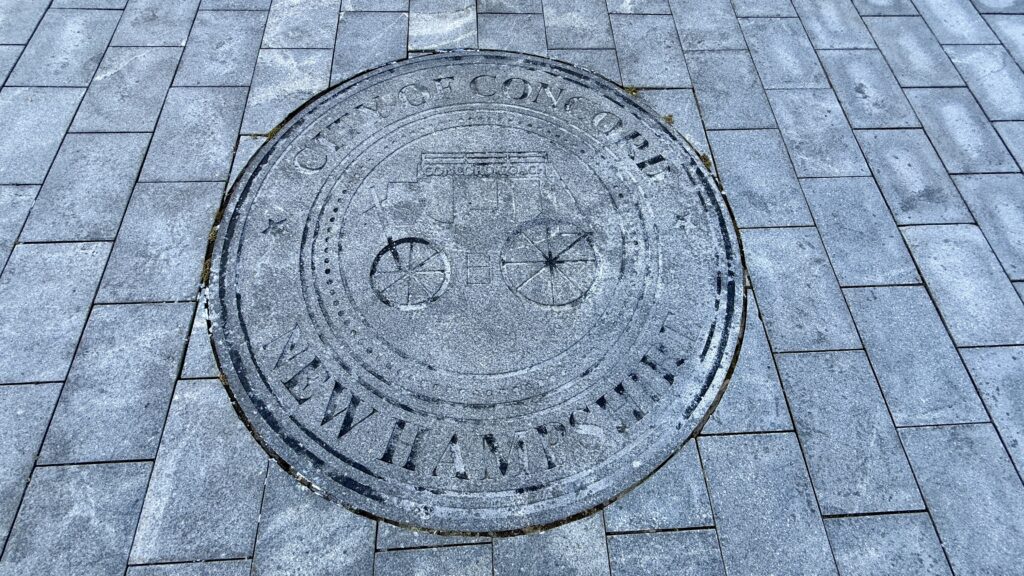
FUN FACT: Concord, New Hampshire, was the birthplace of the famous Concord Coach. In 1827 Lewis Downing, who owned a wagon wheel shop in Concord, formed a partnership with J. Stephen Abbott and developed their famous coach, which provided a smoother ride than its predecessors. Their company, Abbott, Downing & Company, and its successors produced thousands of stagecoaches until it was dissolved and the name acquired by Wells Fargo in 1927.

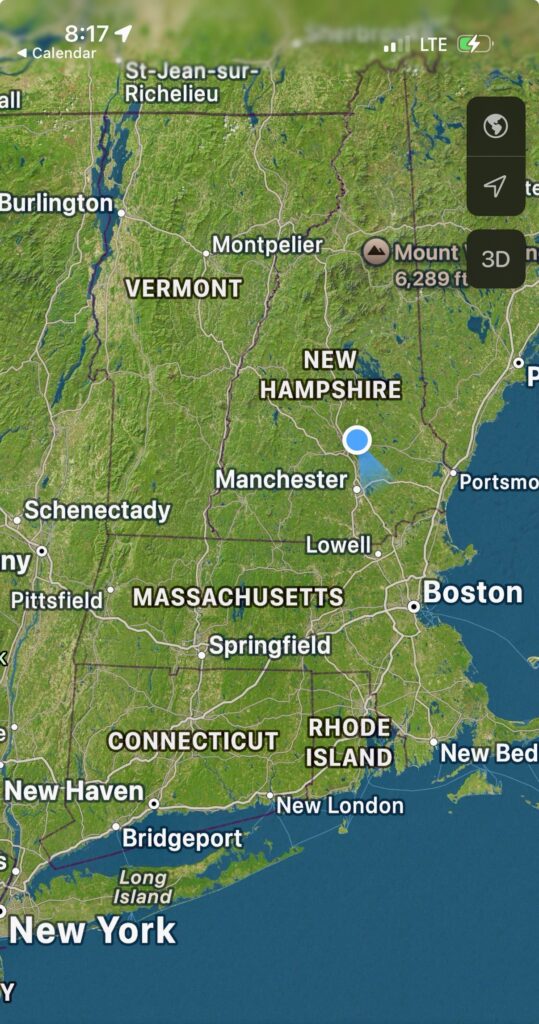
Map of the New England States (just a piece of Maine is shown northeast; Pennsylvania and New York are west). New Hampshire is bigger than Rhode Island, but these states aren’t that big. I had to really zoom in to get the state boundary markers.
Whew, that part of the blog was probably a bit longer than it needed to be, but I found New Hampshire to be quite interesting with all the fun facts. I hope you’re still with me! On to Boston, where we toured the John F. Kennedy Presidential Library, visited the State Capitol, walked the entire Freedom Trail, and enjoyed some time in a hotel while our Classy Girl was getting a little upgrade. While Boston has a lot to offer, it should be shorter. 🥰🥰
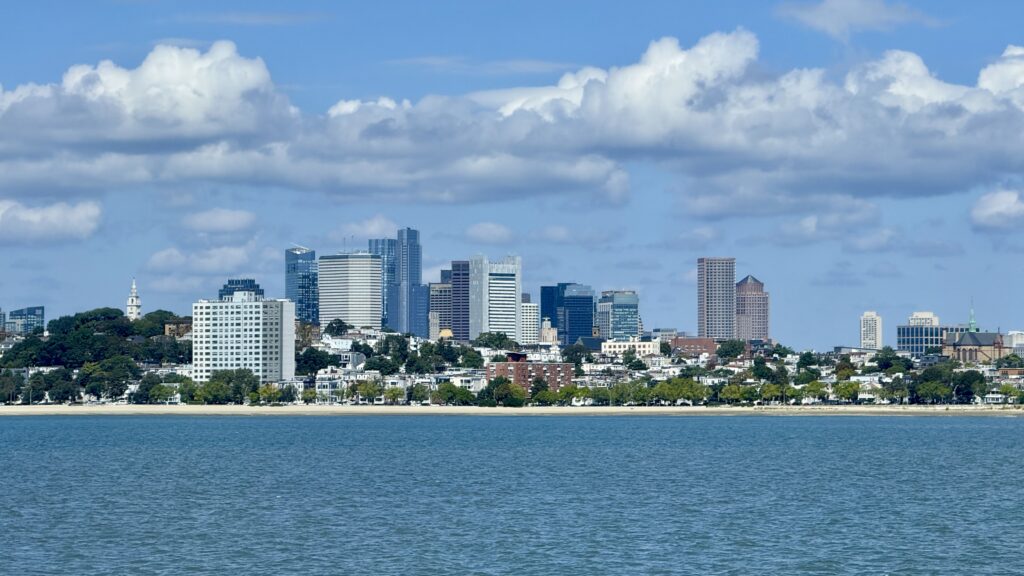
September 12, 2025. Boston Massachusetts State Capitol
It’s about an hour from our Harvest Host to Nashua, where we dropped off our Airstream. Tim booked a hotel outside of the city, as there was something going on to make the rates outrageous! We really wanted to stay downtown in Boston, but it has taken us several attempts to get here with many obstacles standing in our way, so we decided to just do it. It is on our bucket list, after all!
You may recall the story about the Constitution Chair in my previous blog, with a picture of the USS Constitution, the famous ship at the end of the Freedom Trail. The State House is at the beginning. We got so many steps in that day, my Apple watch thought it had been kidnapped. I’ll include a couple of stops on the Freedom Trail, but this blog is primarily about the State Capitol.
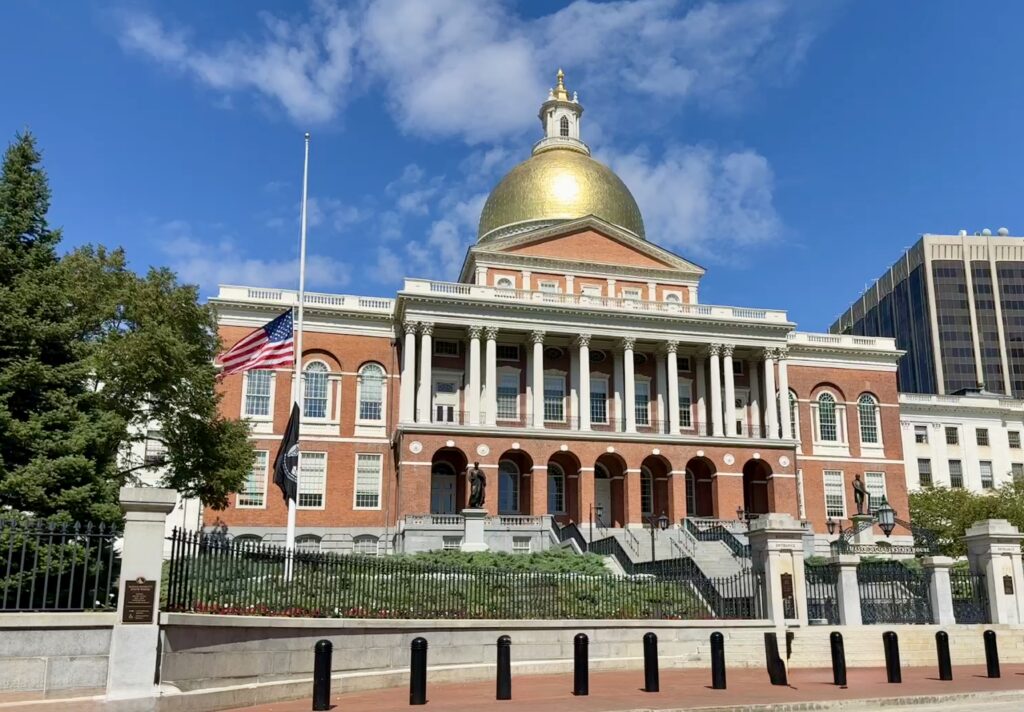
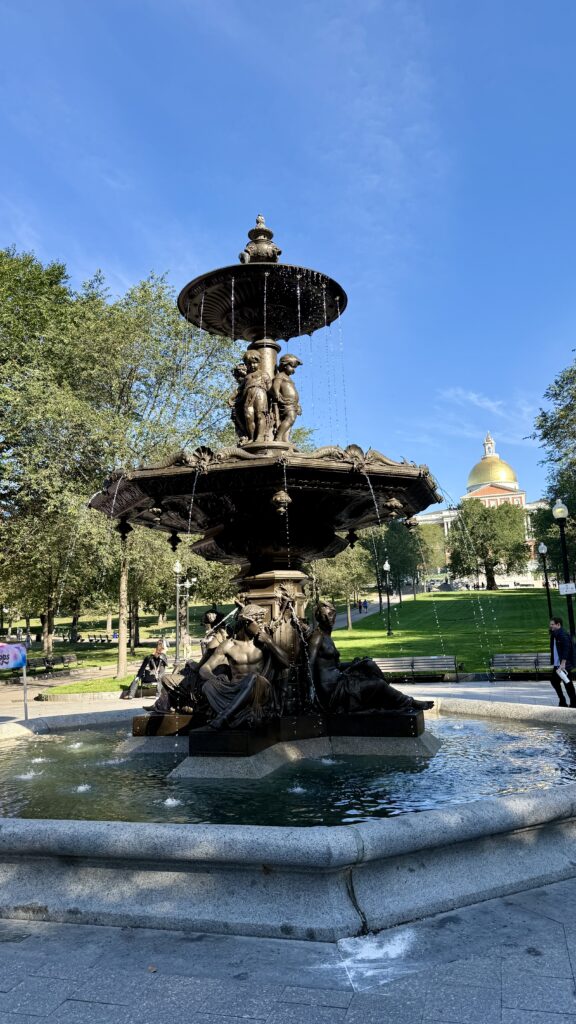
The Golden Dome
The original wood dome, which leaked, was covered with copper in 1802 by Paul Revere’s Revere Copper Company. The dome was first painted gray and then light yellow before being gilded with gold leaf in 1874. During World War II, the dome was painted gray once again, to prevent reflection during blackouts and to protect the city and building from bombing attacks. The dome was re-gilded in 1969, at a cost of $36,000, and once again re-gilded in 1997, this time in 23k gold at an estimated cost of $1.5 million.
The dome is topped with a gilded, wooden pine cone, symbolizing both the importance of Boston’s lumber industry during early colonial times and of the state of Maine, which was a district of the Commonwealth when the Bulfinch section of the building was completed
It’s True! Not All Heroes Wear Capes. Some Wear a Badge.
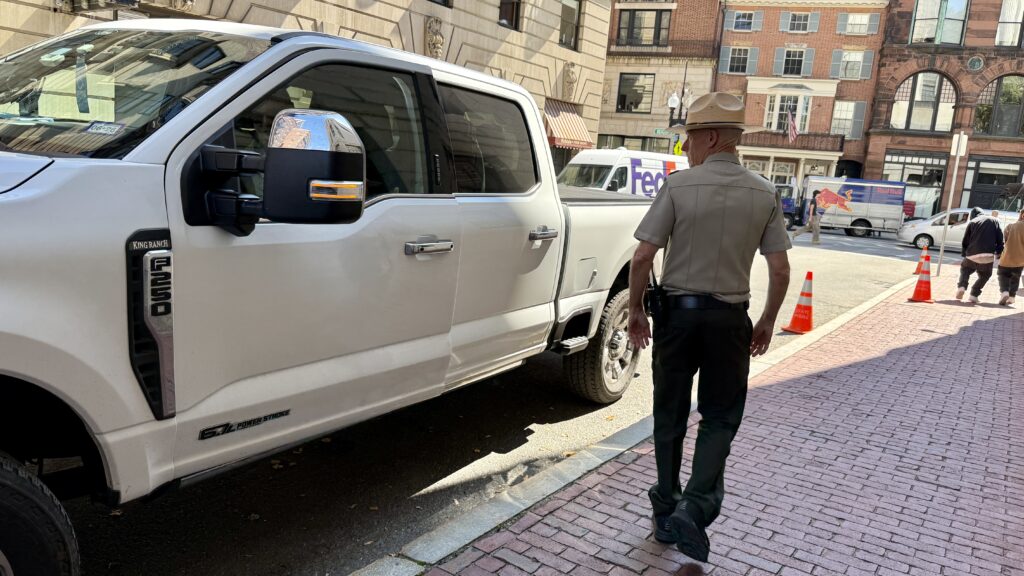
Driving in Boston is a madhouse! Especially when you are in a Ford F250 with a hitch attached 🥴. Tim dropped me off and said to go on in without him and do the tour while he drove around the city. I sadly complied, and then this happened. A kind security guard at the entrance screening heard my distress. I explained what had happened and he said, “follow me.” Who am I to argue with a guard who carries? He walked me outside the building where a spot was just waiting for us, right beside the State House! It took Tim a few minutes to catch up to us, but once he got there the guard removed the cones so we could park there, and we were able to leave it there while we toured the building without any fees or concerns. He even called me later in the day to ensure we had no trouble with tickets or otherwise. A true Boston Hero!
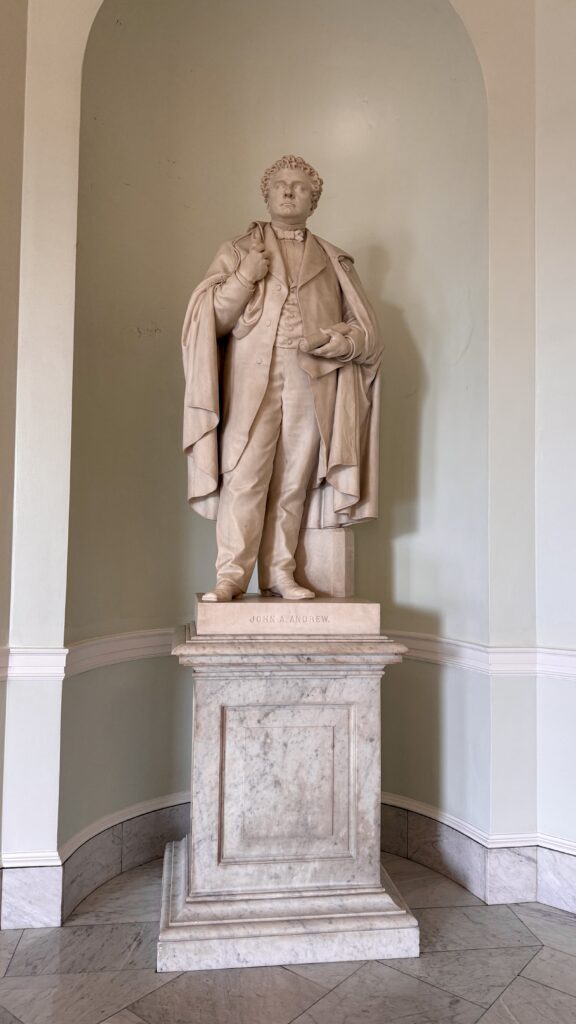
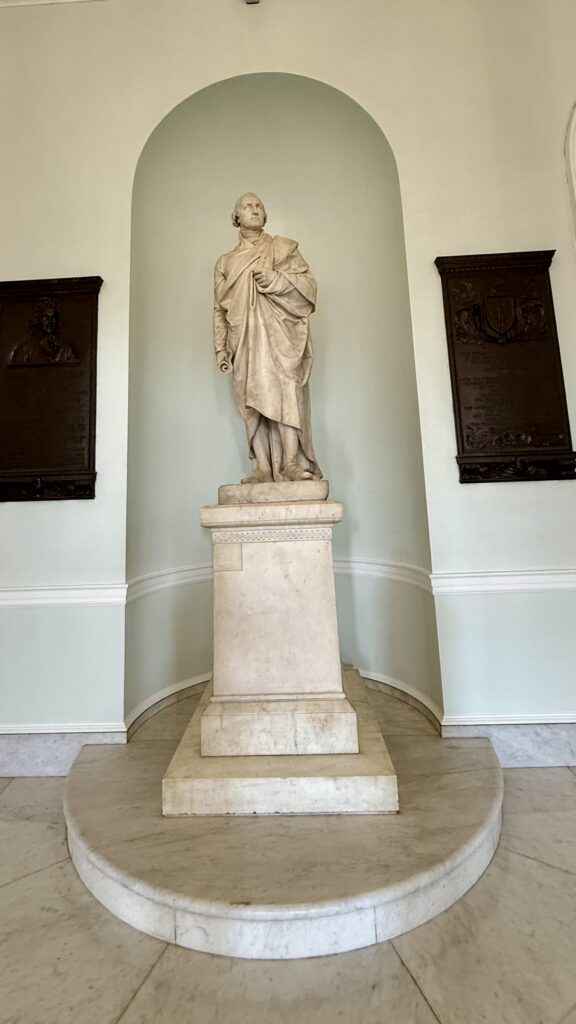
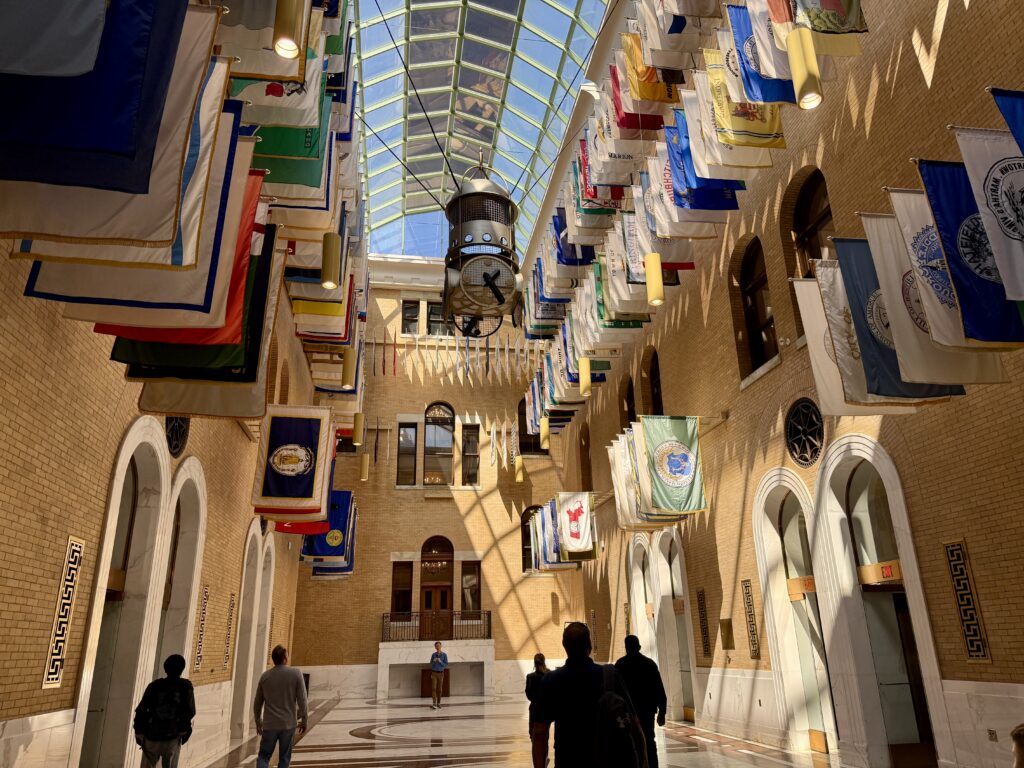
We had some time to kill while waiting for the tour to begin, so we walked around the first floor looking at various statues and busts around the massive hall.

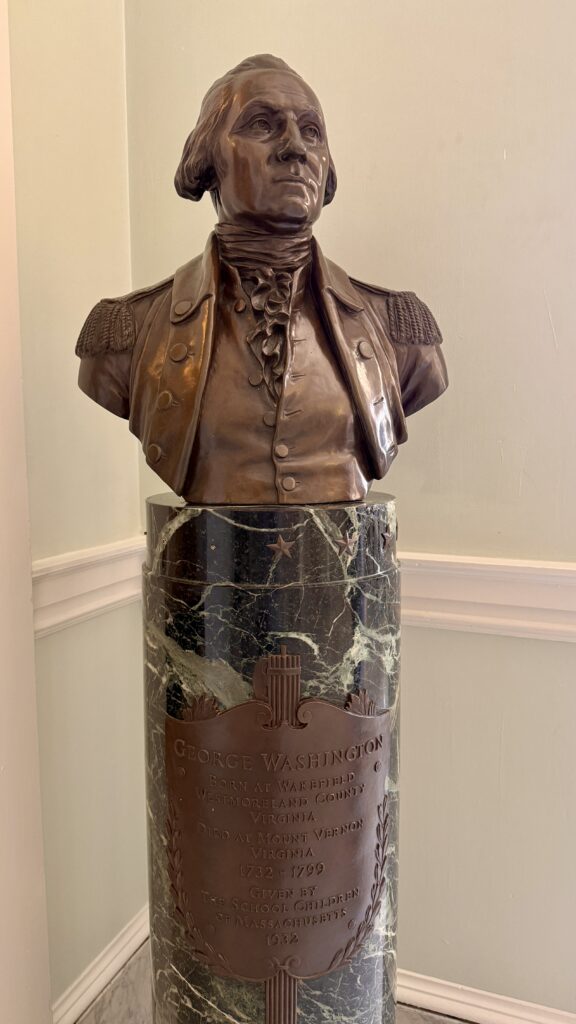
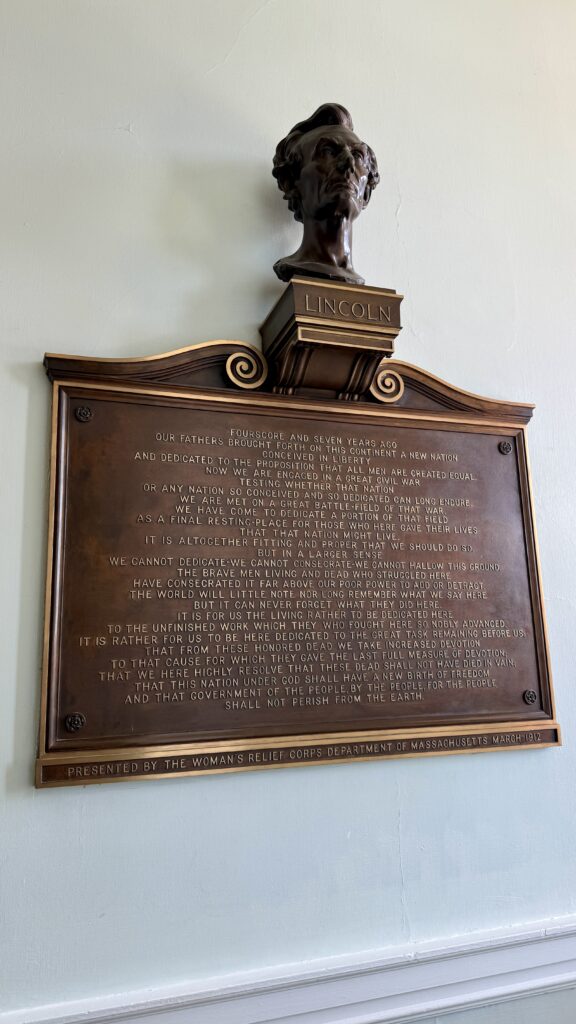
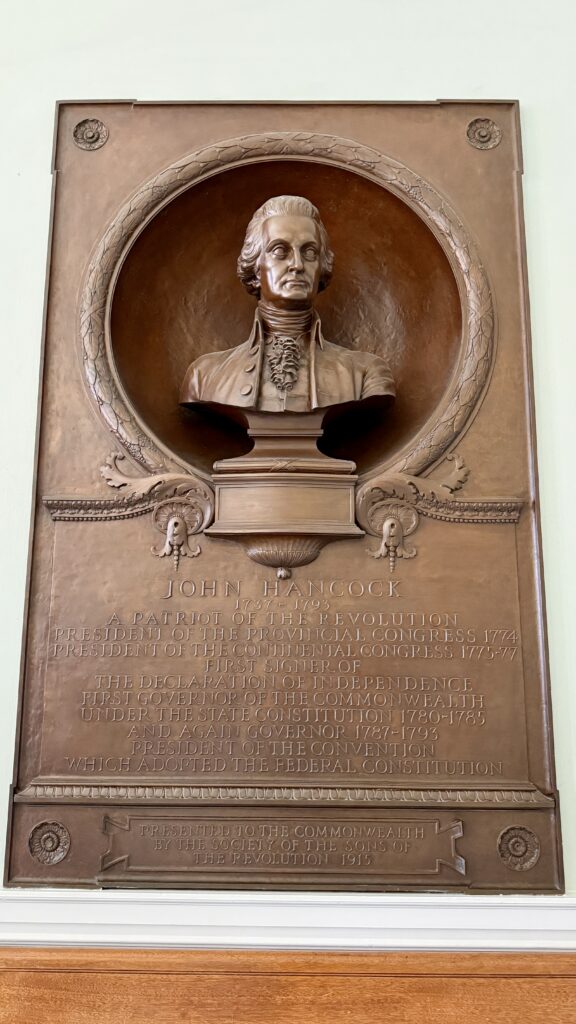
Civil War Army Nurses Memorial

Bronze, 52 x 88 1/2 x 47 inches, unveiled February 12, 1914.
Countless women stepped up to volunteer during the Civil War, seeking ways to help even as the fighting drew close to home. Though barred from the battlefield, they eased pain and sped recovery for wounded soldiers in many creative ways.
Bela Pratt’s sculpture in Nurses Hall, inspired by the Pietà, captures this spirit of compassion with the gesture of the figure’s free hand. The caregiver’s tender embrace and caring touch honor the dedication of Civil War nurses. In tribute, the legislature renamed Staircase Hall as Nurses Hall in 1984, ensuring their sacrifices remain at the heart of the Boston State Capitol.
The Grand Staircase
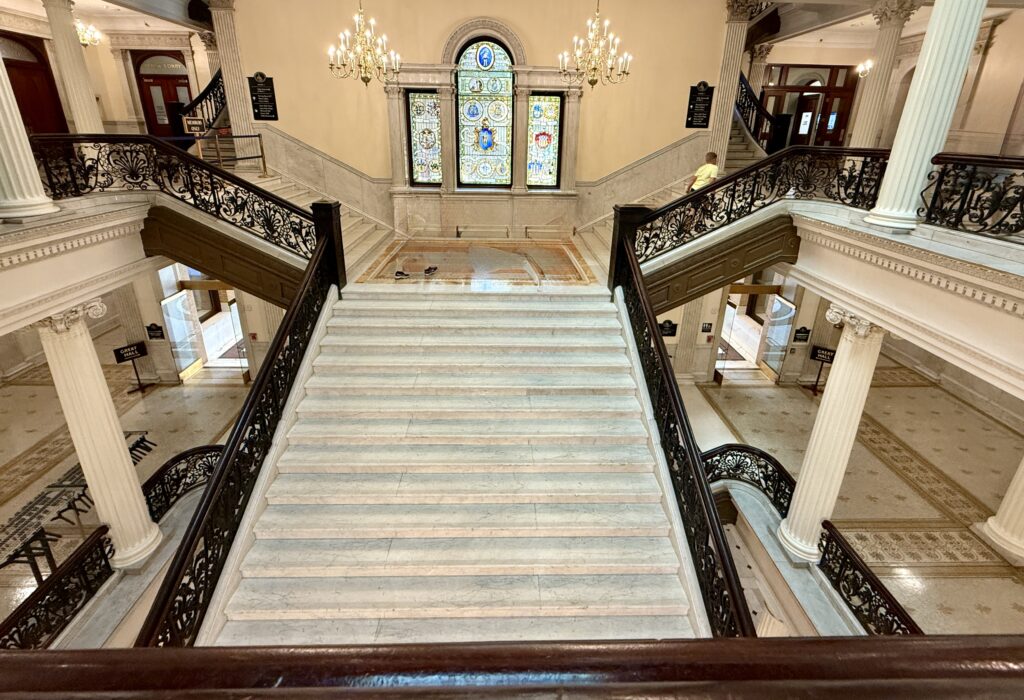
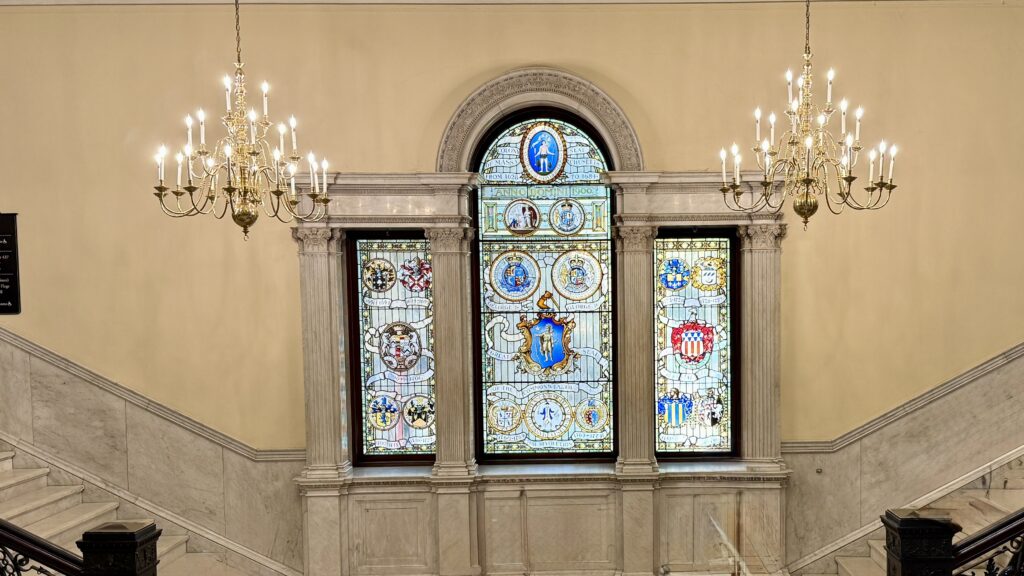
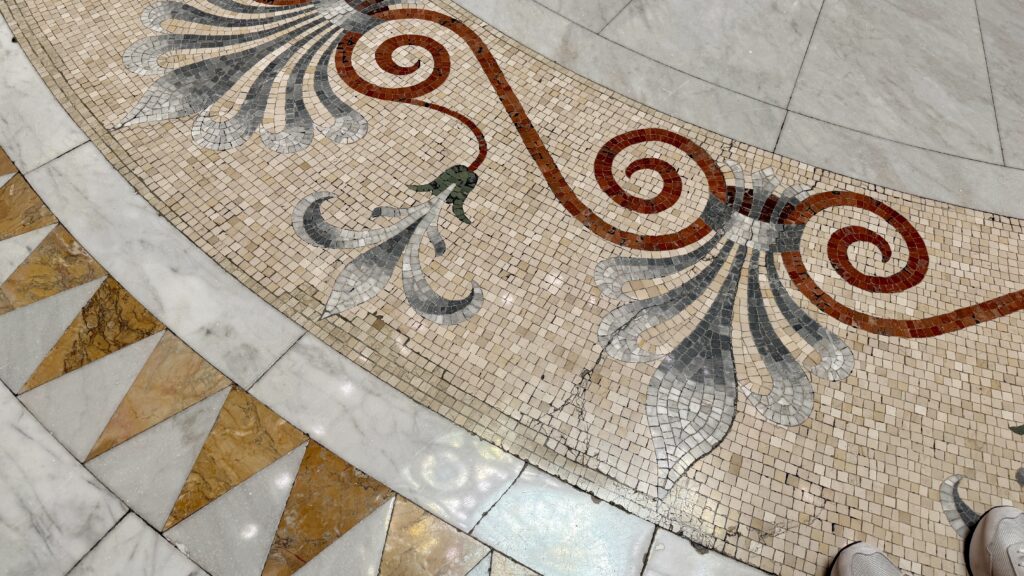
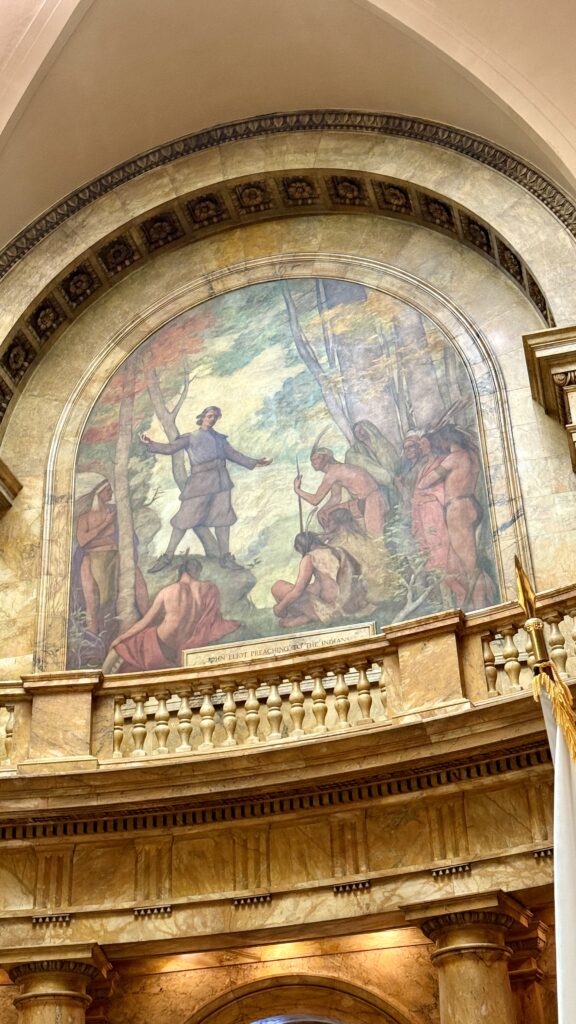
Artwork of all Kinds
Tim’s Uncle Mike created some beautiful stained-glass gems, one of which his wife gave us when he passed away. Those are about the size of a breadbox, which took him hours to make. This puts into perspective how long these windows and ceilings must have taken to design and create. Works of art!
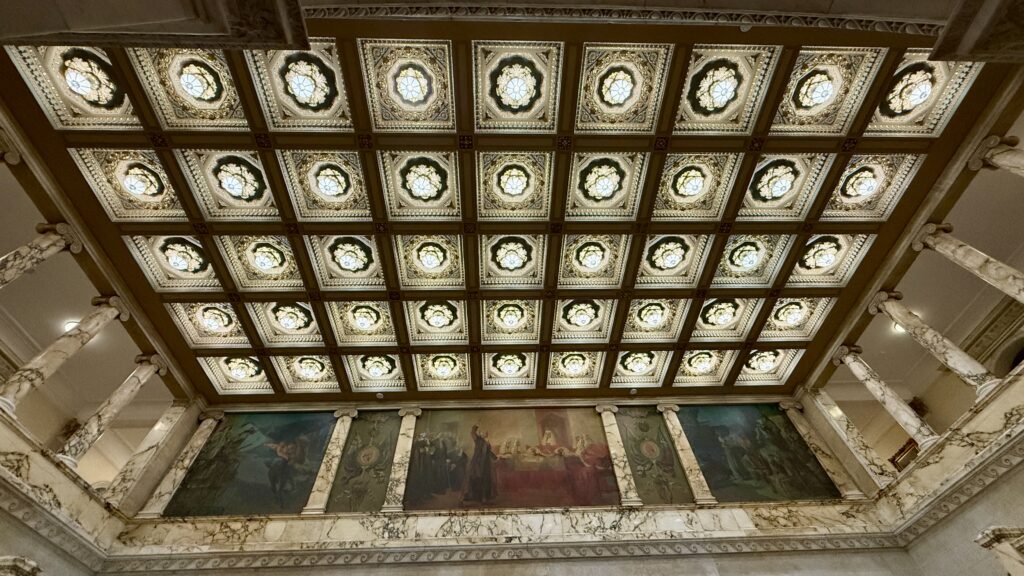
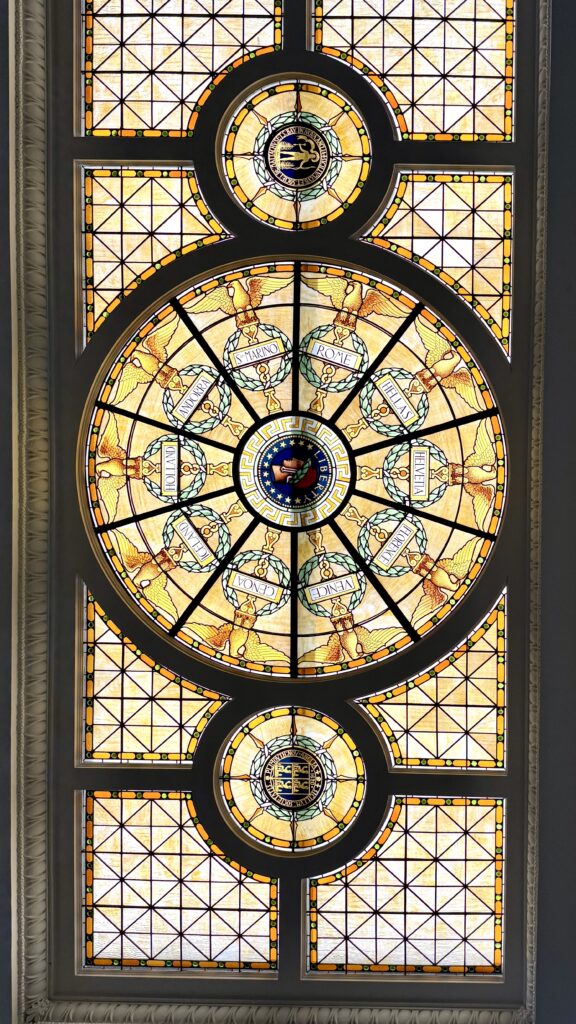
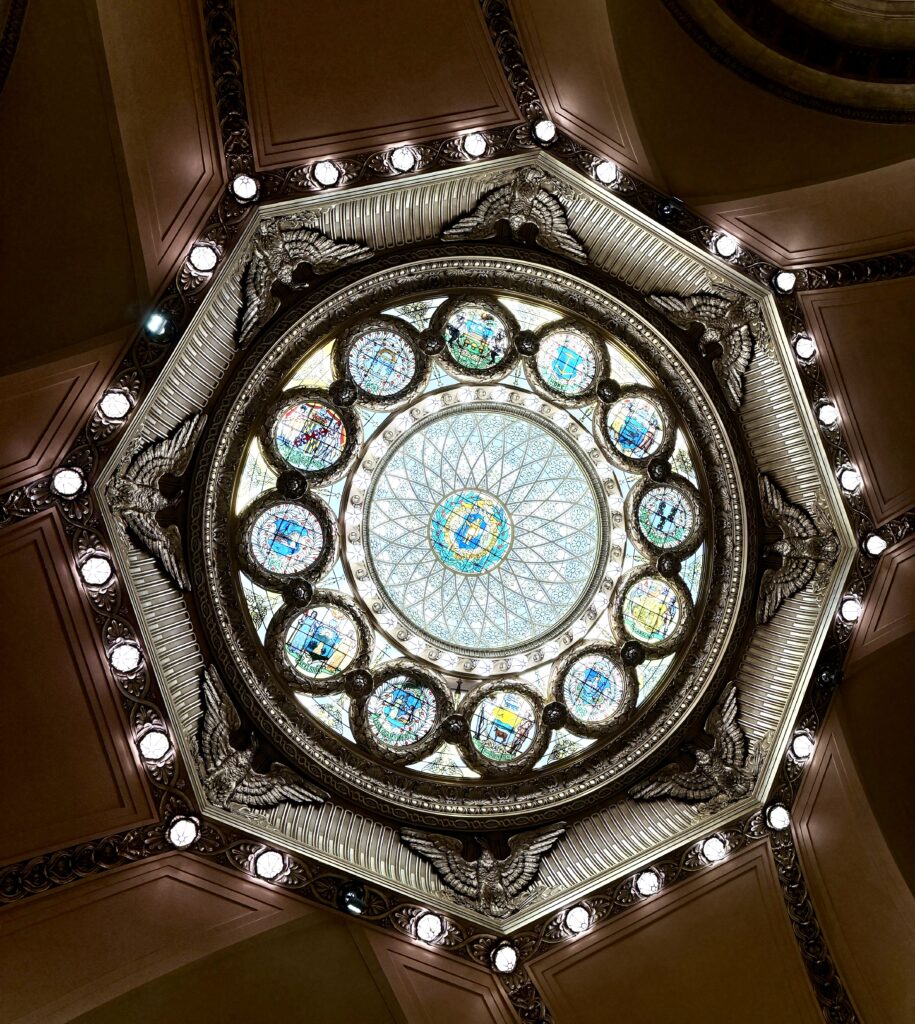

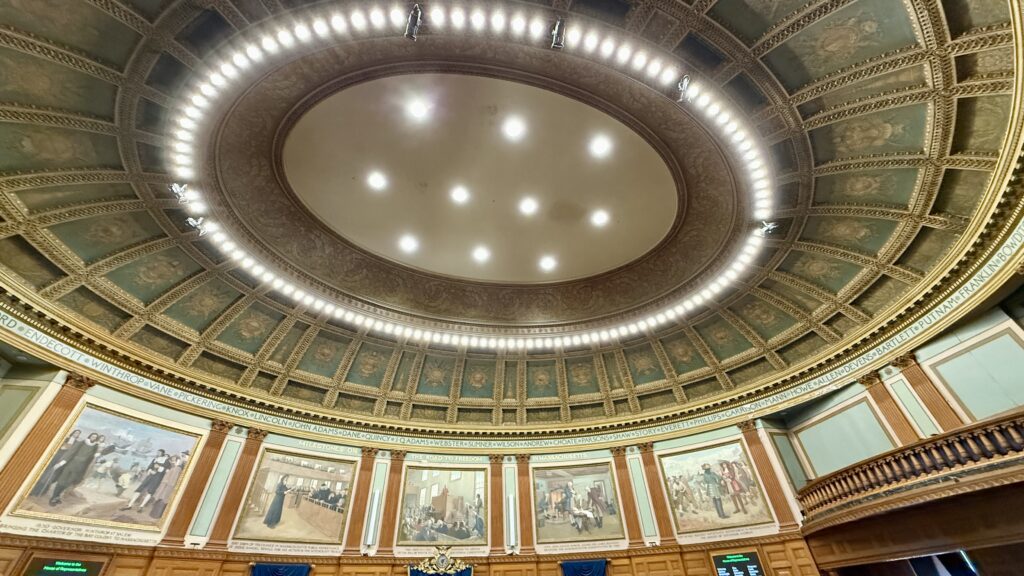
Massachusetts House of Representatives
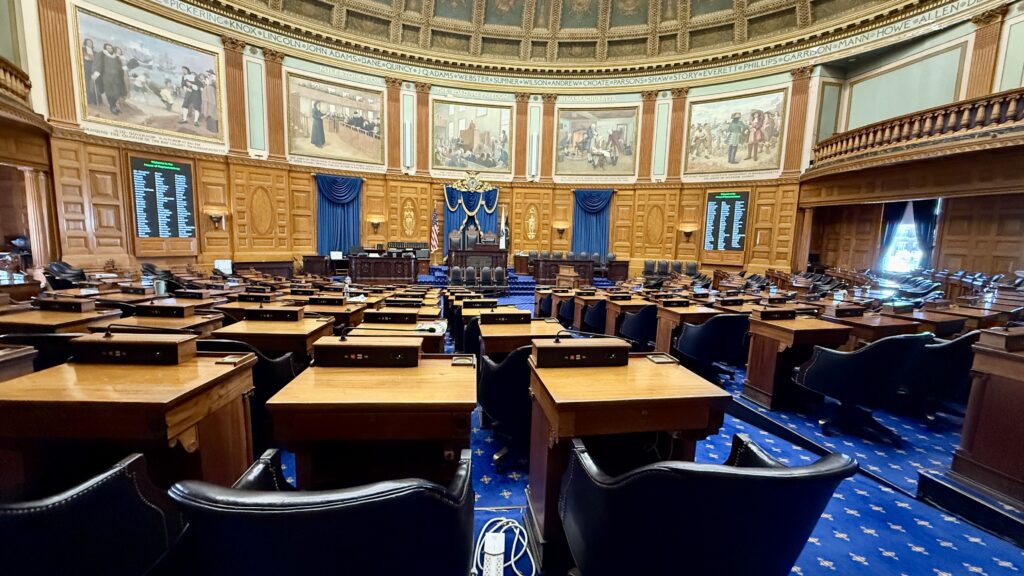
Sacred Cod.
This cod designed an unknown artist was given by John Rowe, a prominent merchant and representative from Boston, in 1784. It was said to produce good luck and serve as a reminder of the fishing industry, presiding over the general court. It is a nearly five foot (150 cm) carved-wood effigy of an Atlantic codfish, painted to the life, hanging in the House of Representatives, ”a memorial of the importance of the Cod-Fishery to the welfare of this Commonwealth” (i.e. Massachusetts, of which cod is officially the “historic and continuing symbol”).
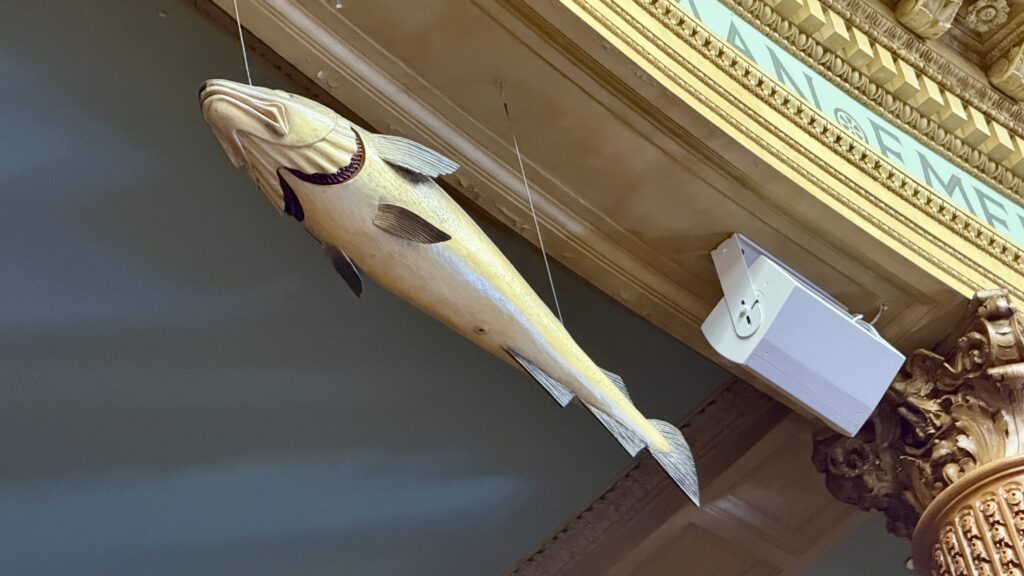
Fun Fact: In 1933 the Sacred Cod was briefly “Cod-napped” by editors of the Harvard Lampoon, prompting police to drag the Charles River and search an airplane landing in New Jersey. In 1968 it was again taken briefly, this time by students at the University of Massachusetts Boston. The fish presents such delight to tourists and locals alike, the State Library of Massachusetts wrote an entire article titled “What’s so odd about our Sacred Cod?”, if you like that sort of thing.
Senate Reading Room
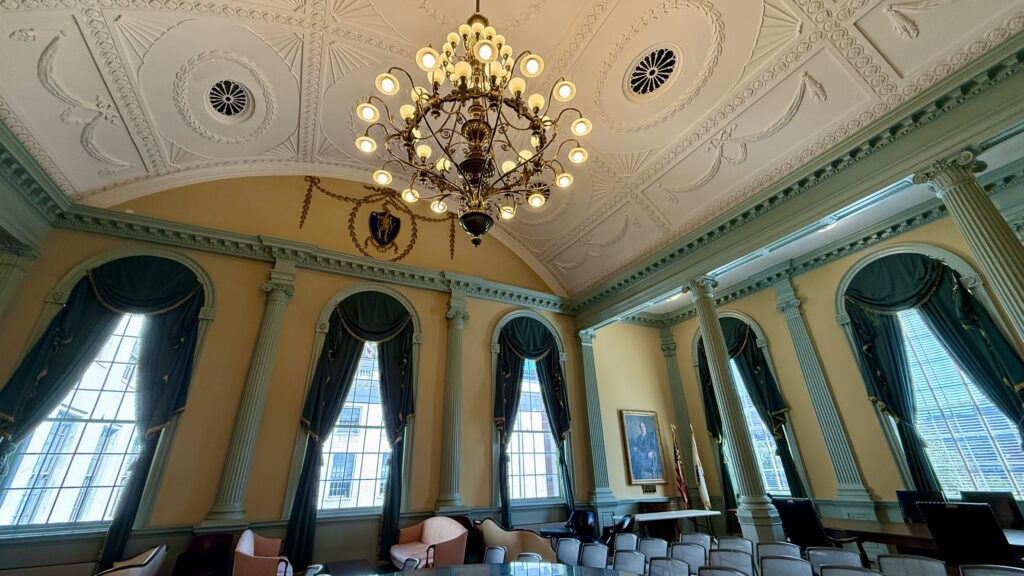
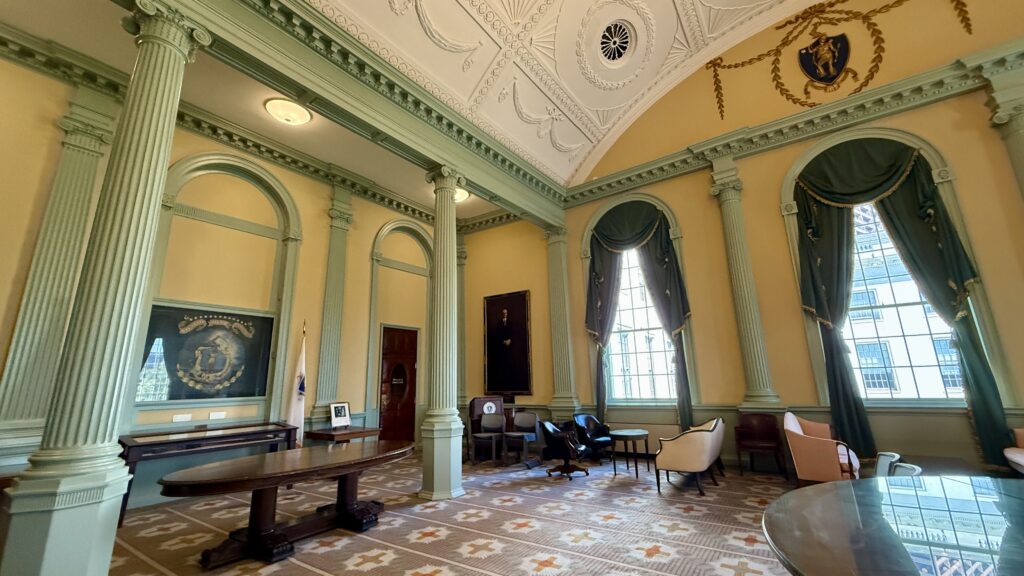
Massachusetts Senate Chamber
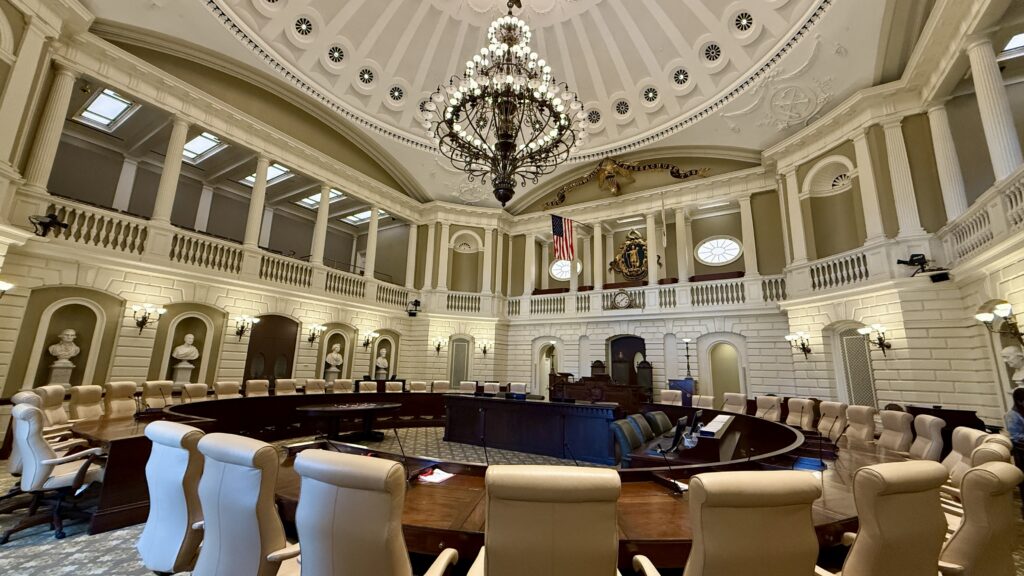
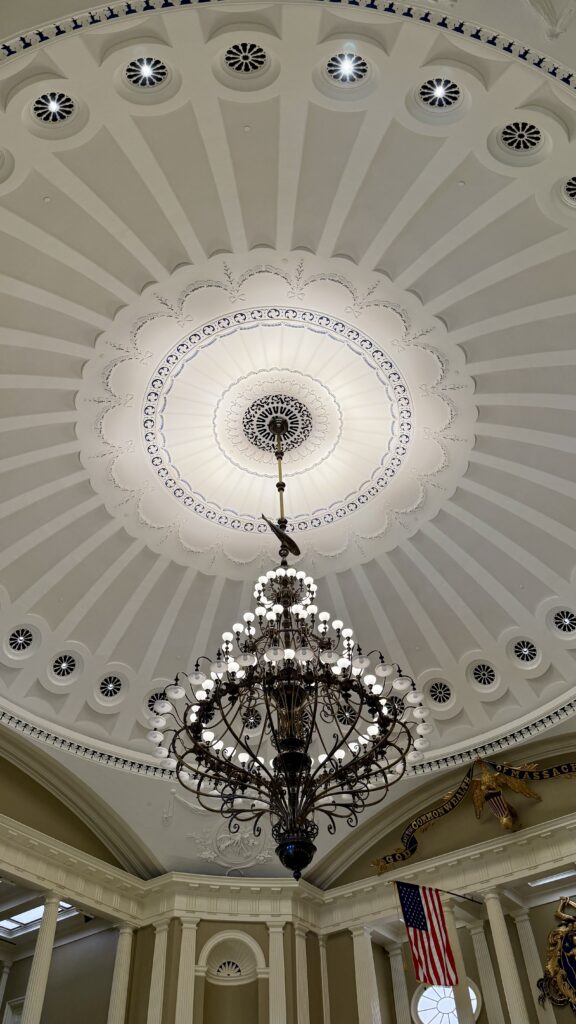
Notice the cod fish, hanging in the chandelier at the center of the Senate?
This one is sometimes called the Holy Mackerel. 😂
Freedom Trail
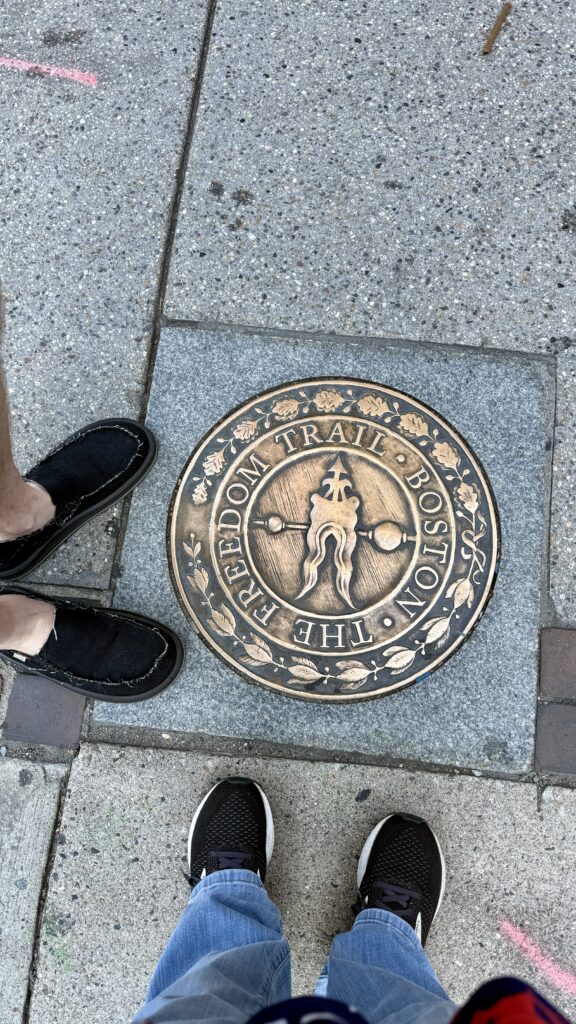
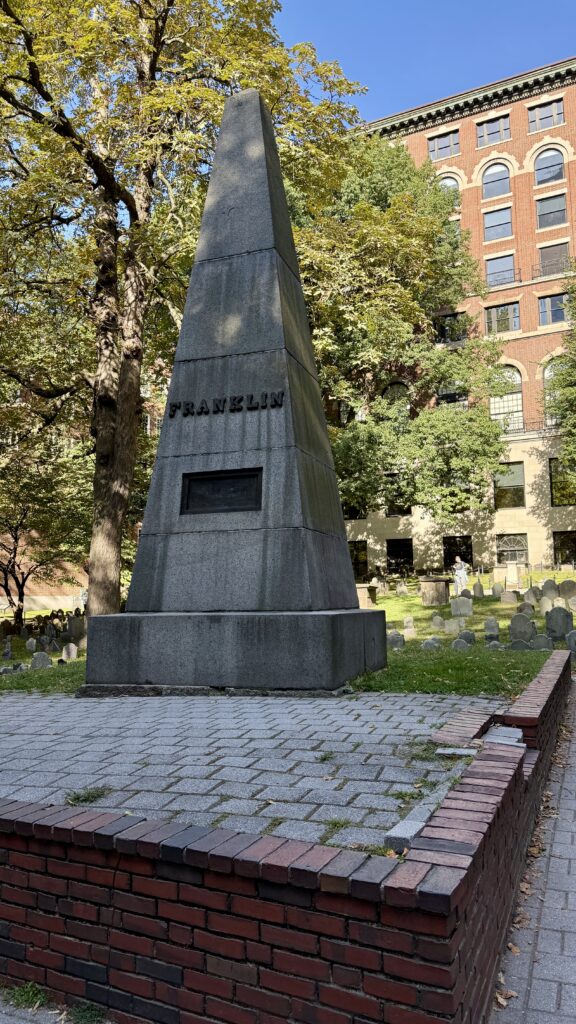
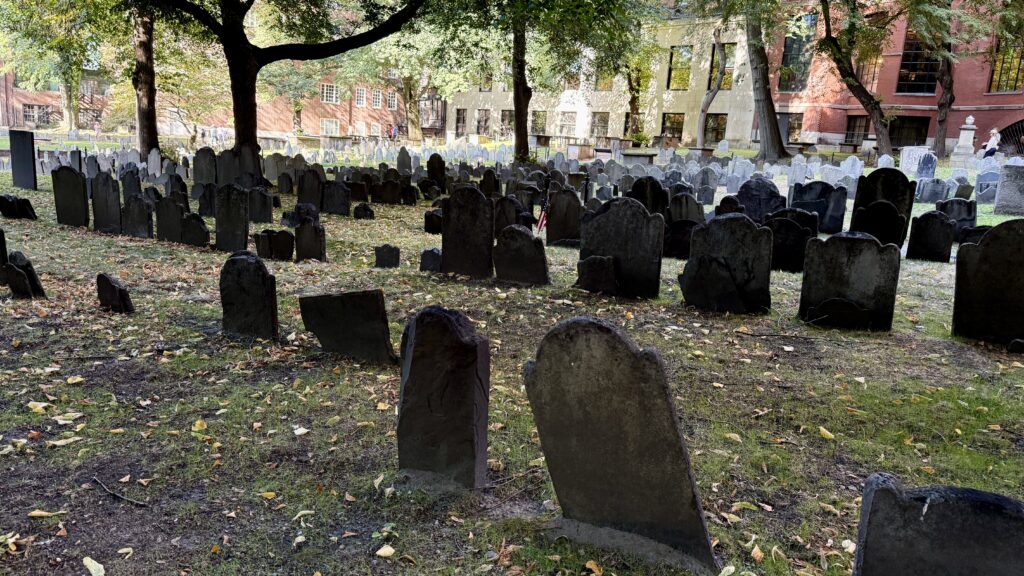
No trip to Boston would be complete without walking at least part of the Freedom Trail. We walked the entire trail, which was about eight miles on our legs, then caught a Lyft on our way back to the truck. I highly recommend it. It’s a fairly easy walk, but it is long if you walk all the way across the bridge. Perhaps you can do it in sections, spending several days in the city, and drive across the bridge to save some steps. There is a lot to see. Here are just a few of the amazing sites.


Wrap-up New Hampshire and Massachusetts.
I hope you enjoyed Part 2 of the New England State Capitols (State Houses). Comment below and tell me one thing you discovered about these wonderful cities or buildings! I would love to hear from you. I promise I will not spam you. You need to sign up to comment so my website knows you are a real person.
Finally, look for Part 3 of the New England state capitols where we will cover Rhode Island and Connecticut and wrap up the New England states. Be on the lookout for more Easter eggs! Every Capitol has something unique to share.
À la prochaine…hasta la próxima vez…until next time!
“I am the Lord, who heals you.”
Exodus 15:26
*Credits: The tour guides present some great stories which you may or may not catch on your own. I also obtained historical information from plaques inside the State Houses, tour brochures, Capitol websites, and good ol’ Wikipedia.