The Nitty-Gritty Gritty Blog Explained. (Scroll down or click on recent posts to read the most current blogs.)
Merriam Webster defines grit as both a noun and a verb. As a noun, it can be “small loose particles, sand or gravel,” or something similar. I kind of see my cancer that way. My body has a bunch of loose particles, and I have experienced lesions that look a bit like sprinkles of gravel on the CT Scans and MRI pictures. Technically, cancer is a normal cell (or cells) gone rogue rather than a foreign object like grit, and it is much larger and more dangerous than a piece of sand in your shoe. However, I think this concept of grit could fit. (See what I did there?)
When you get a piece of grit in your shoe, it is an annoyance. It is a constant source of irritation. Some people stop the journey because of the discomfort; hikers take off the boot and remove the pebble. They immediately find relief. If left unchecked long enough, it can rub the skin raw, turning into a sore that potentially becomes infected and impacting the rest of the body with fever, chills, and even death.
We have done what we can to remove the cancerous grit throughout my body. Previous blogs will tell the whole story, if you have time to read it all. While my body is currently stable, and has been for several years, the cancer and treatment are ongoing. Body scans continue to show “hot spots,” but they have not progressed since 2019. It is very likely the spots in my bones are where the cancer was, rather than where it is.
I am a lifer. Although I look healthy, until they discover a cure for stage 4 metastatic breast cancer, I will most likely be in treatment for the rest of my life. (You can read further about my treatment in various blog posts.) Like grit, cancer and treatment continue to annoy due to the frequency, side effects, and ongoing pain where the cancer has impacted various parts of the body. Like grit, I am reminded that what starts small can grow into something more serious if it is not treated (and sometimes continues to grow even when it is treated). Like grit, it is annoying, but I am pulling off the shoe the best way I know how.
The fourth definition of grit (noun) is also why I named my blog the Nitty-Gritty Gritty Blog. Webster defines grit as “firmness of mind or spirit: unyielding courage in the face of hardship or danger.” That definitely fits. Regardless of the hardships, I remain steadfast in my journey with God as my support and encourager. I have unyielding courage because his Holy Spirit is holding my hand. My friend Jesus walks beside me and keeps me company during treatments and scans. This blog will take you through a dangerous journey I have encountered, and continue to hike each day. It will do so with the firm and courageous spirit which God has provided.
Lastly, grit (verb) is also defined, “to cover or spread with grit.” I like that. That’s what I aspire to do, cover you with grit. Spread the grit. Make you gritty as well! In this blog I also hope you catch the courageous spirit as we look at day-to-day life with breast cancer. Breast cancer which was deemed “cured,” but metastasized to other parts of the body. Breast cancer which is deemed by medical journals and doctors as terminal; yet, life goes on! I hope you apply each lesson to your life and realize you too can have firmness of mind and spirit and unyielding courage in the face of hardship or danger.
Perhaps you are also experiencing a difficult journey right now. Or maybe you are just a kid and you have a long journey ahead of you. Whatever your stage in life is, please know that God can grant you peace and comfort as you encounter grit in life, and he can cover you with grit to pull through!
This blog is nitty-gritty, because we get down to business. And it’s a gritty blog, because my mind and spirit are firm. I hope reading my story will provide you with a bit more grit as well.
It isn’t the mountain ahead that wears you out;
it is the grain of sand in your shoe.
~Anonymous~
P.S. Some people may wonder why I started ending my blogs the way I do. I chose this tagline because I love the French culture. I have many French friends, and I am trying to learn how to speak their beautiful language. I also close with this phrase because I believe we will meet again whether in a blog, on earth, or one day in Heaven.
À la prochaine…until next time.
Please leave your comments below! I would love to hear from you. You are asked to enter an email address so my website knows you are not a robot. I will never sell or share your email address with anyone.
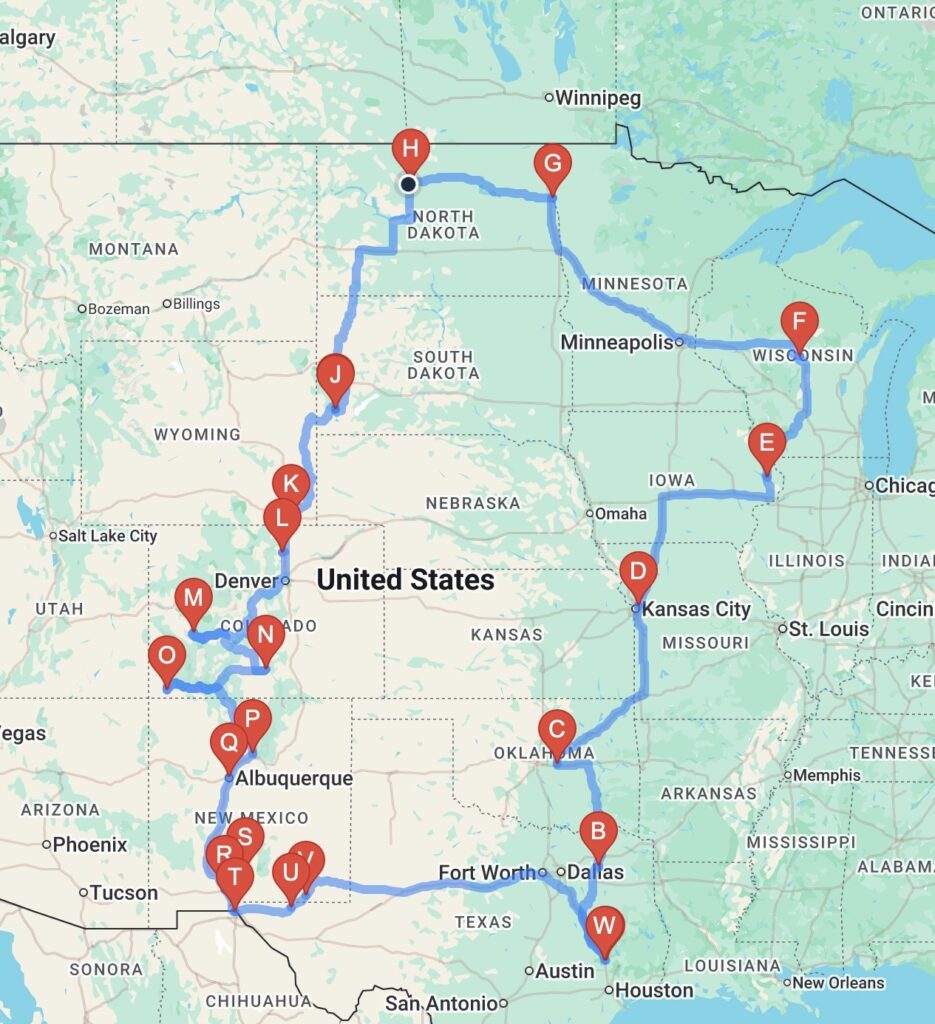
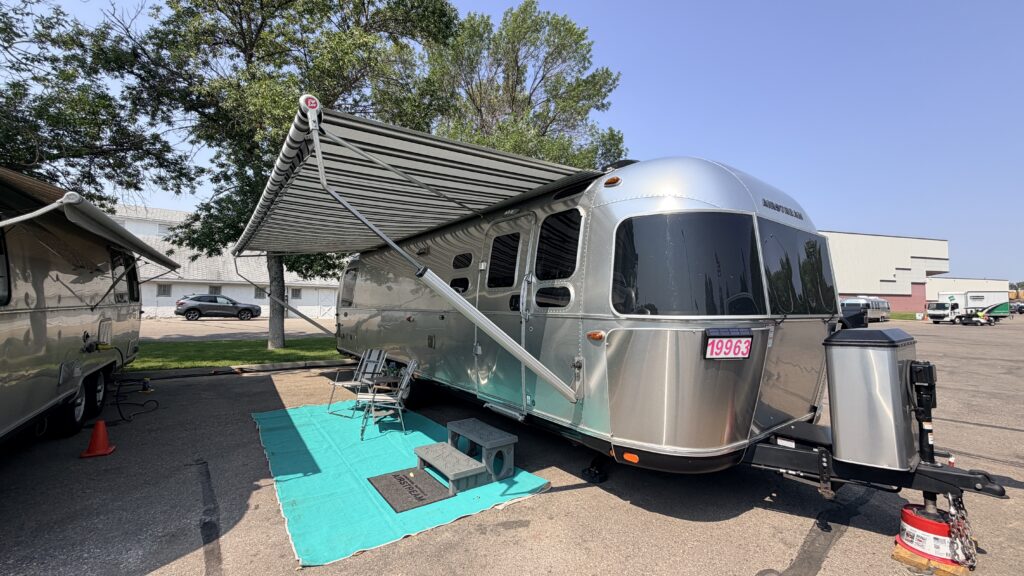
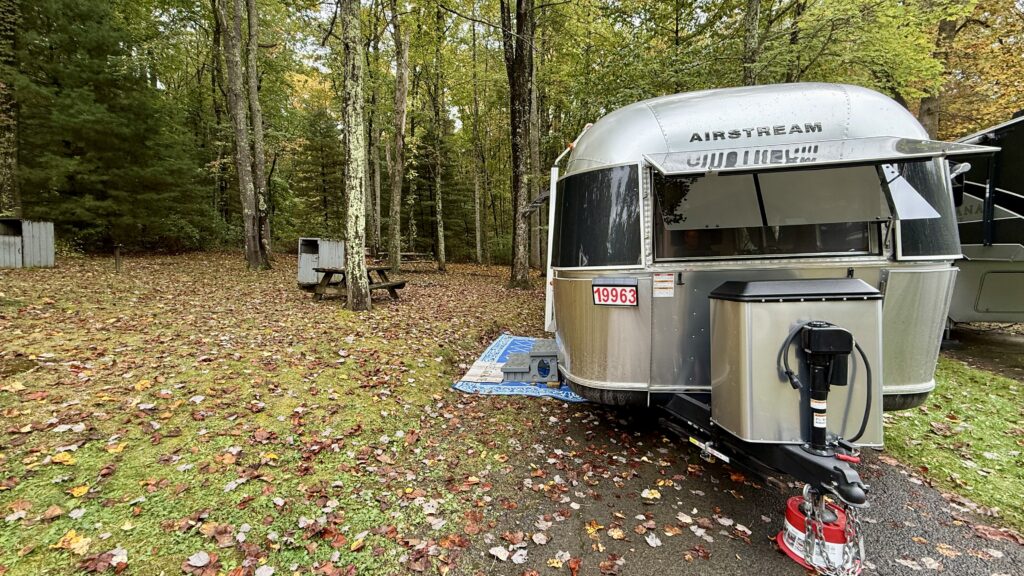
We’re calling this year’s Airstream trip The Dogs Days of Summer, because the map of our stops looks like the profile of a dog 🐶😂🤪😁. At this writing, we are at the farthest point north (H on the map), and from here we start heading southwest back home.
We hope to catch some National Parks, State Capitols, and see two more of our grandkids when we get to the El Paso area. We should be home in September.
We travel and live life. I have a tendency to try to cram more into our path than we sometimes have time to accomplish. Some of those points on the map may change if Tim calls an audible on the way back home. However, we did accomplish everything we had planned on the way up, and then some. We were blessed to see several of our friends, enjoy a balloon fest, and we spent a whole week in Wisconsin near our daughter’s family.
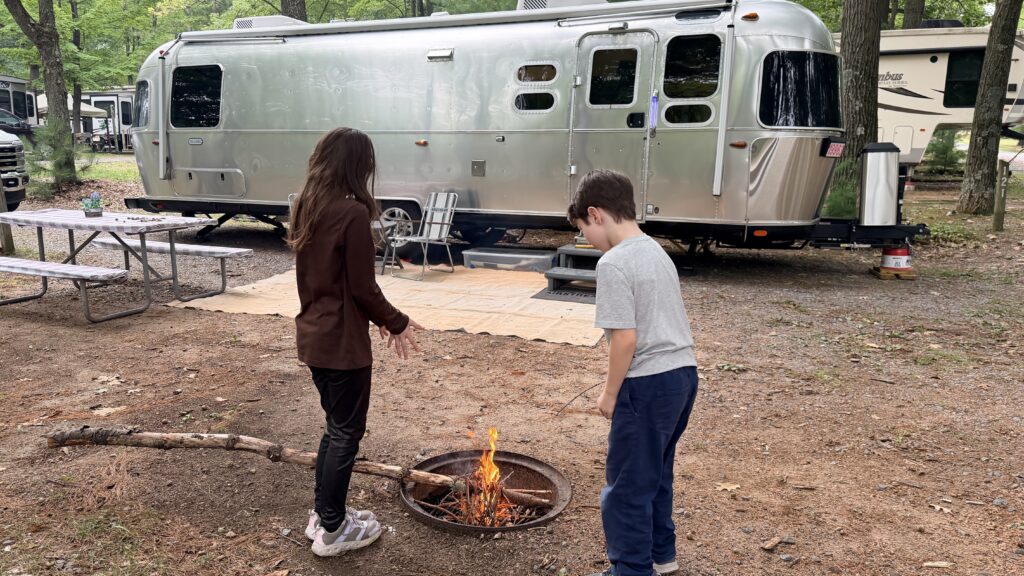
This is Paige and Gabe. Tim had a work site visit on the weekend, so I kept the children and had a camping sleepover while Mom and Dad got a break. Gabe wanted s’mores, so I built a small campfire and we cooked marshmallows. Fun times.
Paige wanted some girl-time and she spent the first night talking about pretty much everything girls talk about. Gabe’s bed was up front.
She also really got into the Bible Study book I gave her. She completed four lessons while they were with us!
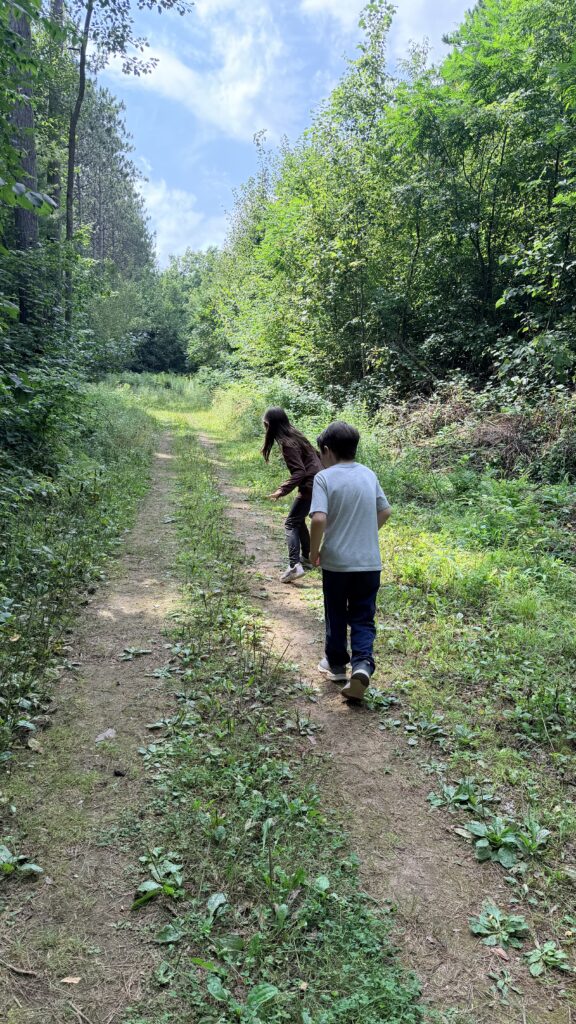
Paige is leading us on a treasure hunt. We found “gems” along the way, which the treasure thief had dropped as he was running away. We were getting closer to finding him, and we had to walk quietly. 😂 She’s very creative!
I might have picked up a tick on our hike. Or some kind of bug bite. There’s a spot on my leg that looks like it’s getting infected. I’m going to the Urgent Care to get it checked out today. Urgent Care is one of the best inventions ever! I have made good use of them on our various trips and travels. Many Urgent Cares use the Epic system, so they know my whole history before I even tell it. And they take Medicare. 🥰
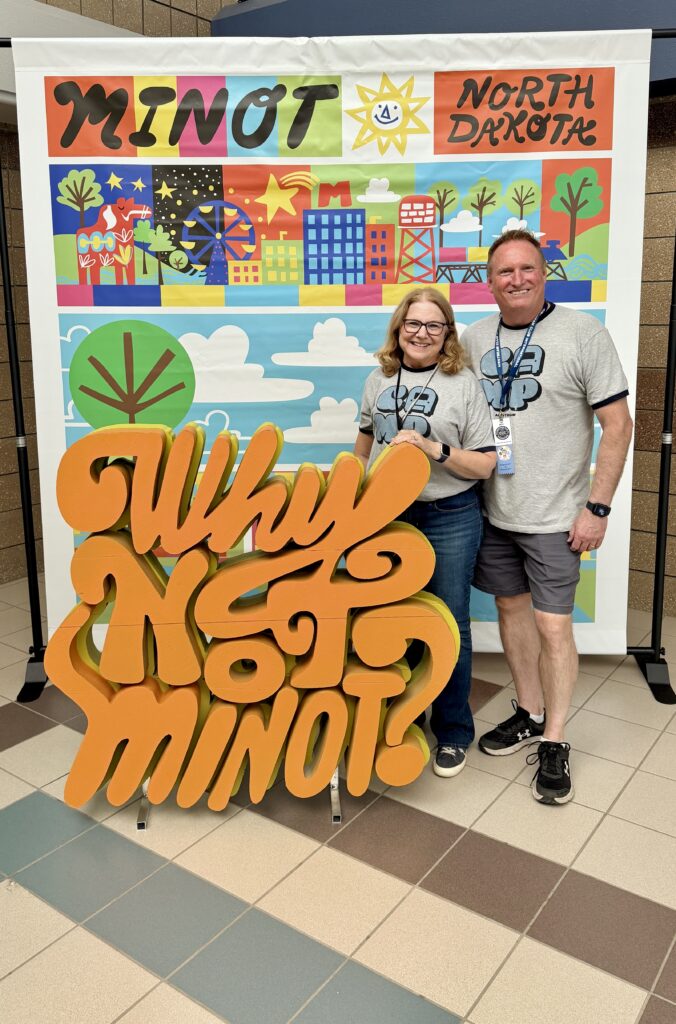
We left our family, a bit too early for my liking, but our time was limited. We arrived in Minot, North Dakota two days ago, awaiting the beginning of the Airstream Club International Rally. It officially starts tomorrow. We got here early to beat the crowds, and it ended up being a very good decision!
The blue handicap tag was hanging from our mirror, and we asked if they had any ADA spots left for parking. Yes! We were able to park there, which means less walking from one end of the fairgrounds to the other. I do okay most of the time, and don’t need the accommodations, but when I get tired and need a nap I don’t want to have to walk a million miles to get to my bed. This was a God-thing for sure.
The campground has 30 AMP service, and somehow we ended up parked right in front of the electrical service. (We were concerned about the possibility of being too far for our cable to reach.) The parking attendant said we could have the 50 AMP plug as well! Another God-thing for sure. (Shhhh…our friends might get jealous when they find out.) We are not parked with the bulk of our club, but there are two other rigs in our section from our club, so we feel right at home.
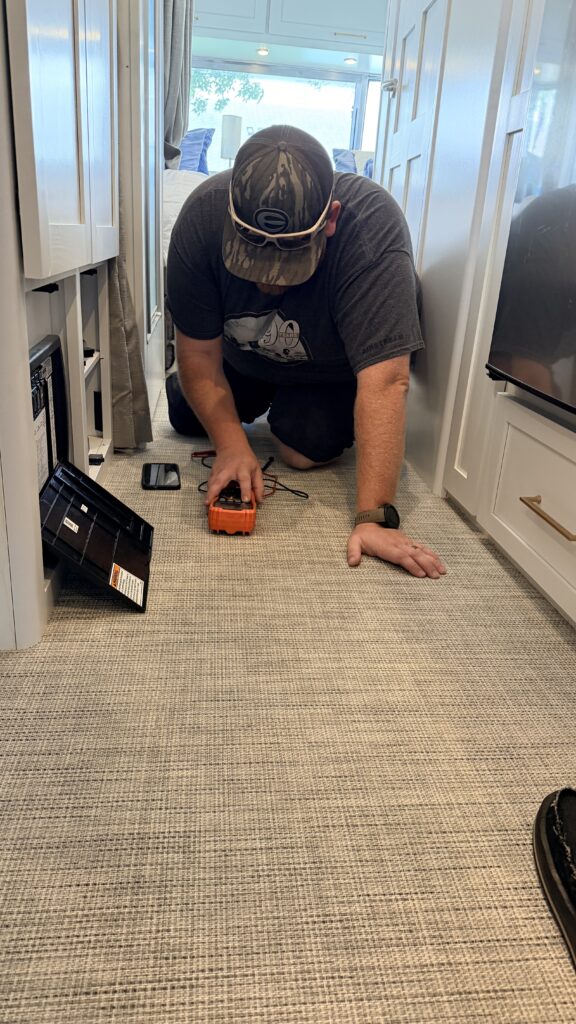
Speaking of electricity, we have been having some trouble with our power giving us a full charge. It turned out to be the converter. We were the first on the list to get our rig worked on, and they brought a new converter for us as well. We were also able to get some other small work done, and now she’s good as new (well, gently used anyway).
Sometimes I get so busy living life, I forget I have metastatic breast cancer. I’m treating it more like a chronic illness, which many people can relate to. It’s still there, and I still have to go to treatment, but I’m not letting it stop me from living life and enjoying my family.
Looking forward to a great rally, time with friends, and some relaxation. Or, as Gabe calls it, chill-axin’ 😁 .
À la prochaine…hasta la próxima vez…until next time!
“I am the Lord, who heals you.” ~Exodus 15:26
My relationship with Jesus Christ motivates me to keep blogging. Though I have metastatic breast cancer*, my faith helps me survive, thrive, and feel alive while staying active. Without Him, I couldn’t achieve anything. With His help, well, my accomplishments speak for themselves on my blog. If you’re interested in learning about building a relationship with Jesus, feel free to comment below. I will never sell or share your email.
*Metastatic breast cancer is Stage IV cancer. Metastatic, or metastasis, means the cancer has spread beyond the original location (breast and immediate lymph nodes). In 2016 the doctors found significant metastasis to my bones, skull, liver, and lungs; then in 2018 to the brain. However, with chemo, immunotherapy, gamma knife, and of course my faith in the Lord, it is all undetectable at this point. I continue in treatment every three weeks via infusions, and receive multiple scans on a regular basis. If you or someone you know has metastatic breast cancer, I recommend these organizations for additional support:
Metavivor and Unite for Her (also for ovarian cancer)
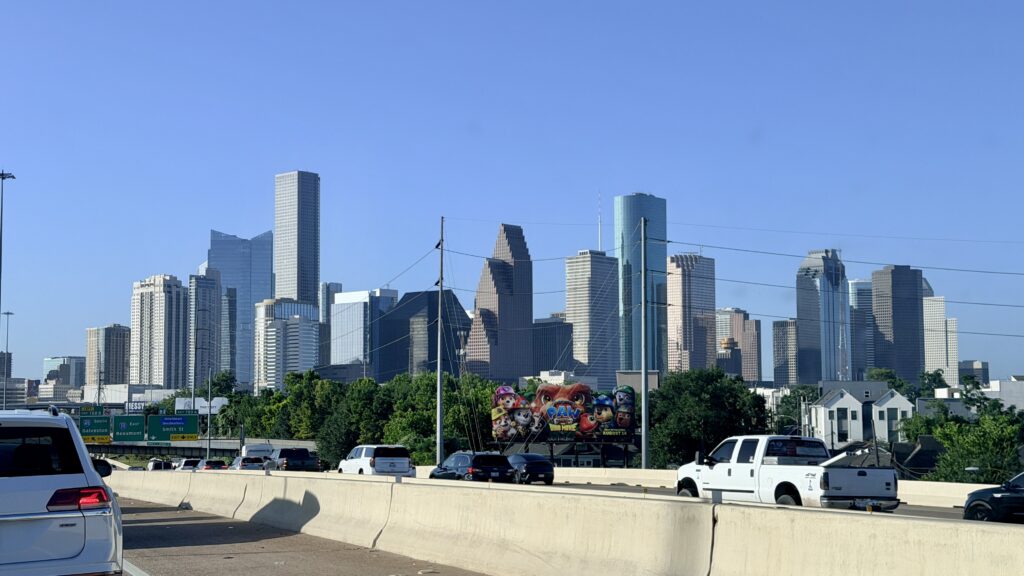
Two months have flown by since my last update. We took a little trip to the beach for some R&R, took a ferry to Galveston, and enjoyed some down time.
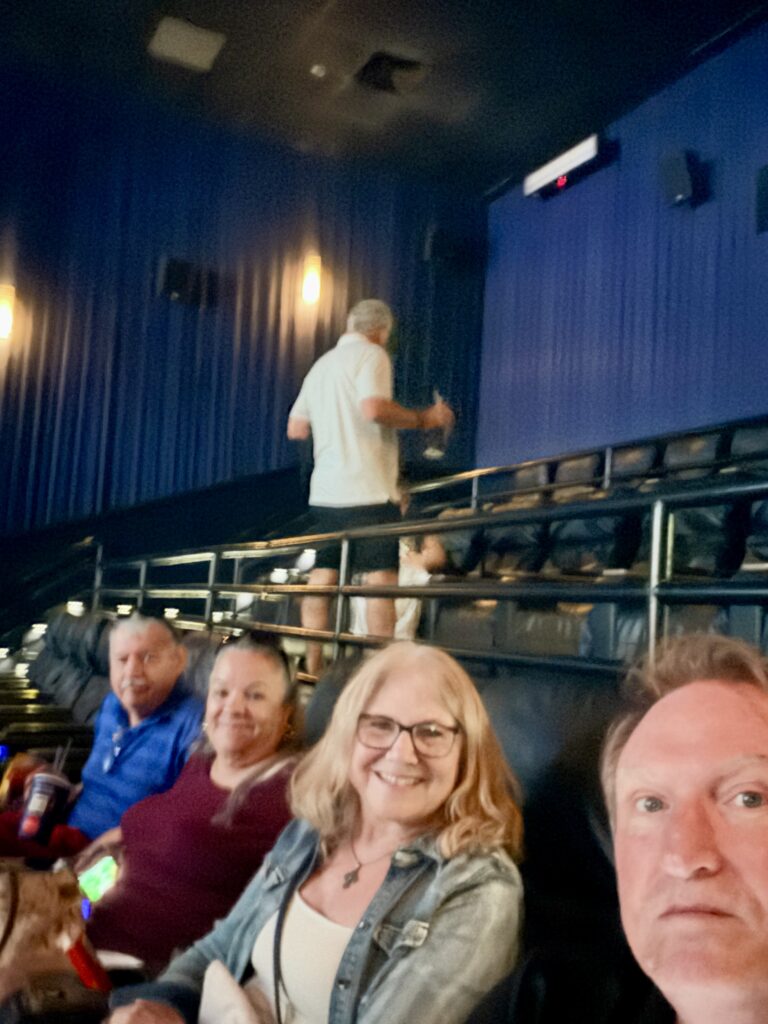
We also had company for a few days. These are our lifelong friends. We tried to see a movie, but the emergency system made us leave the building, due to a fire at the popcorn machine. We’ll have to catch that one later.
You may want to know what happened with my last endoscopy. And, if you follow me on Facebook, you also know I broke a tooth. I’ll address that one first, and then the former.
My bottom right molar is missing about 1/4 of the top. I wasn’t eating a nut or anything hard. It just broke off. My dentist recommended I get it extracted and referred me to an oral surgeon. I thought I should check with MD Anderson first, and so I went downtown to the dental oncologist for a consult today.
Tim got up and offered to drive me. What a charming gentleman he is! It save us $20 in parking fees, and gave us a chance to be together since he just got back from a work trip. While I’m typing this blog, we are sitting in a brand new Panera Bread that still has a giant balloon out front, advertising their Grand Opening. (Actually, the manager just told us it’s a re-opening, and they will be doing the same to the one in Conroe later this year. Yay!!) It’s nice to get the free drinks with our sip club. I’ve digressed…
Dentist. The dental oncologist and his fellow gave me an overwhelming verbiage of information. Dr. Lei reminded me that my cancer treatment is the highest priority. Everything else is supportive. So, they will do what they can but it always takes second place to dealing with the cancer. After all, if we let the cancer take over, there’s no reason to do the rest.
Anyway, here’s what they said, in a nutshell…
I clench my teeth which causes breaks as well as other issues with the joints. Anyone else out there do that? Resolve? Wear a mouth guard at night.
Extracting my tooth is out of the question. I have been on Zometa since 2017 for the bones and therefore my body is never a candidate for bone involvement. Since the root of the tooth is in the bones, they cannot touch it or we risk osteonecrosis of the jaw. I knew that was always a concern, but I really hoped I could just get it out of there. Resolve? Go to an endodonist and get a root canal and crown. Hopefully they can save the root and avoid any bone involvement. Ugh…
More importantly, he looked at the roof of my mouth. My palate has been sore for a while. I thought I maybe burned it eating cheese pizza, or drinking hot tea. But I’ve done that before, and this is different. It isn’t healing, and it’s been there for a few months now. I talked with my ENT about it a few weeks ago, and today I mentioned it to the dentist. He said this isn’t a pizza burn. It’s something else, but we don’t know what. He said this is a higher priority, and I need to get a biopsy. He put in a referral to the head and neck specialist so we can find out what we are dealing with.
So, to wrap up my big mouth part of this blog, I have to go back downtown to see the endodontist, back again to get a biopsy of the palate, and however many more times I need to get the procedures and follow-ups after the initial consults. Those of you who know me know how much I love going downtown (can you hear the sarcasm?), so this is a bit of a challenge. However, we will look for other reasons to go and make it worth our while.
GI Issues. My first endoscopy was combined with the colonoscopy, so my stomach was empty. He found perforations in my esophagus, as well as colitis, and started me on medication. When I came in for the follow-up endoscopy, those were healed! He performed a biopsy to determine if I have Barrett’s Esophagus. He also discovered residual food in my stomach, which should not have been there since I had been fasting for the past 8+ hours. He may not have found this if I didn’t do the endoscopy without the colonoscopy, because the prep is different. This is likely the reason I have had the nausea and vomiting, which was the reason I started the GI process in the first place.
Next step was to do a NM (Nuclear Medicine) Gastric Emptying Study. This took place at the Houston Methodist Hospital in The Woodlands. I love that hospital. Its lobby has a beautiful sculpture of Jesus, and it has such a warm and welcoming feel to it. They fed me a scrambled egg with radioactive material used for tracking, took a scan, waited two hours and took another scan to track the egg, then waited another two hours and took a third scan. I still had egg in my stomach so they officially diagnosed me with Gastroparesis.
I have a video consult with a surgeon on Friday, August 7th, to discuss a possible repair of the nerve with surgery, but I’ll know more about that after we meet. Prayers are appreciated!
I’ve done some research on these conditions, and the drugs I’m on to prevent the cancer from returning are a trifecta for GI issues. I am not wiling to give up the immunotherapies, as they have kept the cancer at bay for the past decade. I knew there could be side effects, but it feels like my body is starting to fall apart. Going to the doctor is a full-time job.
The upside is, God has given me plenty of energy to do His will, and what we enjoy. Travel, write books, spend time with family, and minister to others. No matter what, the Lord is with us and He has it all in His hands. We thank Him daily for giving us another day of life.
Our next trip begins in one week. We will be taking our Classy Girl up north, then west. Tim has an onsite visit for work in Chicago area, we plan to see our daughter’s family somewhere in Wisconsin, we are making plans to attend the Airstream Club International Rally in Minot North Dakota, and then we will head home via Colorado, New Mexico, and visit with our two granddaughters who live in west Texas.
After that, we will take care of our broken bodies.
À la prochaine…hasta la próxima vez…until next time!
“I am the Lord, who heals you.” ~Exodus 15:26
My relationship with Jesus Christ motivates me to keep blogging. Though I have metastatic breast cancer*, my faith helps me survive, thrive, and feel alive while staying active. Without Him, I couldn’t achieve anything. With His help, well, my accomplishments speak for themselves on my blog. If you’re interested in learning about building a relationship with Jesus, feel free to comment below. I will never sell or share your email.
*Metastatic breast cancer is Stage IV cancer. Metastatic, or metastasis, means the cancer has spread beyond the original location (breast and immediate lymph nodes). In 2016 the doctors found significant metastasis to my bones, skull, liver, and lungs; then in 2018 to the brain. However, with chemo, immunotherapy, gamma knife, and of course my faith in the Lord, it is all undetectable at this point. I continue in treatment every three weeks via infusions, and receive multiple scans on a regular basis. If you or someone you know has metastatic breast cancer, I recommend these organizations for additional support:
Metavivor and Unite for Her (also for ovarian cancer)
It seems my friends and I are always talking about what is wrong with our bodies🤪😂. I thought only old people did that 🤷♀️. Oh yeah, I am one of those old people 🥴. Time flies faster than you can blink.
It’s been a while since I posted a medical update about my metastatic breast cancer journey, in case you are wondering. We’ve been having too much fun doing life. Reality hits when all the appointments occur right after we get home from having fun. Yet, I am grateful for the doctors (I have many doctors) who take care of me!
All hooked up and waiting for my treatment. This time I got Herceptin, Perjeta and Zometa, and it was a long day.
The past couple of weeks were full-on with treatment, scans, endoscopy, colonoscopy and a new acupuncture I’m trying for the neuropathy and lymphedema. People look at me and say, “you look amazing,” or “you don’t look like you have cancer.” I appreciate that! It helps boost my motivation and enthusiasm for life. However, the old adage “you can’t tell a book by its cover” is also true of the body. What we see or feel on the outside isn’t always indicative of what’s going on inside. The doctors watch me closely.
My CT scan and whole body bone scan showed my body is still stable with no progression of disease. The results continue to show evidence of where the cancer has eaten my bones, or effects of the radiation. This explains the pains and muscular spasms I get in my side. Sometimes my fingers lock up with the muscle spasms and I literally have to pull them back into place. That’s fun! Fortunately I have a high pain tolerance, and these spasms only last a minute or so. The scans continue to find some degenerative issues as well as a few other minor things–as they always do–but nothing actionable at this time. God is good!
I had a colonoscopy last week, as well as an endoscopy. The doctor put me on Pepcid twice daily along with another medication that I will take for two months and then repeat the endoscopy. I have an inflamed esophagus, which explains the heartburn and difficulty swallowing from time to time. Fortunately the prep for the endoscopy is not as bad as for the colonoscopy. That’s the worse part! I’m already noticing a difference from the medication.
I made some orange jello and ate some gummies as part of my prep.
I also went to get acupuncture for the first time in my life. Tim had it one time many years ago, so I was aware of the process. This acupuncturist took time to explain the reason it helps, all about the meridians and blood flow. Our body is very well connected. We can hurt our toe and it affects an internal organ. He is working on the neuropathy in my hands and feet, as well as the lymphedema in my right arm. I have had two treatments so far, and it seems like it’s helping but we will see how I’m doing after four. I get a good nap in when I go there!
My yearly echocardiogram and cardiology appointments are coming up this week. They watch my ejection fraction to ensure I can continue to get treatment. Herceptin is hard on your heart. They used to require this every four or six months, but I have graduated to annual visits since my heart is still strong.
Next week I will lay on yet another table while they look at my brain. This happens about every 3-4 months, and then another follow-up with my neurosurgeon for results. I continue to have some balance issues, which is likely due to the radiation they did in the cerebellum to zap those little lesions in 2019. I expect they will still say my brain is stable. I’ll keep you posted if anything changes.
You never know what kinds of fall-out you might have from all the treatment, but it’s keeping me alive!
À la prochaine…hasta la próxima vez…until next time!
“I am the Lord, who heals you.” ~Exodus 15:26
My relationship with Jesus Christ motivates me to keep blogging. Though I have metastatic breast cancer*, my faith helps me survive, thrive, and feel alive while staying active. Without Him, I couldn’t achieve anything. With His help, well, my accomplishments speak for themselves on my blog. If you’re interested in learning about building a relationship with Jesus, feel free to comment below. I will never sell or share your email.
*Metastatic breast cancer is Stage IV cancer. Metastatic, or metastasis, means the cancer has spread beyond the original location (breast and immediate lymph nodes). In 2016 the doctors found significant metastasis to my bones, skull, liver, and lungs; then in 2018 to the brain. However, with chemo, immunotherapy, gamma knife, and of course my faith in the Lord, it is all undetectable at this point. I continue in treatment every three weeks via infusions, and receive multiple scans on a regular basis. If you or someone you know has metastatic breast cancer, I recommend these organizations for additional support:
Metavivor and Unite for Her (also for ovarian cancer)
March 25, 2026. Raleigh North Carolina and Columbia South Carolina (with a little Congaree in between).
After passing security, the tour desk worker stamped our passport and handed us a slick 6-panel, trifold brochure for our self-guided tour of the North Carolina State Capitol.
Stamp #38! Sound on.
Back to another short capitol tour! We thought an hour on the parking meter would barely suffice, but we were in and out and down the road before my 45-minute timer went off on my Apple watch. The North Carolina Capitol only does guided tours on the weekends, or for school groups during the week. We were there on a Wednesday, while passing through after eating our cooked-to-order breakfast (French toast) at a hotel along the way.
This is the second Capitol building to be built on this location. The first building was a simple, two-story brick State House, completed in 1796, later enlarged to add a third floor, dome, rotunda, and eastern and western wings. That one burned down in 1831 when workers were fireproofing the roof and accidentally set it on fire (ironic, eh?). The current building was built in the Greek Revival style, popular in Europe and the United States at that time. The roof and dome are made of copper, which patinaed to a green/blue over time.
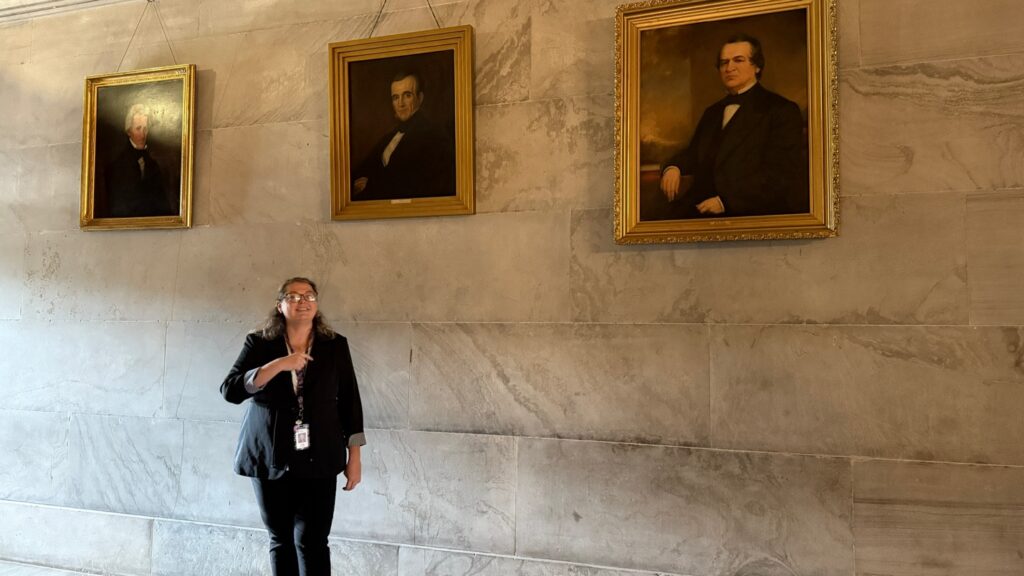
James Knox Polk, Andrew Jackson, and Andrew Johnson are proudly displayed in front of the North Carolina State Capitol, with the title: “Presidents North Carolina Gave Their Nation”
Immediately after picking up our brochure, we were greeted by a larger-than-life statue of George Washington underneath the dome, the same one pictured on the cover of the brochure, but very different from the regal, marble statue we saw yesterday in Richmond. Washington was sculpted to look like a Roman General, wearing the tunic, sandals, tightly fitted body armor, and a short cape fastened at the shoulder. He didn’t look like George at all! The idea was intriguing, but we didn’t really care for it. The original statue by Antonio Canova was destroyed in the State House fire. An Italian artist Romano Vio used his working model to create the replica, which was placed here in 1970. In our opinion, they should have gotten a clue from the fire. But what do we know?
Governor’s Office
Only the Governor’s office remains active here (encompassing the first floor including staff). Official business also occurs from time to time including press conferences, bill signings, oath of office ceremonies, special sessions of legislature, and commemorations.
Senate and House Chambers
Regular senate and house sessions are no longer held in this building. The second floor holds the two old chambers of Senate and House, restored to their original charm, serving as a museum for visitors like us. First we walked into the Senate, and then the House.
Door to the SenateSpittoon as it used to be!Fireplace to keep warmSenate Chamber 1840-1961.House of Representatives, 1840-1961. Thomas Sully’s 1818 portrait of George Washington is seen above the speaker’s podium. The painting was saved during the State House fire of 1831.
Second Floor.
Plaques line the hallways around the staircase leading to the second floor. Several display information about the slavery that took place in North Carolina. One plaque I found interesting revealed information about the State Treasurer John Haywood, who served 40 years and died in office. Not long after his death, they discovered nearly $70,000 missing from the treasury. (That’s about $2.36 million today!) His peers vouched for his character, claiming it must have been an error; however, the state required his personal estate to pay back the debt. They sold all his belongs, including 100+ slaves, at a public auction in 1828, leaving his heirs with no inheritance. The title of the plaque: “110 Valuable Slaves.”
Another slave story is found in the brochure. Local enslavers rented their slaves to the project for the construction and state operated quarry. We can thank over 130 enslaved African Americans who worked on the Capitol from 1833 to 1840 as “quarrymen” and general “laborers.”
Pen-Check Stairs.
Fun Fact! There are two of these staircases between the second and third floors. I don’t feel like rewording the description from the brochure, so I’ll just include it here. “Two free-standing stone staircases…are carved from solid stone and joined so that the weight of each step is directed on the one below it. Ultimately, the weight of the entire staircase is supported by the base step, which is embedded in the stone floor.” Amazing design!!
These stairs lead to the galleries as well as the State Library. We skipped the third floor in the interest of time (and legs). We had a late night last night, and a full day ahead.
Capitol Grounds
On the way back to the car, we saw some flowering trees as well as very large trees. One of the biggest magnolia trees I have seen is below, and look at the tree by Tim in the third picture below. Can you find him? It was still a bit chilly for us Texans, but the blue skies made a beautiful backdrop.
On to South Carolina!
Congaree National Park
This was a fairly easy National Park for us to get to and it was on our drive path where we caught five capitols and a National Park on our road trip home from Connecticut. Tim had two onsite visits with churches who are looking for pastors in Connecticut and Pennsylvania. It’s a long way from our home in Texas, so it’s fortunate we like to be together since we spent a lot of time in the car! We didn’t take the Airstream on this trip, so we will come back one day and stay in South Carolina in the Airstream, but now we can stay where we want instead of vying for space near downtown Columbia or Congaree.
Congaree National Park protects the largest remaining tract of old-growth bottomland hardwood forest in North America. It contains over 26,000 acres, with 15,000 of those acres designated as a wilderness area. The park received its official designation in 2003 as the culmination of a grassroots campaign that began many years earlier, in 1969. They welcomed 287,833 recreation visits in 2025 (ranking 49th out of 63 National Parks). The park is gaining popularity as this increased from 145,929 visitors in 2018 when it ranked as the United States’ 10th-least visited national park. By comparison, Smoky Mountain National Park (#1) received 11.5 million visitors last year.
The Visitor Center.
The Visitor Center is a pretty standard looking building, but it had some visuals to demonstrate the heights and breadth of the trees in this forest. Those were pretty cool. We got another National Park stamp as well!
This year is the Park’s 50th Anniversary, so I nabbed that stamp as well.Haha! The mosquito gauge by the restrooms was fun. We didn’t have to worry about bugs while we were there. This shows how tall the trees can be. They have holes showcasing woodland critters that live inside the trees
The Boardwalk.
This is a nice park to visit when you are time-limited. You don’t have to hike a long way, or see multiple sites that are miles and miles apart from one side of the park to the other (think: New River Gorge). Congaree is basically a walk through the woods on a nice wooden boardwalk.
We walked about 15 minutes or so, then turned around as our time was limited. There are approximately 2.4 miles of boardwalk, but half of it was closed due to repairs while we were there. It’s a peaceful path through an ancient place surrounded by sounds of nature. Well, mostly peaceful. We thought it was a bit crowded for a Wednesday and there is some construction.
Enjoy a few seconds of pure nature. Sound on!
I would like to go back to Congaree and spend a bit more time there walking the entire boardwalk. I would also like to see the fireflies. This is one of the only places in the world where you can see synchronous fireflies, all lighting up at the same time while trying to find a mate. The females have a lot to choose from!
And now, on to our final Capitol on the eastern seaboard.
South Carolina State House
A morning visit to North Carolina’s State Capitol, an afternoon walk through the Congaree National Park, and a final stop to see the building and property at the State Capitol in South Carolina rounded out our long, yet fulfilling, day.
This Capitol was … okay. Not overwhelming. Not underwhelming. We did not get a guided tour…again. It seems we find the capitol buildings less interesting when we have to go it alone, although Tim does make it entertaining!
A Few Fun Facts. If you like history, read the plaque on how the Civil War impacted this building. And then the plaque on how the Poinsettia (yes, the Christmas flower) got its name. Or, keep on scrolling …
Mirror twin wrought-iron staircases face each other, with famous portraits and paintings on the walls. The banisters incorporate the state flower, yellow jessamine.
The Dome.
The Dome is in two parts – an interior and exterior dome. This is a false interior dome, for aesthetic purposes, which fits inside the exterior dome. The exterior dome is made of steel and wood, finished with copper.
Senate and House Chambers.
Legislature was in session, which meant lots of men and women in suits hanging around (and we were in t-shirts and jeans 🥴🤪😂). We were permitted to watch from the gallery upstairs, and take a picture as the Senate debated about bathrooms in the stadium. That was interesting. Or not. 😂😂😂.
We were able to take a quick picture of the House while they were on a break. I’m sure a docent would have fun telling stories about this room!
Representatives in the Main LobbySenate was closed to visitorsSenate Chambers – they don’t usually like it when you take pictures of the lawmakers when they are in session, so I pointed the camera up toward the beautiful coffered ceiling.
There were a few of these beautifully stained-glass pieces of art. This has the state seal, I believe, with some other state symbols.
The Capitol Grounds
The grounds were some of the most fascinating we have seen to date. They even have a scavenger hunt for school groups to encourage discovery of all the statues and monuments out there. We had fun with the clues. I enjoyed the century-old trees planted around the grounds, in addition to the flowers throughout the landscaping. We probably spent more time outside than in the building, as there was that much to see. This turned the Capitol from “meh” to “cool!”
Notice the statue of George Washington. It’s the same one we saw in Richmond, only this is a replica. There are only six copies of the original marble statue. Notice his walking cane is broken, I couldn’t remember how that happened so I looked it up. According to the University of SC Libraries, the lower part of the cane was broken off in February 1865 by soldiers in General William T. Sherman’s Union Army, who threw rocks and bricks at the statue during the Union occupation of Columbia, aimed at the monument in an act of contempt. The statue is made of bronze on a Missouri Red Granite base.
Also take note of the third picture below. Bronze stars are affixed to the walls in random places, where Civil War cannonballs hit the building.
This southern magnolia tree was planted as a memorial to General Robert E. Lee. Massive! It surpassed the one we saw in North Carolina. Here’s a video for perspective.
The weather was gorgeous, and we were so thankful God had set the sun in the sky for our enjoyment and warmth. I hope you enjoyed the tour of our day, with the three fun stops we took along our path. You can do anything through Christ who gives you strength! Even conquer those steps.
À la prochaine…hasta la próxima vez…until next time!
“I am the Lord, who heals you.” ~Exodus 15:26
My relationship with Jesus Christ motivates me to keep blogging. Though I have metastatic breast cancer*, my faith helps me survive, thrive, and feel alive while staying active. Without Him, I couldn’t achieve anything. With His help, well, my accomplishments speak for themselves on my blog. If you’re interested in learning about building a relationship with Jesus, feel free to comment below. I will never sell or share your email.
*Metastatic breast cancer is Stage IV cancer. Metastatic, or metastasis, means the cancer has spread beyond the original location (breast and immediate lymph nodes). In 2016 the doctors found significant metastasis to my bones, skull, liver, and lungs; then in 2018 to the brain. However, with chemo, immunotherapy, gamma knife, and of course my faith in the Lord, it is all undetectable at this point. I continue in treatment every three weeks via infusions, and receive multiple scans on a regular basis. If you or someone you know has metastatic breast cancer, I recommend these organizations for additional support:
Metavivor and Unite for Her (also for ovarian cancer)
March 24, 2026. Richmond, Virginia. If you’re keeping track, yes—the date matches Delaware and Maryland; we managed to visit three state capitols in a single day! Talk about a whirlwind adventure. But let’s be honest: Richmond absolutely deserves a blog post all to itself.
In this blog you will see a newly installed and very cool diorama, a law-abiding contraption, an amazing Lego model, a real-live painter, extremely rare full-size sculptures of Thomas Jefferson and George Washington, a 16th century dial clock, the chambers, and more fun facts! Please let me know in a comment at the bottom if you read this blog, and tell me what you think of this State Capitol!
They tend to be even more meticulous with the Passport stamp when they know you are filming the process LOL.
Another stamp in our State Capitol Passport book!
Our tour guide? He was a storytelling superstar, spinning tales that kept us entertained and on our toes throughout the visit. So much for short capitol tours!
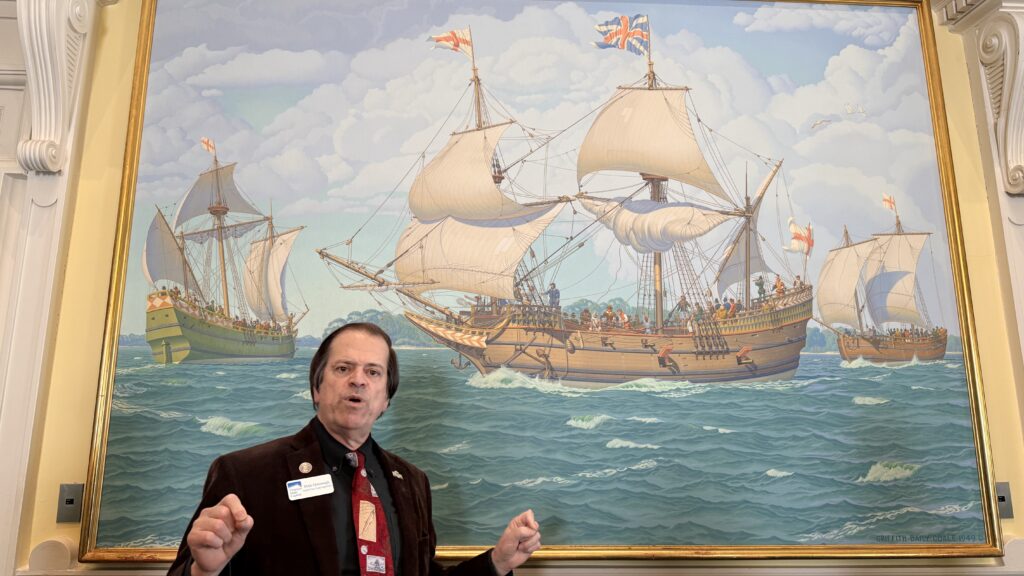
Mark was his name, and talking was his game! We arrived about 15 minutes before the tour began, enough time to view the diorama — one of the coolest features we have seen in any State Capitol building thus far. Our guide told us that is a new feature, just installed about 8 weeks ago!
Mark has been a docent here for a quarter of a century; he loves it! His knowledge surpassed any tour guide we have had thus far, and that’s saying a lot. One might say he was a bit theatrical at times, refusing to respond to any question with a simple answer; each query began another five to ten minutes of storytelling, gesticulating, eyebrow raising, and quirky smiling. Tim kept watching the clock as our two-hour parking pass was nearing expiration.
The Virginia State Capitol has undergone a remarkable transformation over the years, including extensive restoration, renovation, and even expansion. The heart of the building—the central section—was originally designed in 1785 by none other than Thomas Jefferson. Interestingly, Jefferson’s original plans included the outdoor grand staircase, but it was not included in the build at the time. During the modern renovation, not only were the iconic stairs finally added, but crews also excavated the hill beneath the entrance. Now, guests arrive via an impressive underground entryway (where we started our tour), and the space above has been reimagined as a beautiful, sprawling park.
This area serves as the perfect spot for inaugurations and is also a favorite gathering place for locals to enjoy picnics on the lush grass and community celebrations around the sweeping staircase. The Capitol’s two legislative wings, home to the Senate and House, were later additions by architect Peebles, who earned the bid on the project because he was committed to honoring Jefferson’s original design, unlike other architects who wanted to leave their own stylistic marks.
The Diorama.
The tour begins at the diorama, which is underneath the Capitol as stated earlier. Pictures of Kevin Kline, Ben Kingsley, and Geena Davis were featured on the back wall due to their significant connection to the Capitol in their movies, along with George Washington, other famous politicians, prime ministers, the Queen, a bomb dog, and more. Different sections of the diorama light up, highlighting the history of the state, buildings on the Capitol complex, the four seasons, and much more. It was quite impressive!
The Contraption.
Click this link for a very fun demonstration on how an idea is formed and eventually turned into law. It’s a cool metaphor, sitting across the room from the diorama. You can see this cool Rube Goldberg-style contraption at the beginning of the tour, yet another reason to go to Virginia!
Fun Facts!
Several interesting features were noted by our docent as he lead us through the building. After the diorama he showed us this 24-square foot model, built to scale (1:48) by an architectural student from the University of Virginia named Benjamin Edlavitch. It is completely made out of Legos: 50,000 to be exact! It took him about six months to complete, and he only used pieces that were available for retail purchases. If you would like to take a stab at it, you could build one of these too!
Front of the building.The back of the model is dollhouse style, including LEGO people dressed to look like various real-life politicians.
The inside of an old elevator shaft was uncovered during the renovation. If you ever wanted to know something about the government, you would ask the elevator operator. The elevator had to be manually operated, making him privy to many political discussions on both sides of the political continuum, listening intently while going up and down from one level to another. The elevator moved so slowly, people could walk up the stairs and continue their discussions with those on the inside.
Thomas Jefferson Bronze Statue.
The original architect, who also decided to build the State Capitol on the Shockoe Hilltop. Our guide had a lot to say aboutThomas Jefferson’s bronze statue, of which I can’t remember much. I do recall Jefferson said architecture was his delight; he had a love for design. He was serving as the State Minister to France, in Paris, when he designed the building. While he was there, he was thrilled to discover graph paper! He is holding one of his drawings of the building in his hands.
I remember the thrill of drawing on graph paper as a fifth grader, and my teacher telling me I could be an architect. What would my life be like today if I had listened to her?!
After this we made our way up the winding staircase to the (former) main entrance.
George Washington Marble Statue.
The remarkable life-size statue of George Washington was sculpted by Jean-Antoine Houdon from Carrara marble—the very same exquisite stone that Michelangelo chose for his masterpieces. The lifelike detail is truly striking; his face is rendered so realistically that it almost feels like his eyes are following you across the room. His contemporaries confirmed it looks just like him. There’s even a special touch with subtle light behind the eyes (don’t ask me how Houdon did it!), making it seem as if Washington is gazing right through you if you could step in for a closer look. Maybe his nickname should be “Houdini.”
The sculptor thoughtfully showcased both the military and civilian sides of George Washington’s life in this statue. You’ll notice his sword resting at his hip, while his left hand is placed atop a fasces—a bundle of rods that represents authority in ancient Rome. Yet, he’s also carrying a simple walking cane in his right hand, and standing beside a plow, highlighting his role as a citizen and farmer in addition to his military achievements.
I love the detail of this sculpture, from all angles!
Fun Fact
The Statue of George Washington is the only statue to be sculpted “from life,” e.g. while George was sitting for it. Thomas Jefferson planned for it to be in that exact location, as we saw on his original drawings. He even hired the sculptor in advance. Apparently, the sculptor placed a plaster cast on George’s face and left it there while Washington breathed through two straws until the plaster was set. The sculptor wanted to ensure he had a proper mold for the face to make it as realistic as possible. The Smithsonian asked if they could borrow this sculpture for an exhibit one time, and the State Capitol said, “um, no!” (paraphrased by Mark, our tour guide).
Rotunda and Dome.
The heart of the Capitol features the Rotunda, a spacious two-story area topped with a dome that spans about 30 feet across. Natural light pours in from the skylights above, creating a bright and airy atmosphere. Interestingly, the dome was built under the slope of the gable roof, so you can’t view it from outside the building.
The Capitol’s dome was completed in 1794, yet Thomas Jefferson’s earliest descriptions of the central area never mention a dome. He referred to it as the “conference room.” It’s unclear if Jefferson later decided to include the dome or if it was an addition made by Samuel Dobie, the builder who oversaw the project. To this day, the origins of the dome remain a bit of a mystery. However, it was quite evident he intended for George to be placed here, as the central focal point.
Old House Chambers
This grand chamber witnessed some of Virginia’s most pivotal moments. From 1788 to 1904, it served as the meeting place for the House of Delegates, and over the years it hosted conventions that shaped both the U.S. Constitution and four constitutions for the Commonwealth. In April 1861, Virginia voted here to secede from the Union, and Robert E. Lee accepted command of Virginia’s forces in this very room. By the late 1860s, the chamber welcomed Virginia’s first elected African American Delegates—marking a new chapter in the state’s history.
Mark is talking about the most interesting of all statuary located in this room — the bronze likeness of General Robert E. Lee by Rudulph Evans (which is no longer here). The statue was placed where Lee stood on April 23, 1861, when, he accepted command of the Confederate forces in Virginia. He was 54. The statue was removed from this room in 2020.
THE MACE OF THE HOUSE OF DELEGATES
A ceremonial object symbolizing power and authority, this modern sterling silver mace with 24-karat-gold finish was made in England in 1938 and presented to the Virginia House of Delegates in 1974. When the House is in session, the Sergeant at Arms carries the mace to the House Chamber each day where it is displayed in front of the Speaker’s podium. Today the mace remains a symbol of the important political and legal traditions shared by the Commonwealth of Virginia and Great Britain.
Plaque in the old House of Delegates. This must have been before “maximum capacity” signs were born. 😱
We Met a Professional Portrait Painter!
The man in this picture is a professional portrait painter from Philadelphia, and he was in our tour group. He has been working for the past six months on the politician seen in the portrait here, and he came back today to correct a few blemishes. This is the second portrait he was commissioned to paint in this State’s Capitol. We were quite amazed at his handiwork. Awestruck, really. The oil painting looked like a photograph, even up close!
The Old Senate
The former Senate chamber is now used for occasional committee meetings; it contains paintings depicting two of the most important events in the history of the Commonwealth and of the nation. I felt honored to meet the painter behind a portrait. Since he was in our tour group, our docent had a lot to say about much of the artwork throughout the building.
This painting, completed in 1949 by Griffith Bailey Coale, represents the establishment of the first permanent English settlement in America. It showcases three ships, the Susan Constant, the Godspeed, and the Discovery, bringing the first settlers to Virginia in May 1607.
The Jefferson Room.
This room contains a large full-length portrait of Thomas Jefferson painted by George Catlin, who copied an original portrait by Thomas Sully now on display at West Point.
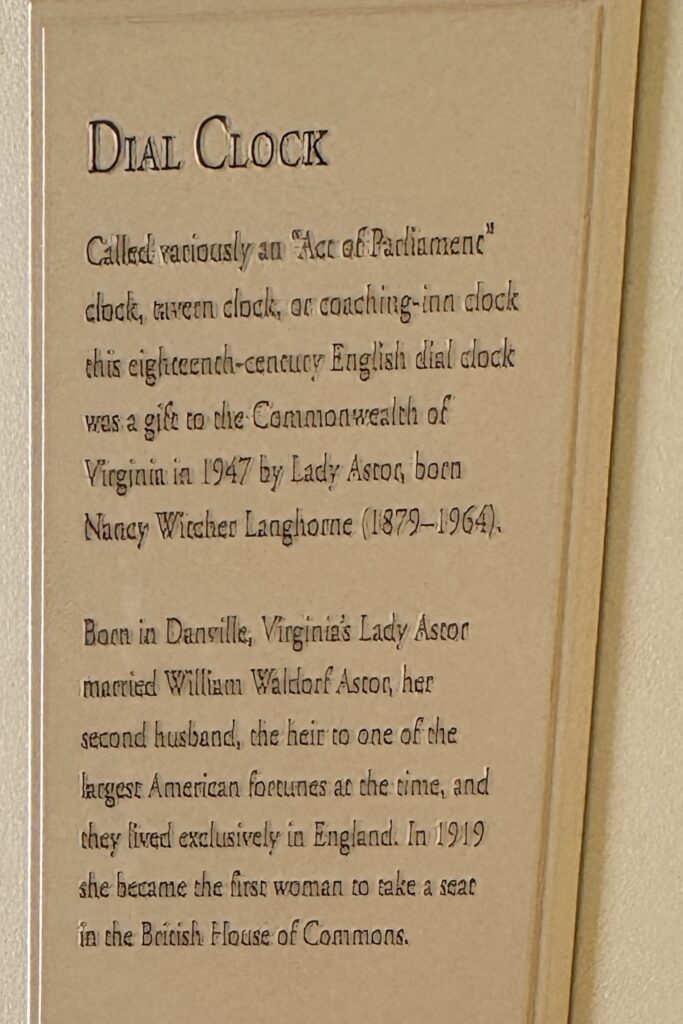
Mark also had much to say about this famous, antique dial clock. It is a 300-year-old English dial clock that must be re-cranked by hand every eight days but still keeps perfect time. The clock is one of the key historical items in the Capitol, which was designed by Thomas Jefferson and stands as a major landmark of Virginia architecture.
Mark is in charge of winding it up, which he does at the same time and day every week. I knew he was wound up for a reason! The plaque tells us more.
Senate and House Chambers.
The current Senate and House Chambers were locked, but the guide did have a key to let us in. He didn’t have a lot to say about those, and it seemed more like an afterthought than a main event of the tour, due to the rich and lengthy history found elsewhere.
House of DelegatesSenate
Conclusion.
I’ll close with an interesting bit of history I found online: “Winston Churchill, Margaret Thatcher (both honorary citizens of Virginia), and President Dwight D. Eisenhower have addressed Joint Sessions of the Virginia General Assembly in the House of Delegates Chamber. In May 2007, Her Majesty Queen Elizabeth II of Great Britain addressed the Virginia General Assembly in the House Chamber.”
Tim said this capitol is probably in the top five of the ones we have seen so far. I would have to agree. With the underground tunnel addition, the stories by the best docent to date, and the grounds, we give it two-thumbs up.
I hope you enjoyed this little tour of Virginia’s State Capitol in Richmond. It would be great if you would leave a comment and let me know if there is something else (or less) you would like to know, as we have several more capitols to see before we complete our bucket list. Thanks for following my blog!
À la prochaine…hasta la próxima vez…until next time!
“I am the Lord, who heals you.” ~Exodus 15:26
My relationship with Jesus Christ motivates me to keep blogging. Though I have metastatic breast cancer*, my faith helps me survive, thrive, and feel alive while staying active. Without Him, I couldn’t achieve anything. With His help, well, my accomplishments speak for themselves on my blog. If you’re interested in learning about building a relationship with Jesus, feel free to comment below. I will never sell or share your email.
*Metastatic breast cancer is Stage IV cancer. Metastatic, or metastasis, means the cancer has spread beyond the original location (breast and immediate lymph nodes). In 2016 the doctors found significant metastasis to my bones, skull, liver, and lungs; then in 2018 to the brain. However, with chemo, immunotherapy, gamma knife, and of course my faith in the Lord, it is all undetectable at this point. I continue in treatment every three weeks via infusions, and receive multiple scans on a regular basis. If you or someone you know has metastatic breast cancer, I recommend these organizations for additional support:
Metavivor and Unite for Her (also for ovarian cancer)
Obligatory selfie. at the Virginia State Capitol in Richmond.
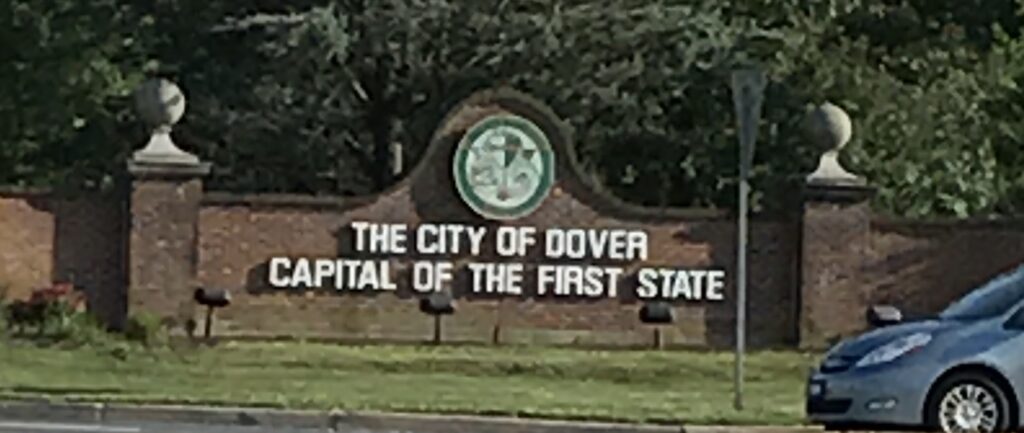
March 24, 2026, Dover Delaware and Annapolis Maryland
I thought we had already experienced the shortest capitol tour but then we went to Dover. An hour later and a long drive over the Chesapeake Bay, we whisked through the Capitol in Annapolis. Both are small Capitol buildings with neither one offering a guided tour while we were there. Needless to say, we breezed through pretty quickly, most likely missing out on some fun stories. We ended up visiting three capitols on this day, with two more planned for the next two days, so pull up your britches, sit back, and hang on for the ride!
Delaware
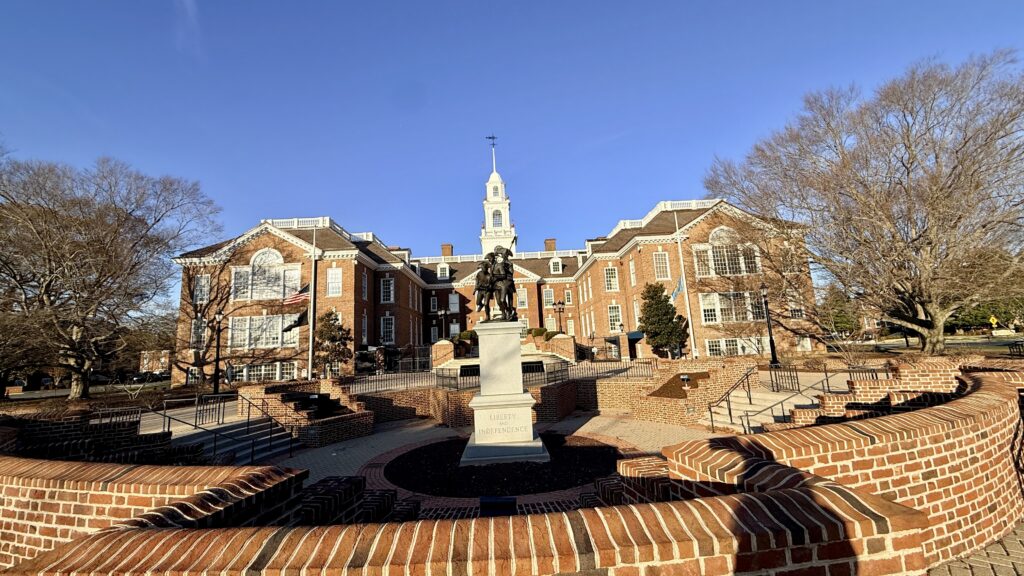
We arrived from our hotel a few minutes before the building opened at 8:00 A.M. as we had a long drive ahead. This one had the best parking of any Capitol yet, or as far as we can remember. However, we had to walk around the building to the East side to get in, and the wind was super cold in the morning!
The building had a colonial vibe from the outside. Not Greek, not Roman, or anything fancy, although they do have a spire with a dome. The building looked like it “fit” Delaware, the first state in the Union. A Revolutionary War monument presides over the front of the building.
The security guard stamped our passport, then pointed us to the slick brochures to start our self-guided tour. Tim was our designated tour guide. They have one of the biggest brochures, or booklet we should say, of the smaller states we have visited. Then again, they included a bunch of legislative pages in case you want to propose a bill.
After passing through security, the grand staircase is immediately in front of you, and we also noticed the Senate and House directly to the right and left of us. Not upstairs (the gallery is up there). Not down a lengthy hallway. Just a few steps away and you are in the Chambers. Like I said, small building!
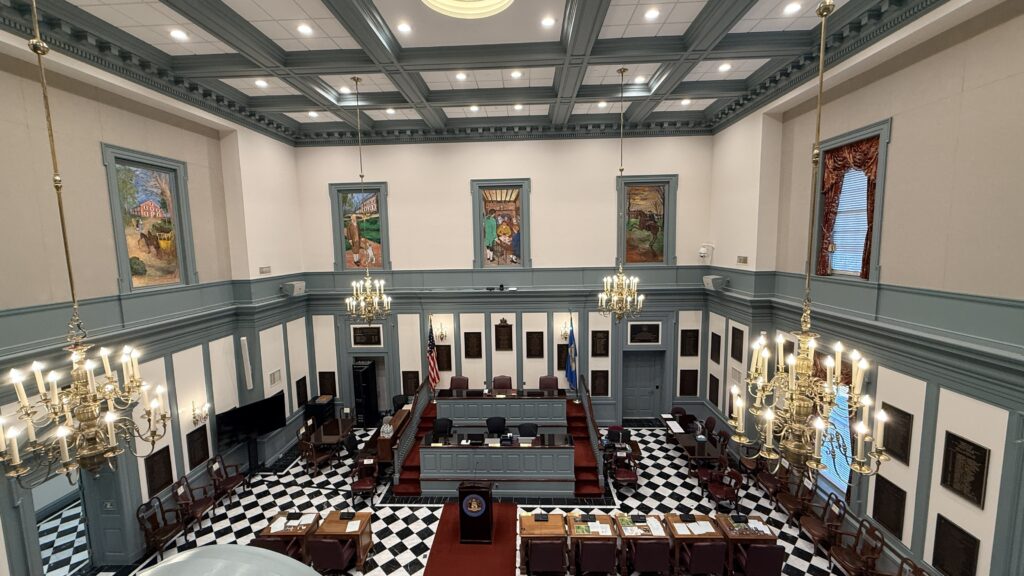
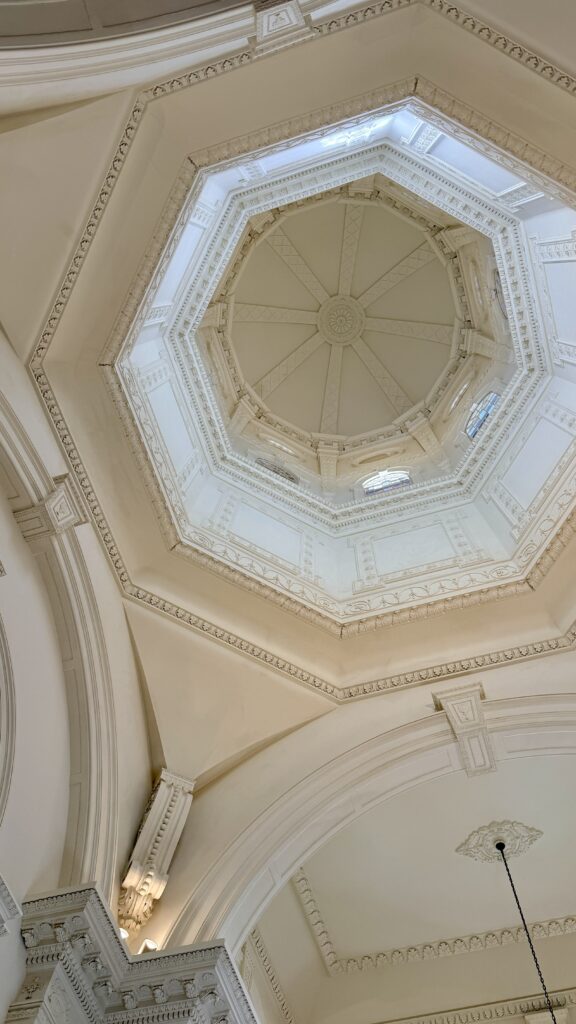
Grand Staircase – the nicest part of the building. I’m doing the “Michael Jackson” thing LOL. Yes, it was cold out. The rotunda is surrounded by pictures of former governors. I didn’t get a picture of the rotunda. Is there one?SenateHouseSenate Gallery viewHouse Gallery view
Each of the Chambers have five murals, which Tim read about from the brochure descriptions. That was probably the most interesting piece in the building. Here’s a sample.
Perhaps it was the missing tour guide, or maybe we were tired from the early morning start, but we both left this Capitol feeling a bit underwhelmed. On the upside, we did get that 35th stamp!
On another note, in 1933 the building we toured in Dover replaced the original one, which still stands! Here’s a picture of the old state house, located in the First State National Historic Park, worthy of a drive-through visit.
The Old State House, on The Dover Green (NHP). This building served as the state capitol from 1791 to 1933.
Maryland
Maryland State Capitol, Annapolis MD. Notice the cherry trees in bloom! Unwittingly, we timed this one just right.
After leaving Dover, we crossed over the Chesapeake Bay on quite a long bridge to get to Annapolis. We decided to visit these two capitols on this particular road trip because you really have to plan ahead to go there; they aren’t on any typical drive path. We didn’t make it when we were pulling the Airstream collecting all the New England states, so this road trip in the Santa Fe was as good as any.
After going down the tiny roads around the Maryland State House, we were so glad we didn’t pull our Classy Girl behind us!
Two school buses blocked the one-way street in front of the Capitol, while letting off large groups of students. Unfortunately, we ran into those students throughout the tiny building — many times. The upside was hearing the docent telling their group some of the stories while we meandered through the various rooms. However, we missed several statues and paintings due to student obstruction.
One inside, security will kindly stamp your passport in this Capitol. State #36 in our book! Picture ID is mandatory to get in. Visitor stickers are also required.
Rotunda
Unlike the building in Dover, this one has a rotunda beneath the dome. At first it seemed a bit prosaic when we looked up, but then we read the following from the brochure.
The rotunda is the space below the dome and is the center of the 18th-century State House, built between 1772–79. The dome was added to the building between 1785–94.
Under the dome is the case displaying George Washington’s personal copy of the speech he gave resigning his commission as commander-in-chief of the Continental Army in the Old Senate Chamber on December 23, 1783.
Considered by historians to be the fourth most important document in American history, Washington’s resignation from power set the important precedent of the military being under civilian authority.
Fun Fact
This the largest wooden dome of its kind in North America, built entirely without nails!
Uh, yeah, that increased our wow factor for sure. You would be impressed as well.
This is the old Senate Chamber. It is restored to its original beauty, and a statue of George Washington stands in the same spot where he gave his resignation speech.
This is a picture of the original document which they have on display beneath the rotunda. The penmanship is so beautiful!
We really wanted to go up there! One school class took their picture here. Barriers didn’t keep them off the stairs! 🤪😂
These internal staircases contain a lot of American history, with photos.
This staircase tells the story of the visitors who came to the capitol, and what they accomplished.
The State House Caucus Room
Okay, I admit. This is quite impressive. In the State House Caucus Room there is a large display of The USS Maryland Silver Service. The brochure tells more of the story behind the stories hammered into the silver. The set was partially paid for by money raised by Maryland school children for the cruiser USS Maryland in 1906.
“This service was a tour-de-force for Samuel Kirk & Son Co., Inc. of Baltimore, and each piece is decorated using the firm’s famous repoussé technique of hammering designs onto the pieces from the reverse side. More than thirty artisans worked on the service for six months. Each of the 167 scenes was meticulously researched, and Kirk’s artisans relied on drawings, photographs, and published sources for accuracy” From the Brochure.
House and Senate Chambers
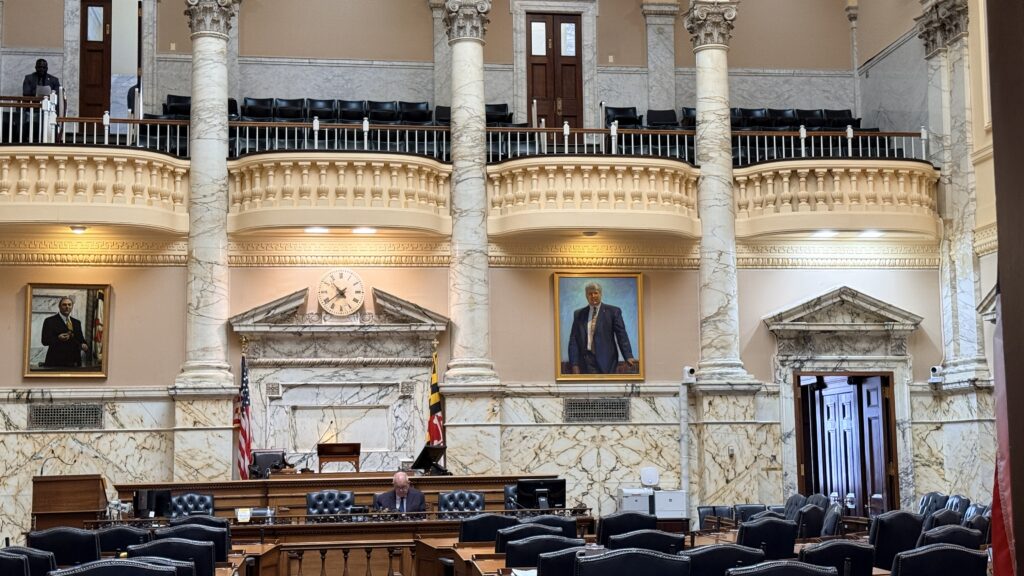
Legislature was in session while we were there, so we could only peek into the current chambers for a moment to take a quick picture.
Senate Chambers, in session.House Chambers, in session.
A Few Fun Facts
Breath-taking ornamental cherry trees in full bloom in front of the Capitol. My favorite part!
The dome is the largest wooden dome of its kind in North America, built entirely without nails!
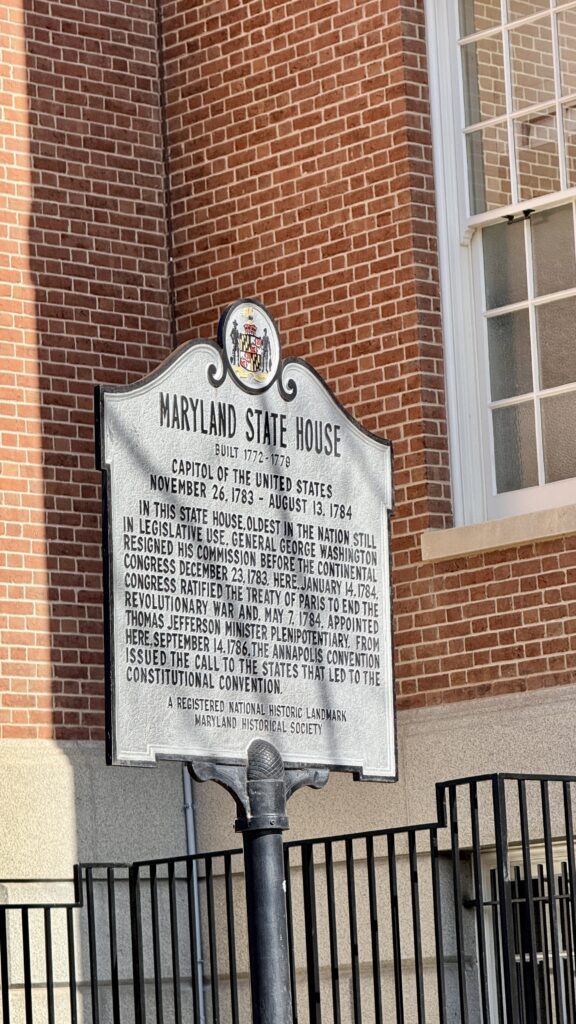
The only statehouse to have served as the nation’s capitol (see left).
The oldest statehouse in America still in continuous legislative use.
George Washington resigned here, and his original resignation letter is on display inside the rotunda.
À la prochaine…hasta la próxima vez…until next time!
“I am the Lord, who heals you.” ~Exodus 15:26
My relationship with Jesus Christ motivates me to keep blogging. Though I have metastatic breast cancer*, my faith helps me survive, thrive, and feel alive while staying active. Without Him, I couldn’t achieve anything. With His help, well, my accomplishments speak for themselves on my blog. If you’re interested in learning about building a relationship with Jesus, feel free to comment below. I will never sell or share your email.
*Metastatic breast cancer is Stage IV cancer. Metastatic, or metastasis, means the cancer has spread beyond the original location (breast and immediate lymph nodes). In 2016 the doctors found significant metastasis to my bones, skull, liver, and lungs; then in 2018 to the brain. However, with chemo, immunotherapy, gamma knife, and of course my faith in the Lord, it is all undetectable at this point. I continue in treatment every three weeks via infusions, and receive multiple scans on a regular basis. If you or someone you know has metastatic breast cancer, I recommend these organizations for additional support:
Metavivor and Unite for Her (also for ovarian cancer)
October 6, 2025. Nashville Tennessee State Capitol
Finally, a city where one might expect it to be a state capitol (haha). We visited the Tennessee State Capitol on this 551st day of our full-time Airstream journey.
The cornerstone was laid on July 4, 1845, but the building was not completed until 14 years later in 1859. The building is designed in the Greek revival architectural style, with a Cupola typical of that style. Therefore, it has no dome or rotunda as we see in the Roman style.
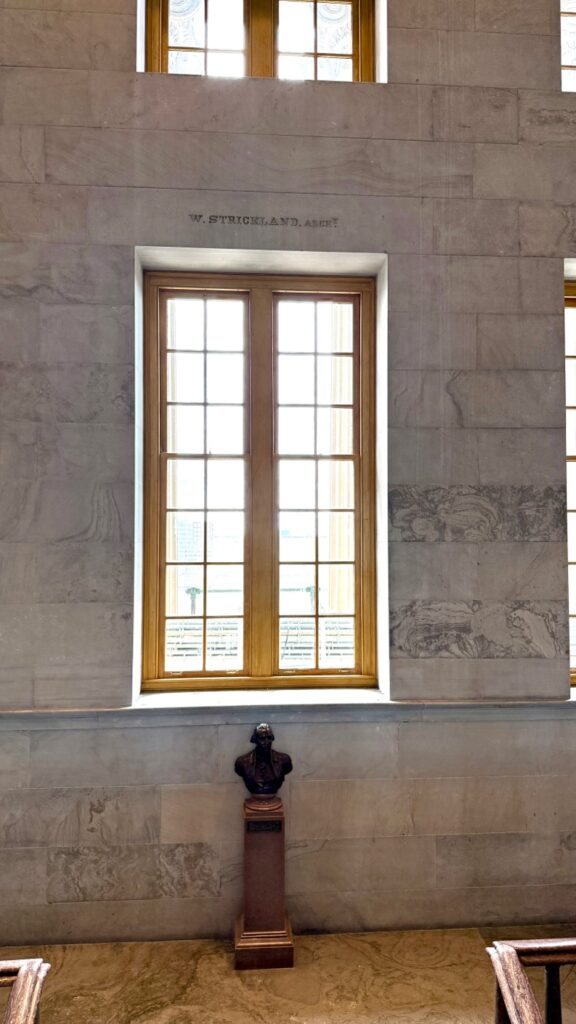
William Strickland was the first architect on the Capitol; he also built the downtown Presbyterian church, which he designed in Egyptian style. You can see some of that influence on the inside of this building as well.
Our tour guide Hannah was a great teacher, entertainer, and seemed to really enjoy interacting with the crowd. She told us Nashville became known as the “Athens of the south” due to all the schools and learning surrounding the city. Each of the blocks of limestone that makes up this wall weighs four to six tons. The limestone came from a local quarry. The walls are several feet thick, heavy load bearing, and the floor is made of marble. The Capitol has withstood several tornadoes throughout the years.
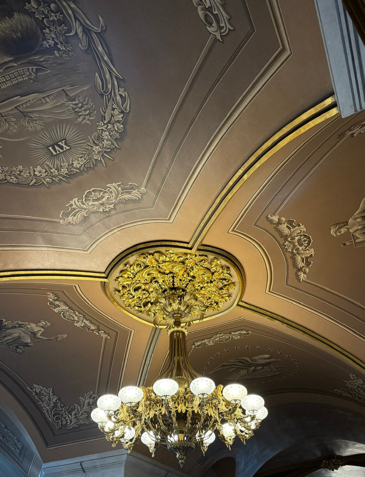
Fifteen enslaved men worked here. They were hired out for a year. All 15 reached emancipation later. The second group of workers consisted of prisoners. They were responsible for digging stone and moving it. A third group of Irish and German Immigrants were stonecutters and painters who painted frescos on the ceiling. The frescos got dirty from gas lamps and cigars, and they whitewashed over the frescos. Many years later, during restoration, they found the frescos under the whitewash and refurbished them. Sadly, I can’t find my pictures of the frescos.
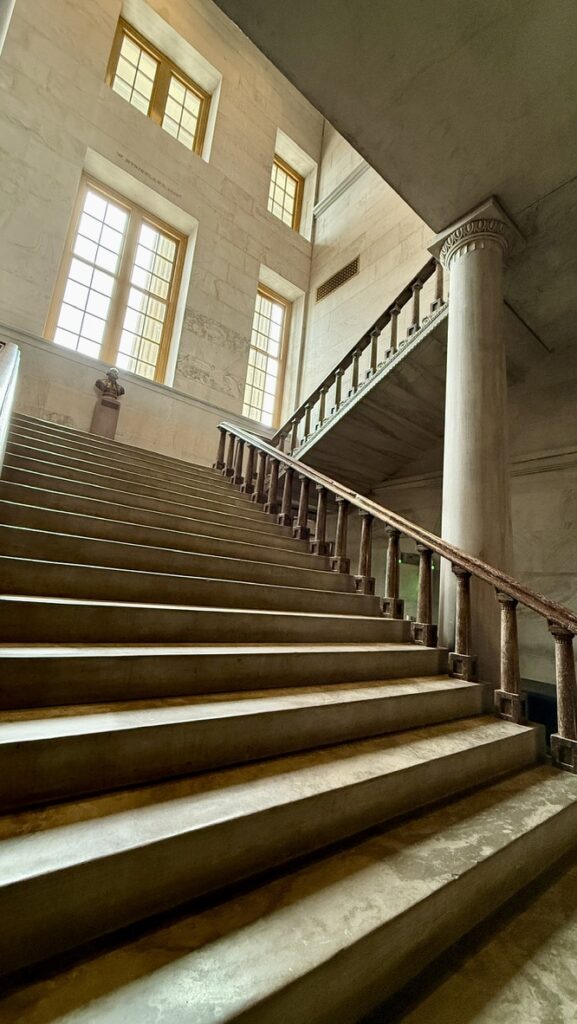
Unlike some Capitol buildings with rotundas, you won’t find an elaborate staircase here. Instead, the staircase highlights marble flooring and an intriguing tale. A chip in the handrail is said to have been caused by a bullet shot from above during a heated dispute over the 14th Amendment in 1866.
Old Supreme Court
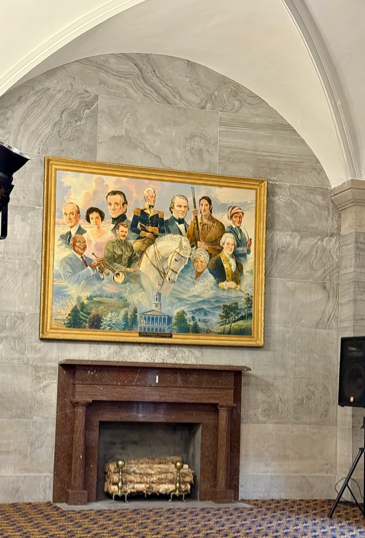
The Old Supreme Court Room, located on the first floor of the Tennessee State Capitol in Nashville, features a prominent 6′ x 8′ oil painting titled “The Pride of Tennessee.
The painting features eleven Tennesseeans notable for their unique contributions to the state and to the nation. Andrew Jackson’s horse is my favorite.
Fun fact…This is the only Capitol building to have someone buried in the wall. The architect (Strickland) didn’t want to leave, and because he felt this was his grandest achievement he made plans to be buried on the Northeast end. He died before the project was finished and was buried in the Capitol after his wishes. The second architect got the same honor, as he didn’t want to be outdone by his predecessor. He was buried in the wall on the southeast end.
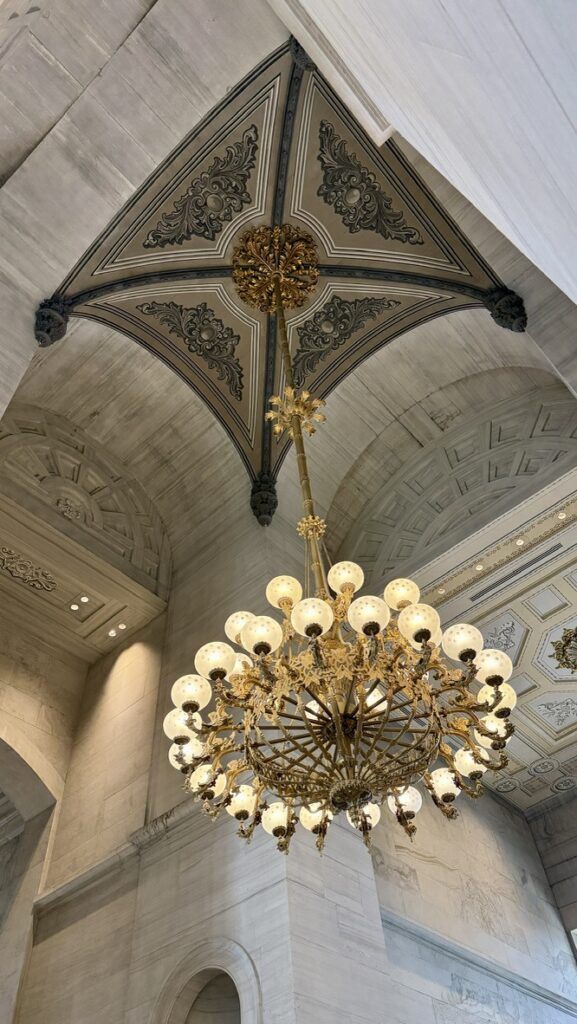
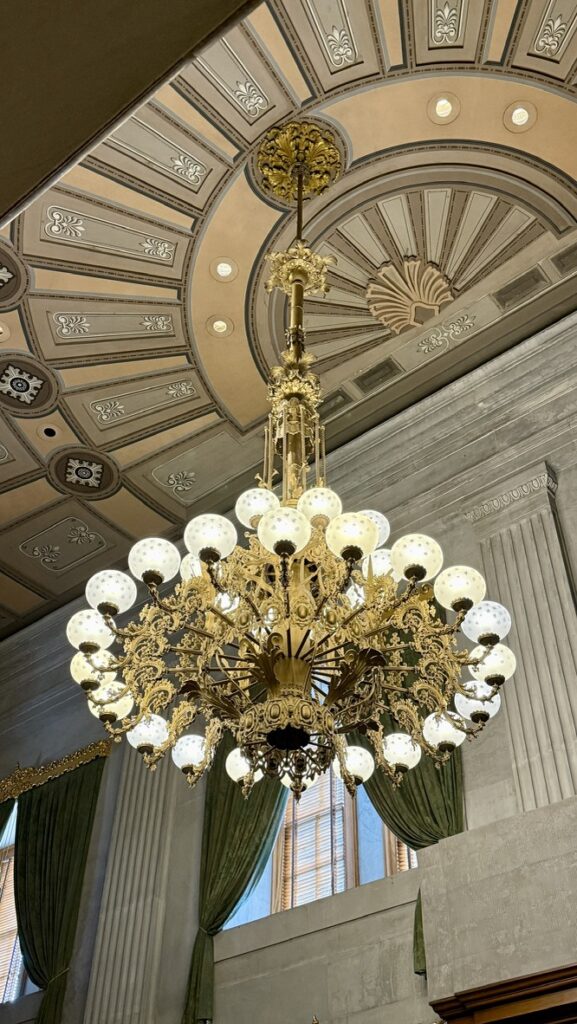
They had gasoliers versus chandeliers throughout the building until late 1880s when they installed electricity. The original chandeliers still hang in the hallways and chambers, except for one in the center of the House, which I’ll tell you about in a minute.
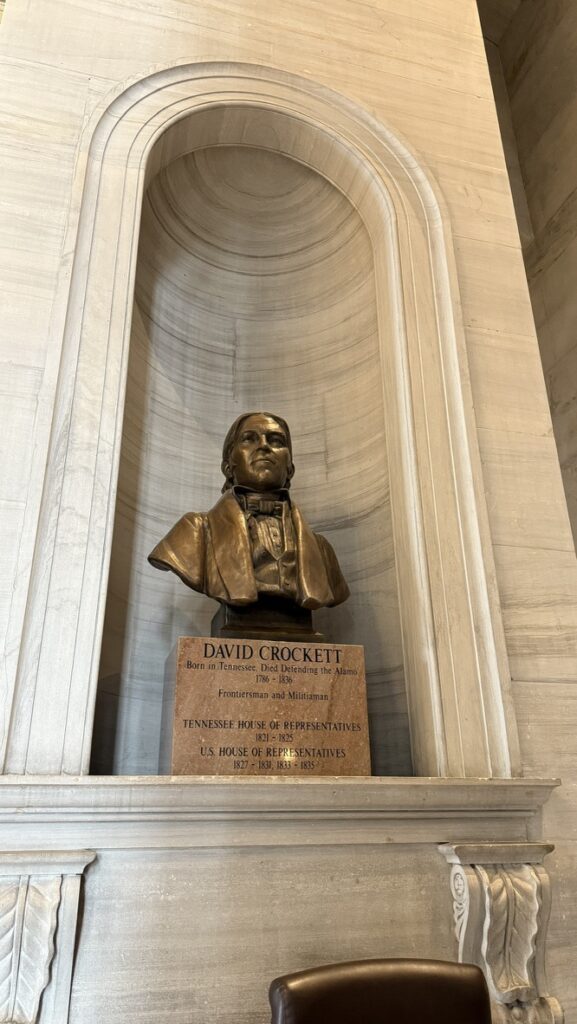
Davy Crockett was born in Tennessee. Of course, he’s also famous in Texas. Remember the Alamo.
House of Representatives
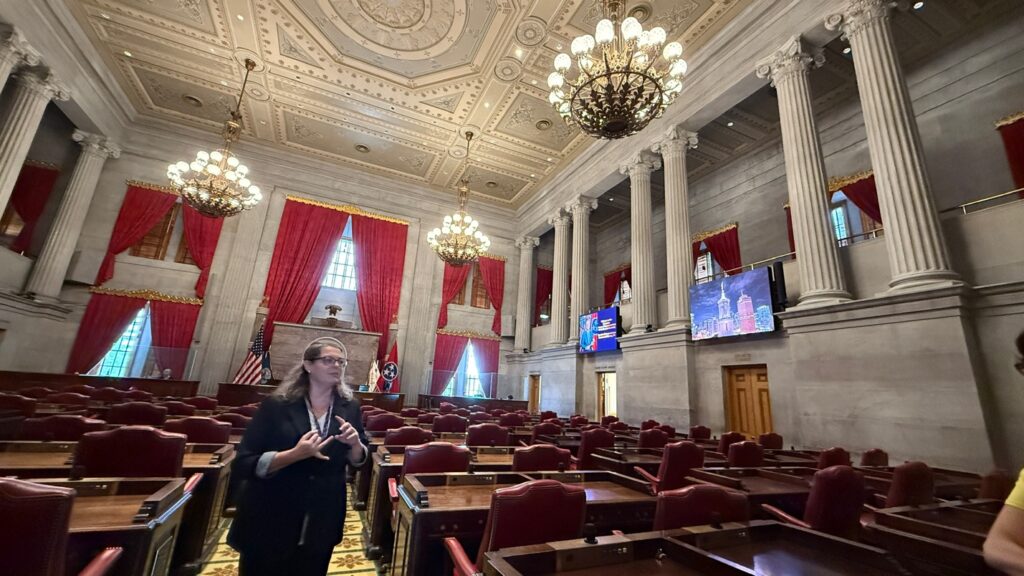
The House of Representatives was our tour guide’s favorite room because of the following story about the 19th Amendment (remember which one it is?), which she told so eloquently. Here’s a recap of the story…
The House Chambers has 16 columns, because Tennessee was the 16th state.
Multiple unrelated historical events in Tennessee have been called the “War of the Roses,” borrowing the name from the 15th-century English dynastic conflict. The most notable instances in Tennessee occurred during the 1886 gubernatorial race and the state’s ratification of the 19th Amendment in 1920.
The 1920 Women’s Suffrage “War of the Roses” was the dramatic final battle over the ratification of the 19th Amendment, which gave women the right to vote.
The conflict took place in Nashville in August 1920, with supporters of the amendment wearing yellow roses and opponents wearing red ones.
With 35 states having already ratified the amendment, Tennessee’s vote was the last one needed for it to become law nationwide.
The vote in the state House of Representatives was tied 48–48. The stalemate was eventually broken by 24-year-old Harry T. Burn, who had been wearing a red rose.
After receiving a letter from his mother urging him to “be a good boy” and “you know what to do,” (e.g. vote for the amendment), Burn switched his vote to “aye,” making Tennessee the “Perfect 36” and securing the right to vote for women across the country. After the vote, he went up into the cupola and hid from the press for four days. He was questioned and challenged, as they thought he was paid off or threatened, but his response was that he did what every man should do, “listen to his mother.”
Hannah also shared an interesting story about the original chandelier in the House, which was 14 feet wide and hung in the center (see ceiling picture below). When the windows were open, the chandelier would swing from side to side. This scared people who sat beneath it, so in the late 1800s they voted to take it down—after which they learned it was architecturally sound and would not have fallen—but it was too late as the vote was final. Getting it out the door was a challenge, and they ended up breaking it into pieces with axes. So sad, and would have been a site to see, but the historic society did recover some of the beautiful carvings that were a part of that chandelier and it’s in the Tennessee museum.
Senate Chambers
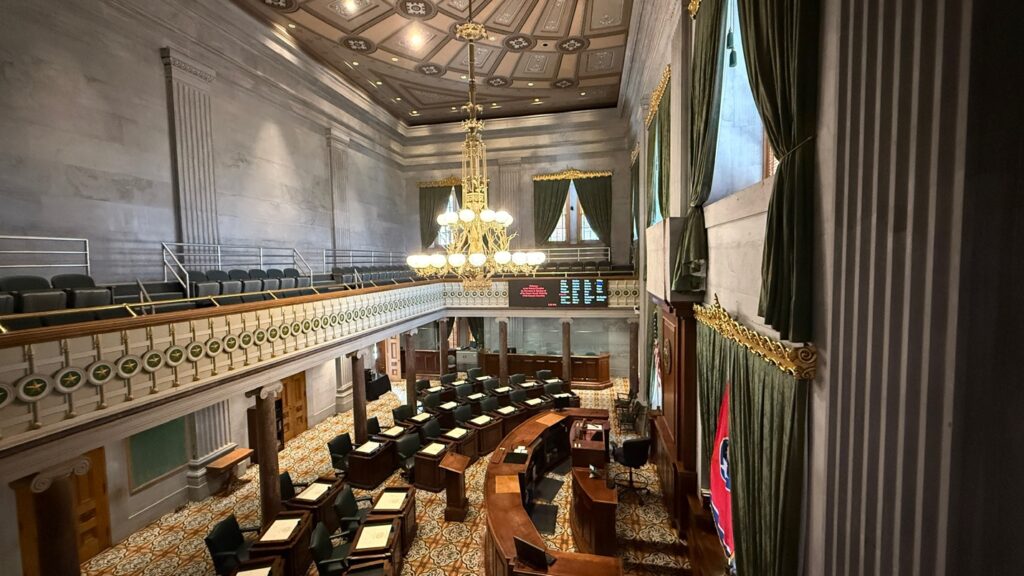
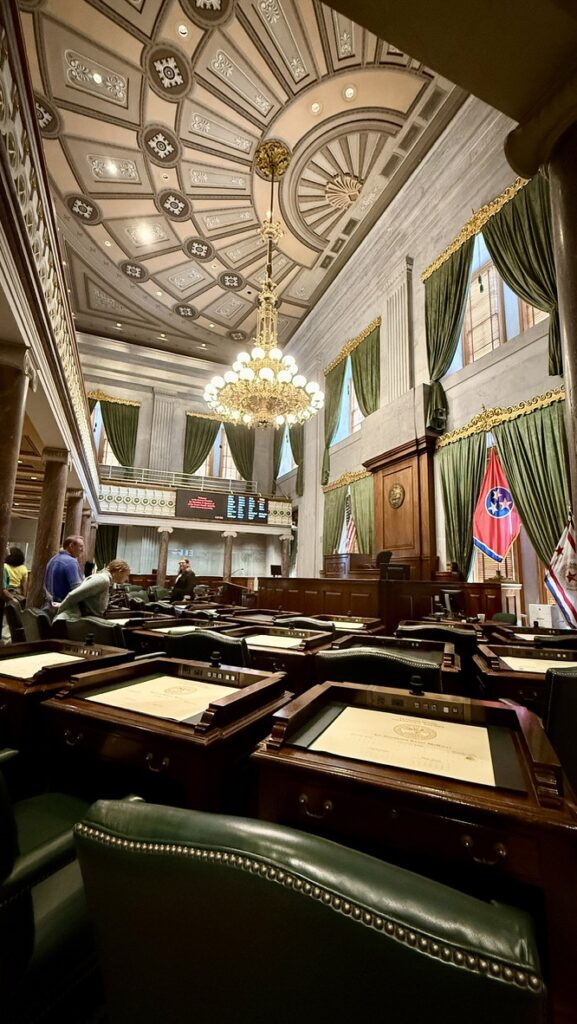
The Senate Chambers is much smaller than the House, as is typical in State Capitols. The columns are made of Tennessee limestone (a/k/a chocolate marble). You can find corn, cotton, and tobacco (three main crops) carvings in the original chandelier, which is still hanging in the chamber.
Legislative Lounge
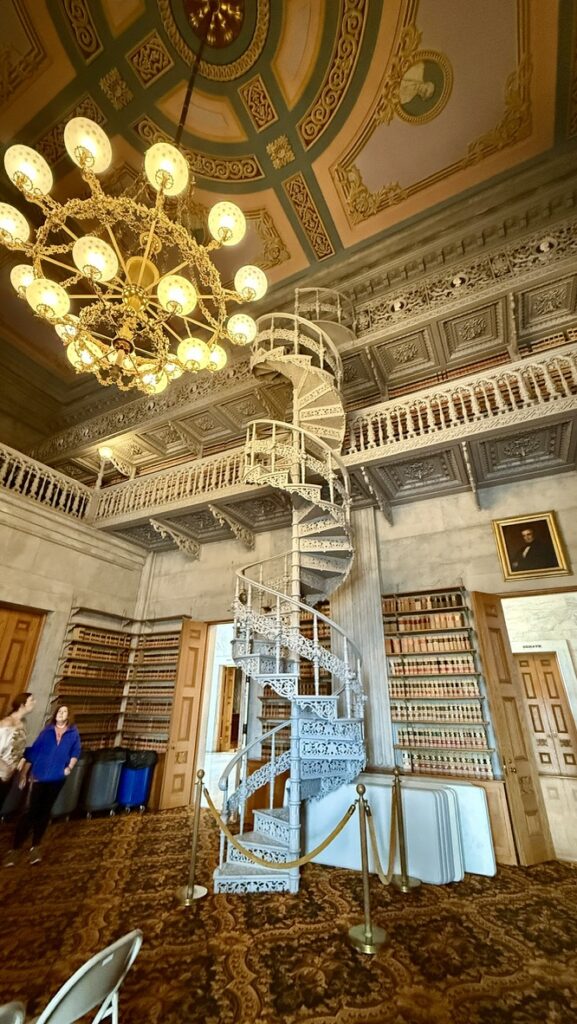
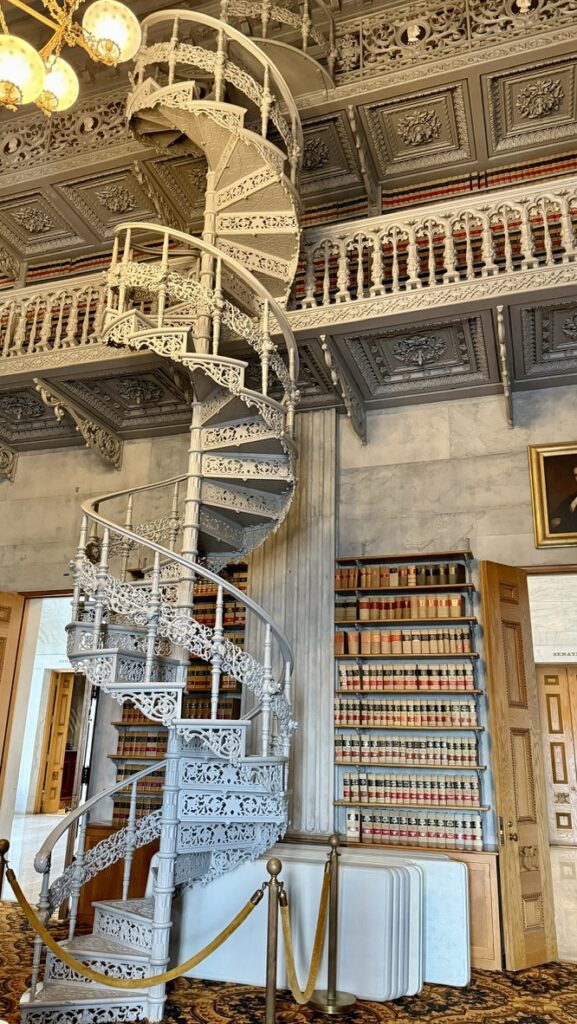
This intriguing room used to be the state library. About 250 tons of books were moved to another building across the street. This was the last room to be finished and by then Strickland was dead, so the new architect designed it in the Gothic revival style, very different from the rest of the building. It looks like something from Harry Potter! The Chandelier is original. Its design contains elements of the purple passionflower, which is the state wildflower and native to Tennessee.
Sequoyah Bust
Sequoyah was a Cherokee, which of course was interesting to me since my great-grandmother was a Cherokee. I love the story about him developing the Cherokee syllabary. Here’s Hannah telling us the story in a 3-minute video, if you’d like to hear more of the history. Or you can read the plaque below for brevity.
The plaque says, SEQUOYAH, Griffin Chiles, Sculptor, 1994, Bronze
Sequoyah, or George Gist, born in the late 1700s near the Cherokee town of Tuskegee in present-day Monroe County, invented the first form of written communication for his people. Comprised of 85 characters, each representing a syllable of the spoken language, Sequoyah’s syllabary was adopted in 1821 and widely used by 1823 among the people of the Cherokee Nation. Sequoyah died in August 1843 near San Fernando, Tamaulipas, Mexico, while seeking a band of Cherokee he thought had migrated to the Southwest.
Capitol Grounds
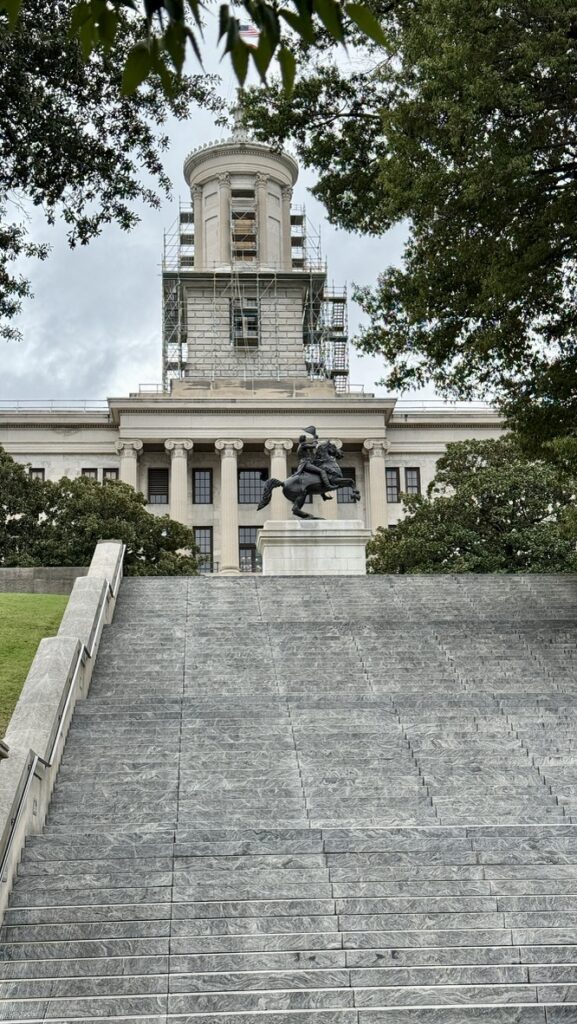
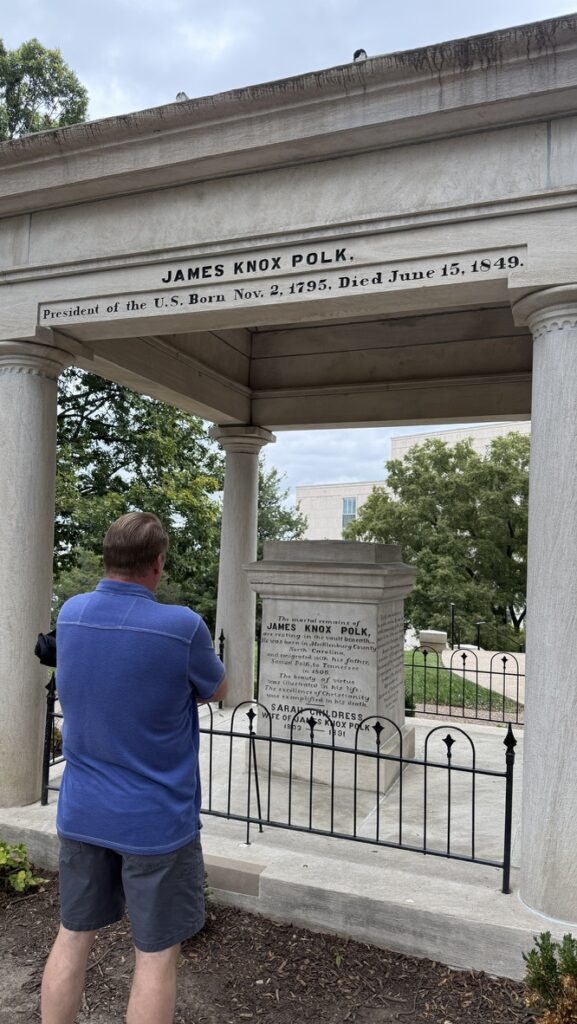
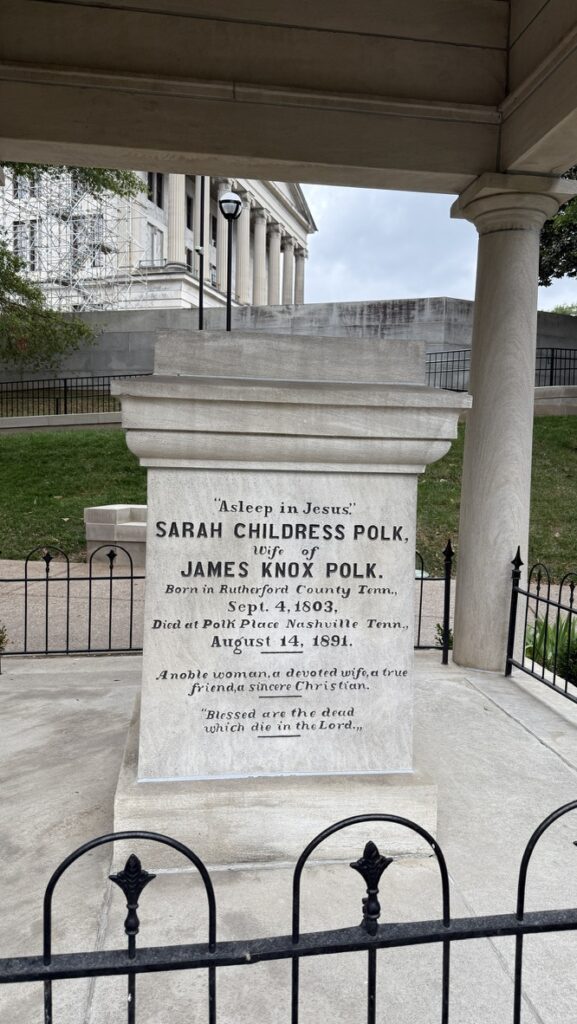
A walk around outside is pleasant on a day like today. There are several monuments, markers, and statues to see outside as well. An equestrian statue of Andrew Jackson, statues of Andrew Johnson and Sergeant York, and the tomb of President James K. Polk and his wife are just a few. Polk and his wife Sarah are buried on the property, underneath a beautiful monument. His body had to be moved several times after his death before its final resting place here. He moved to Nashville after he left office where he planned to live out his life. Sadly, they were battling a cholera outbreak in Tennessee, which he died of just three months later.
I love the inscriptions on Sarah’s grave, “Asleep in Jesus” and “Blessed are the dead which die in the Lord.” It’s so comforting to know when your loved ones die they are going into the arms of Jesus.
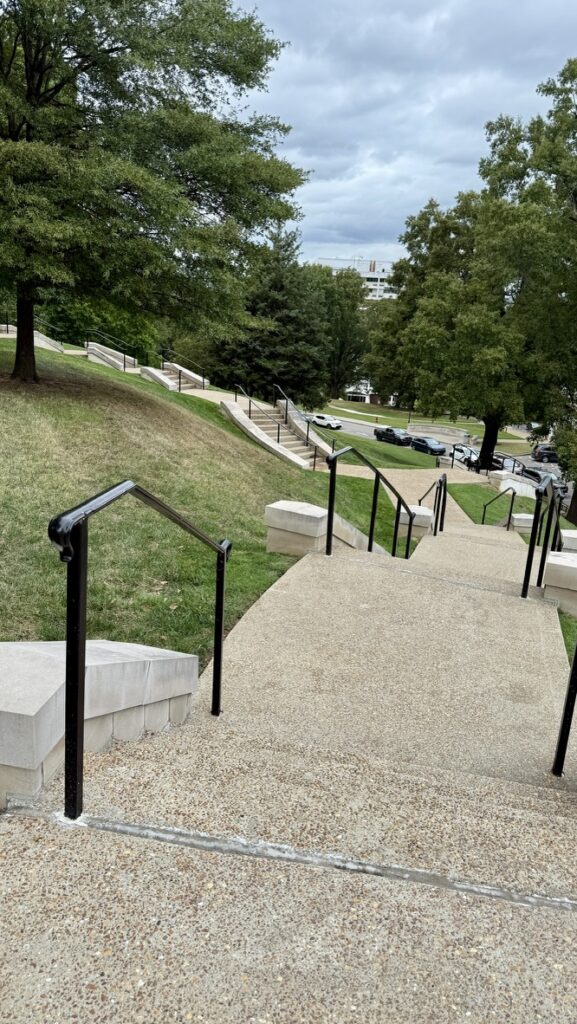
Heading back to the truck. There is a way to get to the Capitol without climbing all these stairs, as they have dug a tunnel for ADA access with elevators, but we didn’t know it sits on the highest hill in downtown Nashville when we started walking there from our parking spot. 🥴 The Tennessee State Capitol is built on Cedar Knob, a prominent elevation overlooking the Cumberland River. The site was selected in the 1840s to ensure a commanding view of the city. The first Catholic Church was originally built here and had to be demolished to make room for the Capitol (there’s a marker on the Capitol grounds where it stood). There is no private parking for the Tennessee State Capitol. During the week, visitors must park in paid lots or at street parking meters.
I hope you enjoyed this little tour of Tennessee’s State Capitol in Nashville. It would be great if you would leave a comment and let me know if there is something else (of less) you would like to know, as we have several more capitols to see before we complete our bucket list. Thanks for following my blog!
À la prochaine…hasta la próxima vez…until next time!
“I am the Lord, who heals you.” ~Exodus 15:26
My relationship with Jesus Christ motivates me to keep blogging. Though I have metastatic breast cancer*, my faith helps me survive, thrive, and feel alive while staying active. Without Him, I couldn’t achieve anything. With His help, well, my accomplishments speak for themselves on my blog. If you’re interested in learning about building a relationship with Jesus, feel free to comment below. I will never sell or share your email.
*Metastatic breast cancer is Stage IV cancer. Metastatic, or metastasis, means the cancer has spread beyond the original location (breast and immediate lymph nodes). In 2016 the doctors found significant metastasis to my bones, skull, liver, and lungs; then in 2018 to the brain. However, with chemo, immunotherapy, gamma knife, and of course my faith in the Lord, it is all undetectable at this point. I continue in treatment every three weeks via infusions, and receive multiple scans on a regular basis. If you or someone you know has metastatic breast cancer, I recommend these organizations for additional support:
Metavivor and Unite for Her (also for ovarian cancer)
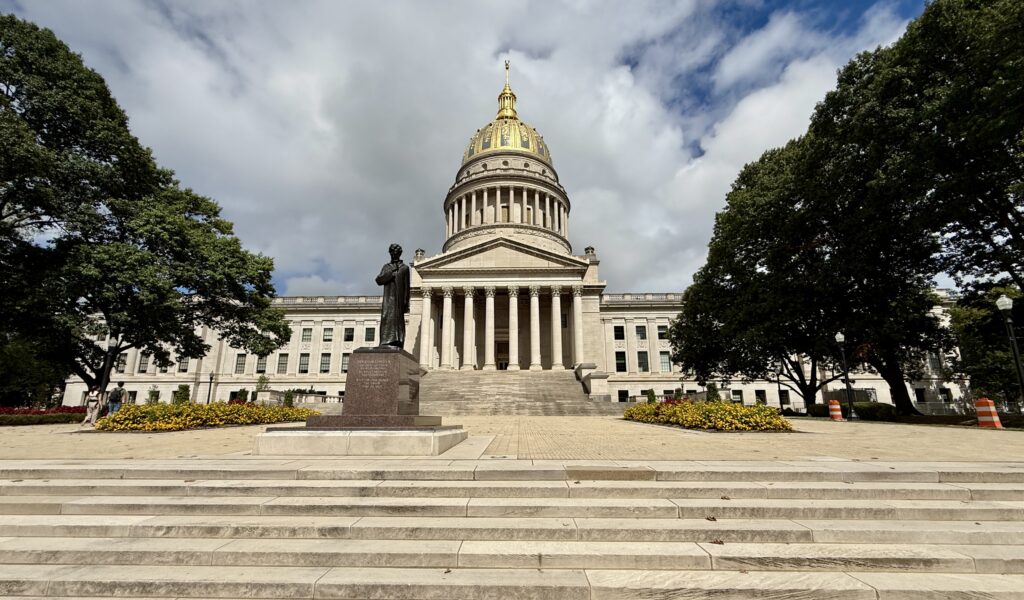
Fun fact: Abraham Lincoln played a big part in West Virginia becoming a state, so you’ll spot his statue and portraits all over the Capitol. See the picture above, where his status is on the steps. He’s way more visible than George Washington! The Capitol’s gold leaf dome gleams in the sun, and its architecture is pure Roman flair, all thanks to just one architect.
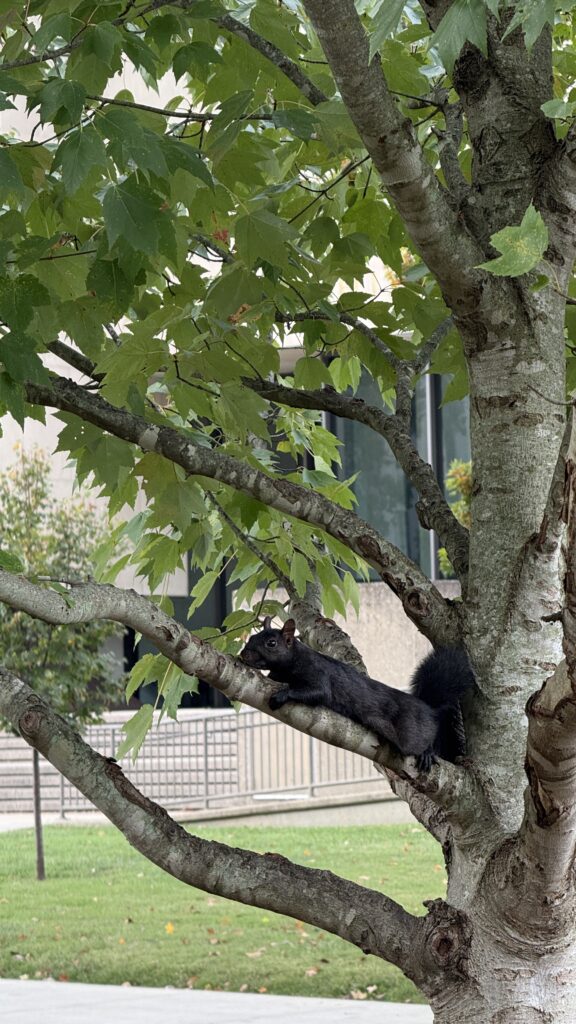
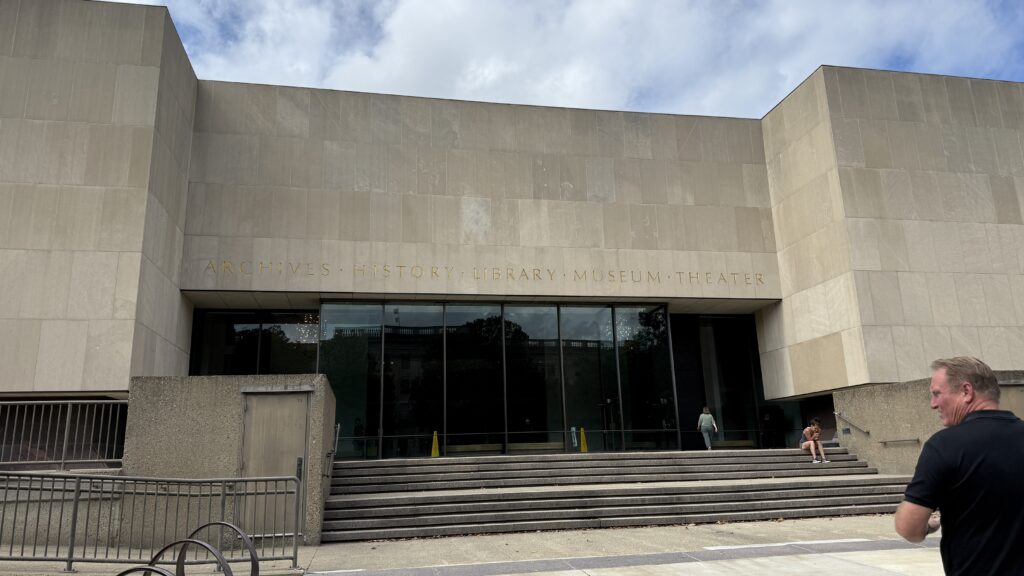
Today was an adventure packed with surprises! We zipped through one of the fastest Capitol tours ever at the West Virginia State Capitol, spotted an incredibly rare melanistic (black) eastern gray squirrel, explored the free State Museum, and later trekked around New River Gorge National Park—my exercise rings are officially conquered. In this blog are a few highlights that made the day unforgettable.
But first, let me show you where we stayed. We parked our rig in Beckley, WV, at the Coal Miner’s Exhibition. This was the first time our truck and trailer slid backwards while trying to get into a campground. It was a very steep hill, covered in wet leaves. Not a good combination! But we finally got into our very tight spot after using 4WD, and set out to enjoy the surrounding area. We were sweating bullets for that one.
House and Senate Chambers
SenateHouse
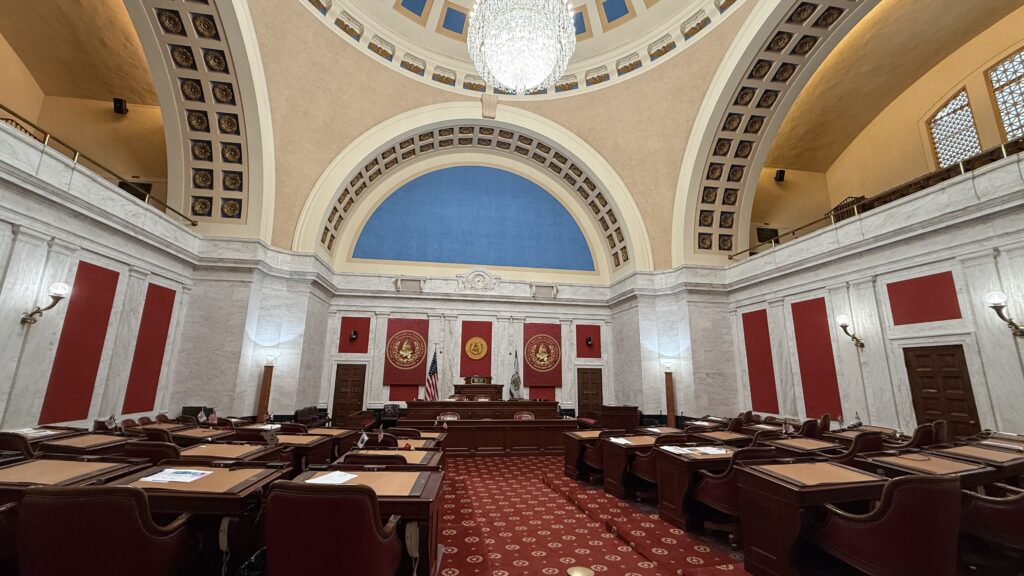
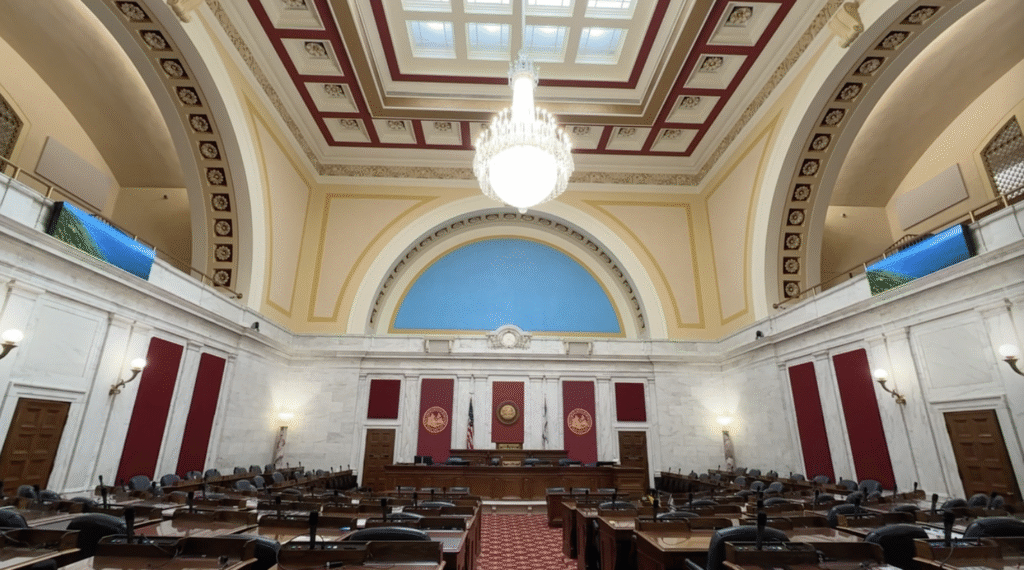
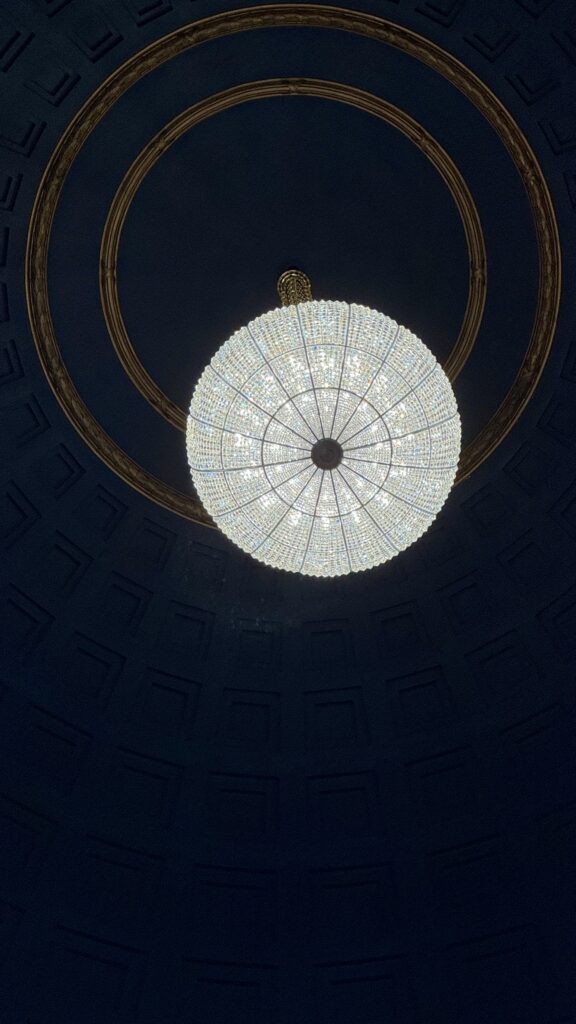
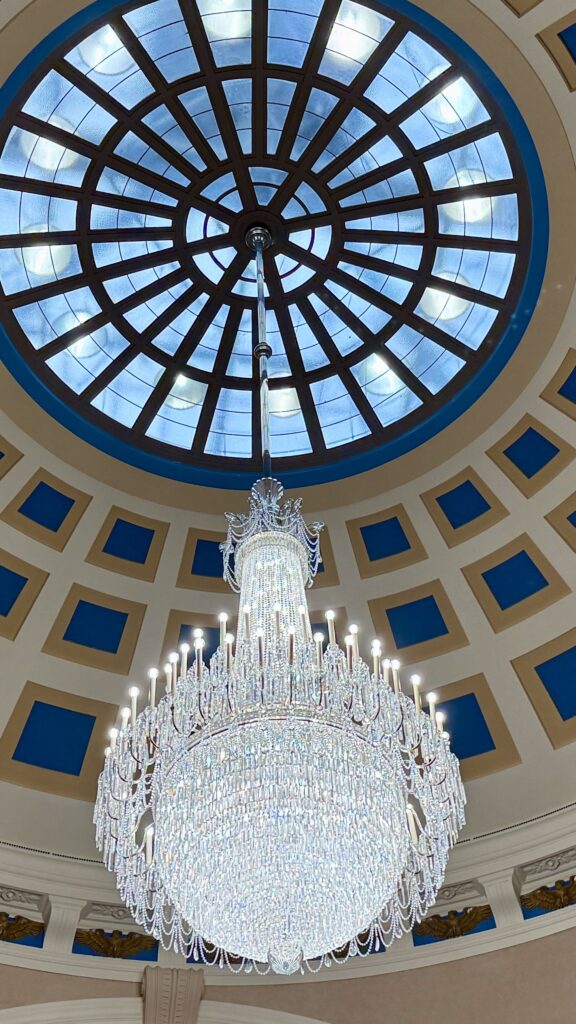
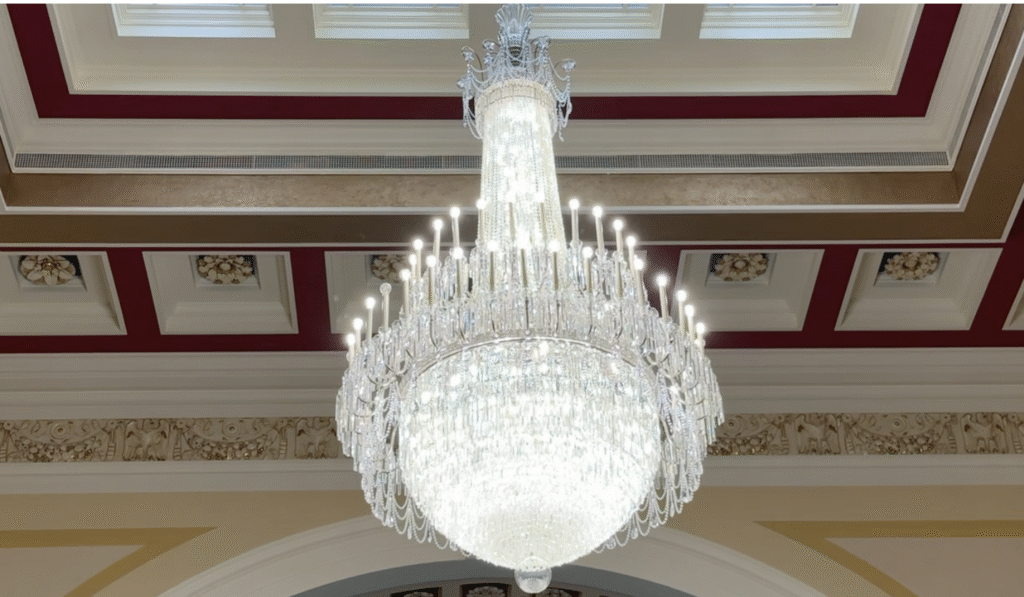
If you ask me, the real showstoppers at the Capitol are the chandeliers—each chamber sparkles with them!
Speaking of rare sights, meet the melanistic eastern gray squirrel—splooting right in front of us! Only about 1% of these squirrels are melanistic, so seeing one up close at the Capitol was a treat. Apparently, they’re local celebrities here.
The State Museum? Absolute gem! It’s free, bursting with stories, interactive exhibits, and a sprawling maze of history downstairs.
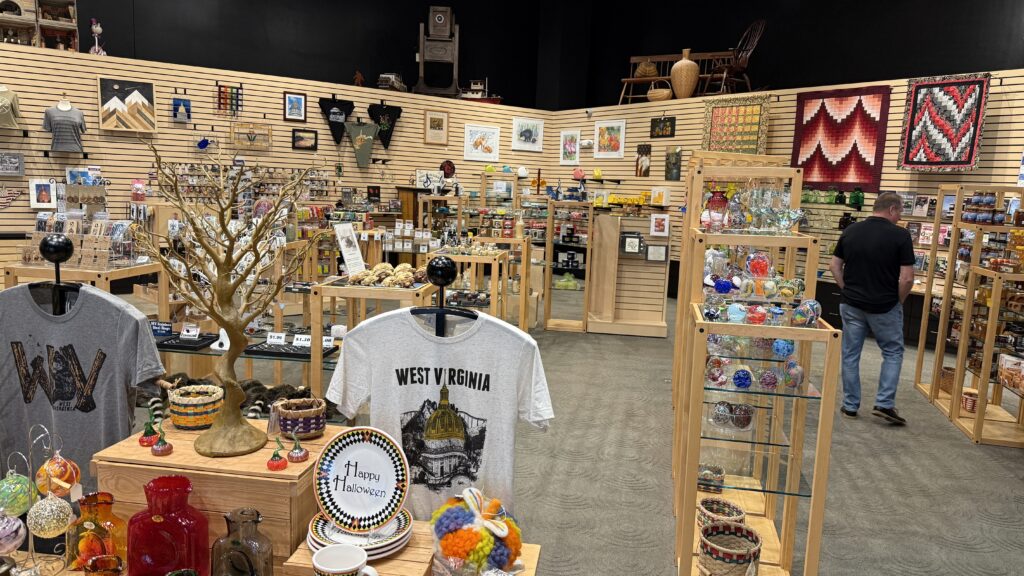
And don’t skip the gift shop—it’s one of the best we’ve seen.
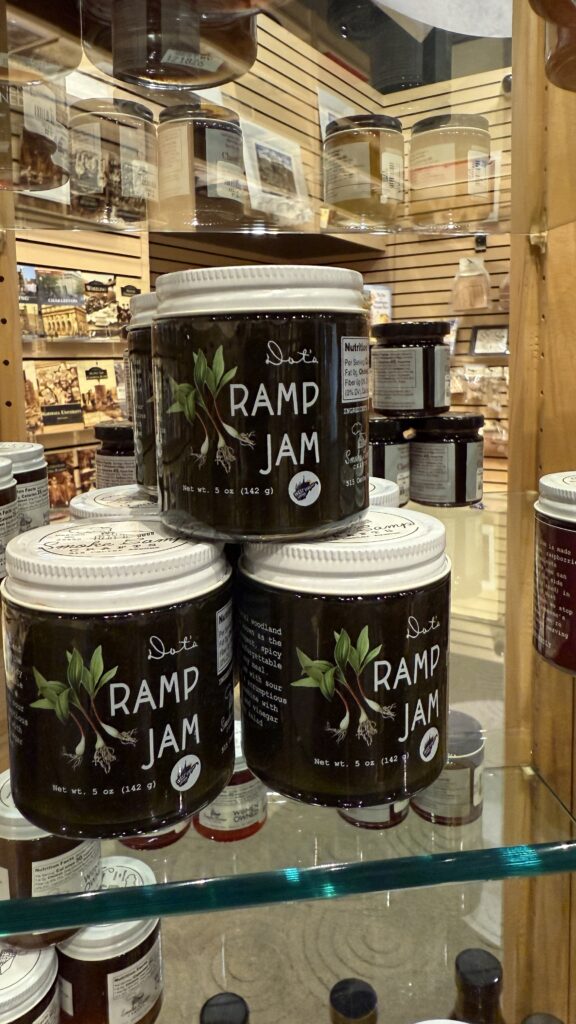
We stumbled on ramp jam for the second time—have you ever heard of ramps? They’re wild leeks famous in Appalachia, full of savory punch. Ramp jam is the star of the show: spread it on toast, dip it with cream cheese and crackers, use it as chutney for meats, or glaze veggies and grilled treats. It’ll wake up your taste buds!
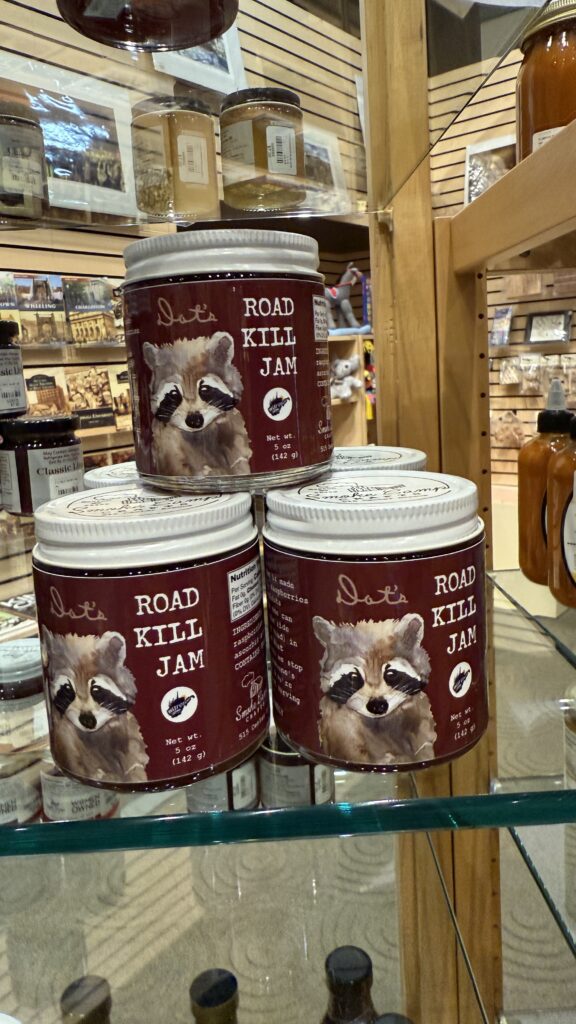
This tickled me! 😂😂
But only after I gagged a bit. 🤪🥴
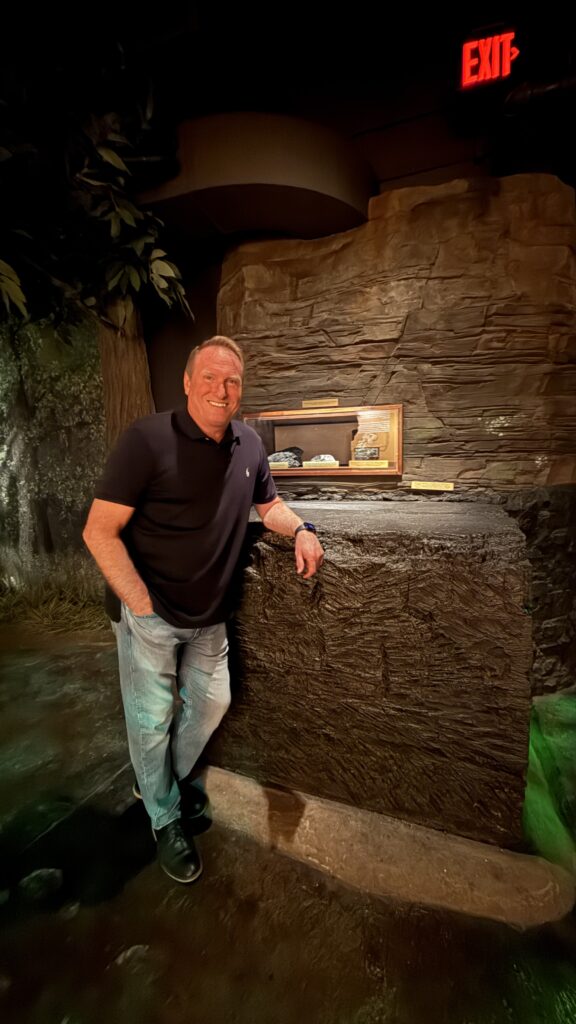
And, of course, there was a giant lump of coal—Tim found it in the WV Museum. You can’t visit West Virginia and miss out on the coal!
À la prochaine…hasta la próxima vez…until next time!
“I am the Lord, who heals you.” ~Exodus 15:26
My relationship with Jesus Christ motivates me to keep blogging. Though I have metastatic breast cancer*, my faith helps me survive, thrive, and feel alive while staying active. Without Him, I couldn’t achieve anything. With His help, well, my accomplishments speak for themselves on my blog. If you’re interested in learning about building a relationship with Jesus, feel free to comment below. I will never sell or share your email.
*Metastatic breast cancer is Stage IV cancer. Metastatic, or metastasis, means the cancer has spread beyond the original location (breast and immediate lymph nodes). In 2016 the doctors found significant metastasis to my bones, skull, liver, and lungs; then in 2018 to the brain. However, with chemo, immunotherapy, gamma knife, and of course my faith in the Lord, it is all undetectable at this point. I continue in treatment every three weeks via infusions, and receive multiple scans on a regular basis. If you or someone you know has metastatic breast cancer, I recommend these organizations for additional support:
Metavivor and Unite for Her (also for ovarian cancer)
Planning ahead is absolutely key for this State House adventure! Security here is on another level—more intense than any Capitol we’ve visited yet. No wandering on your own; you’ve got to pre-register in advance for a guided tour. When you arrive, get ready to flash your photo ID, pass through security, and pose for a sticker-worthy headshot to wear during your visit. It almost felt like visiting my granddaughter in the NICU—except with a bit more official flair.
Fun Fact: This building is the third oldest State Capitol in America and claims the silver medal for longest continuous use! Trenton snuck into second place when Virginia’s streak got interrupted—they seceded during the Civil War, officially pressing pause on their run. Maryland still reigns supreme as the oldest and most continuously used statehouse, but New Jersey’s State House isn’t far behind. History loves a good comeback story! 🙃
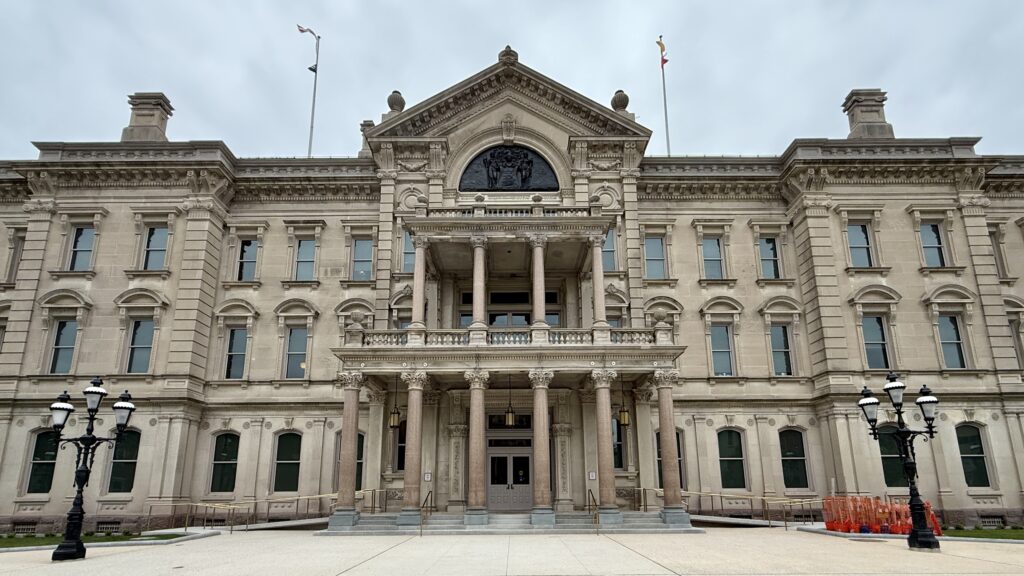
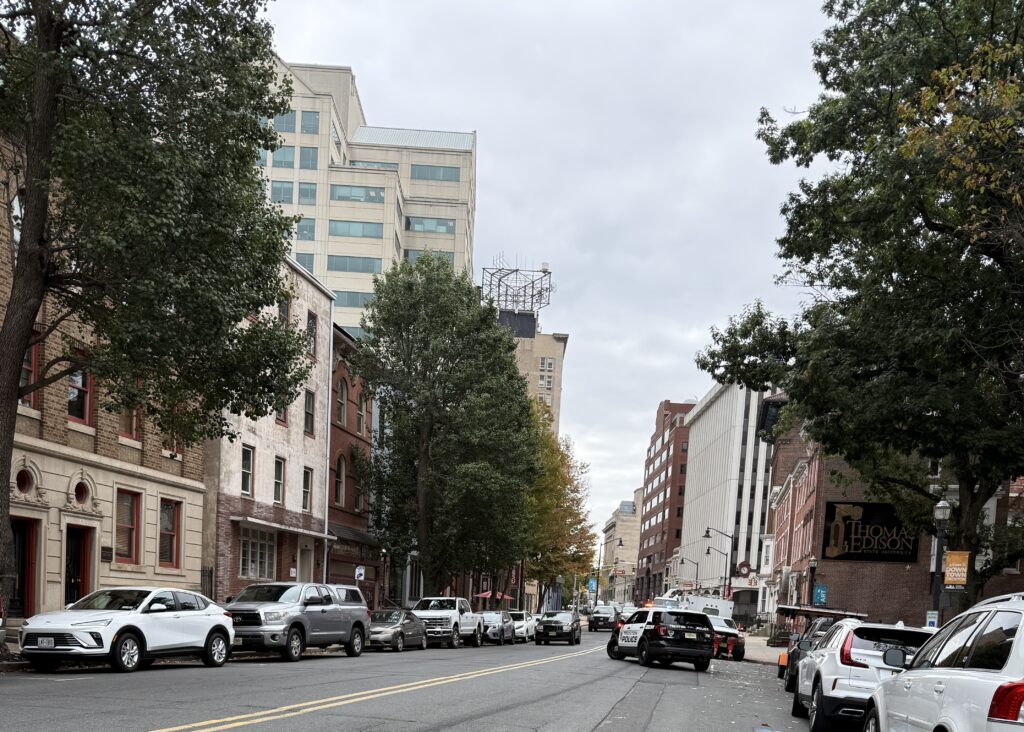
Unlike those stately capitols perched on sprawling lawns, New Jersey’s State House is smack in the heart of downtown—hugging historic State Street and flanked by its legislative neighbors. From State Street, you’ll have to squint to spot the dome peeking out—blink and you might miss the building’s true size and style! See the first picture in this blog.
Parking was an adventure of its own. With our big truck (and that pesky hitch), we were thankful we’d left the Airstream behind—otherwise, parking would’ve been impossible. We lucked out with a parallel spot by a busted meter, right next to a police car with flashing lights. We asked the officer what to do; he just smiled and said, “Don’t worry about it.” We returned after our tour to find no ticket and our truck exactly where we left it. Small victories!
After sticker duty, we were corralled into the courtyard—security watching us through giant windows—until our tour guide came to collect us. Exploring freely isn’t allowed; when the tour ended, we had to exit right away (though our guide kindly let us stop off at the restroom first). The strict rules? Our guide said it’s all because of 9/11, New Jersey lost more people in the attacks than any other state except New York, so security has stayed extra tight ever since.
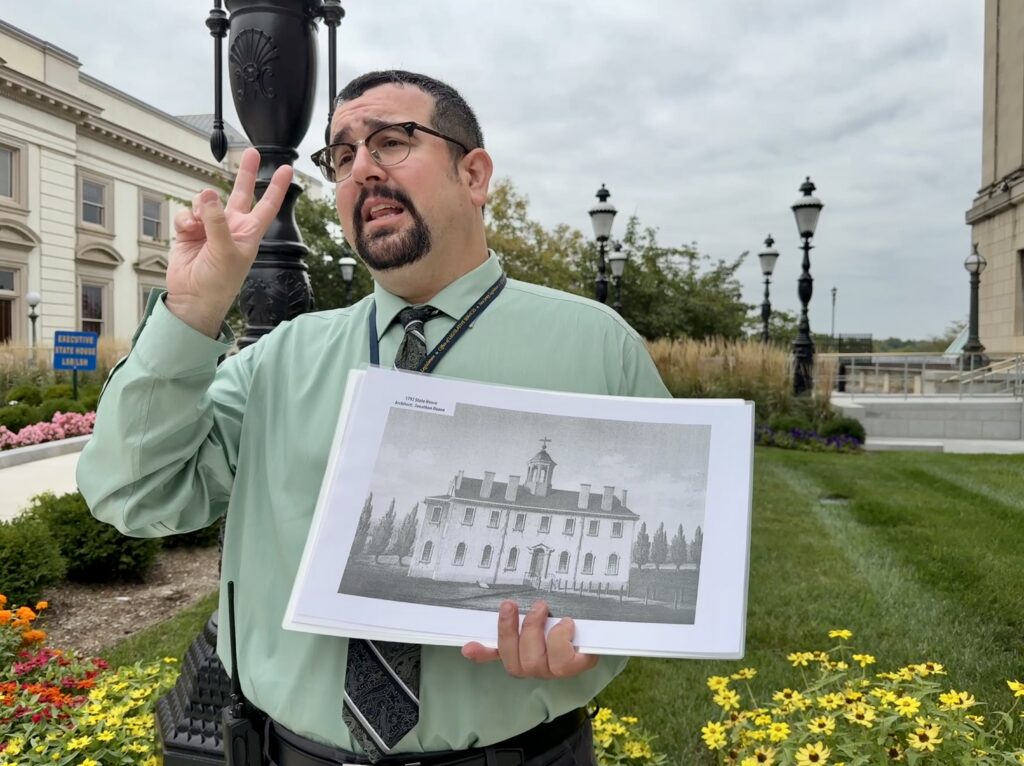
It’s official now. We have stickers. I’m glad they didn’t use my driver license photo – it looks like a mug shot LOL.Our tour guide shows us the progression of the original building to what it is now. Different architects with different styles built the add-ons, so it is a bit of a maze inside. This is another reason they do not let you go on your own. Even the legislators get lost in the hallways.
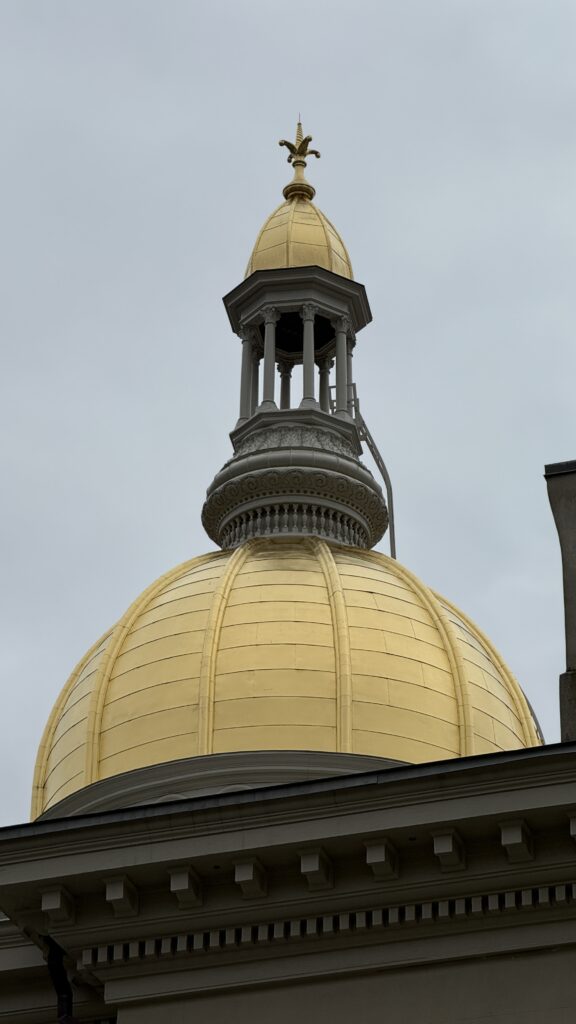
In 1996, the New Jersey State House began renovations of its golden dome. That project wasn’t completed until 1999, but was no simple job. The dome is covered with 48,000 pieces of gold leaf.
Each piece of gold leaf cost $1.00 and was paid for with money raised by New Jersey school kids through the “Dimes for the Dome” program.
Boehm Porcelain Sculpture: “The Glory of New Jersey”
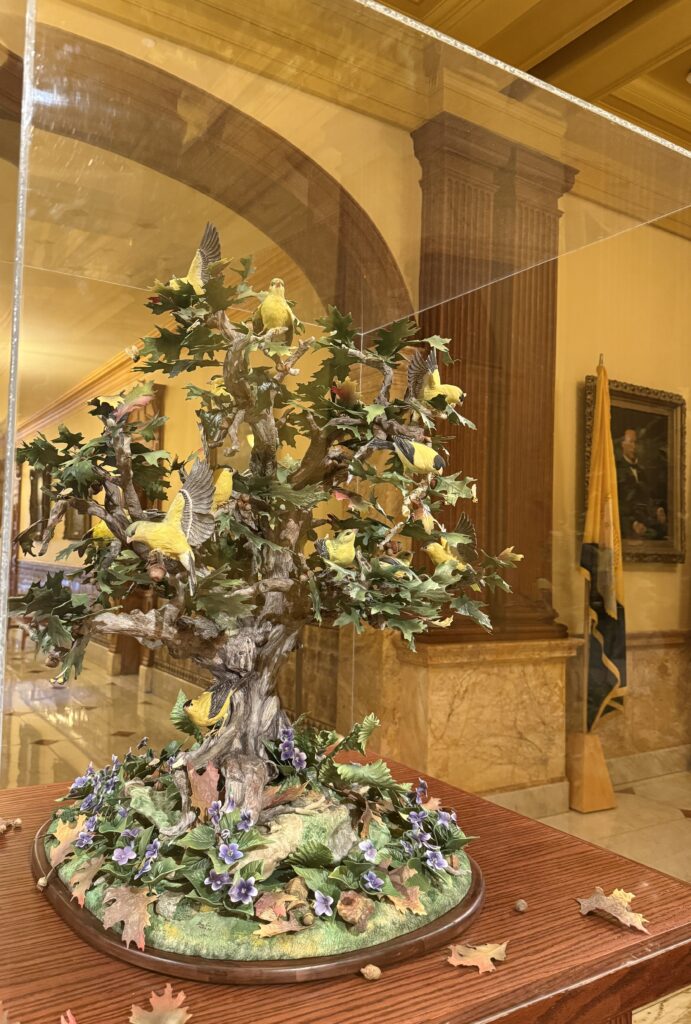
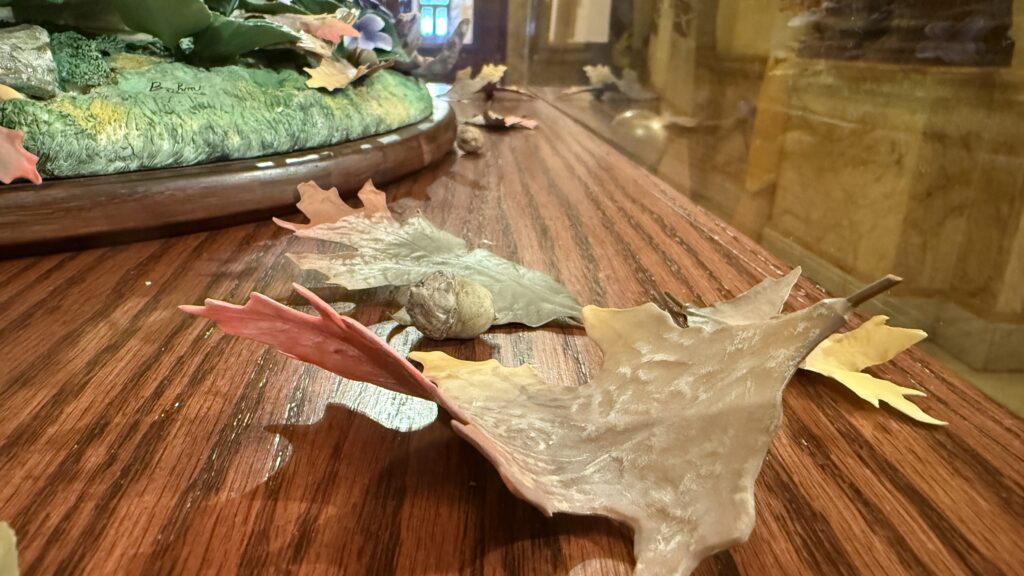
Step into the crossroads of the State House halls and you’ll spot a dazzling showstopper: a glass case holding “The Glory of New Jersey,” a porcelain masterpiece by Boehm Studio, crafted right in Trenton in 1995. This isn’t just any sculpture—it’s a vibrant northern oak (NJ state tree) loaded with 21 goldfinches (NJ state bird), each one representing a different New Jersey county. Look closer and you’ll find violets (NJ state flower) blooming at the roots, 13 honeybees symbolizing the original colonies, cranberries, horseshoe crabs, and—here’s a quirky touch—a single ladybug saluting New Jersey’s first female governor, Christine Todd Whitman. The whole thing stands three feet tall, weighs in at 75 pounds, and was brought to life by 12 artisans using 129 molds and 326 individual pieces. Now that’s Jersey pride, captured in porcelain!
Not only does this piece add a splash of local pride to the building, but it also serves as a playful centerpiece for school groups and curious guests, serving as a fun scavenger hunt. Everyone loves gathering around to learn the stories behind the symbols and snap photos for their own collections of Garden State memories, including us!
Yes, it’s all made of porcelain!
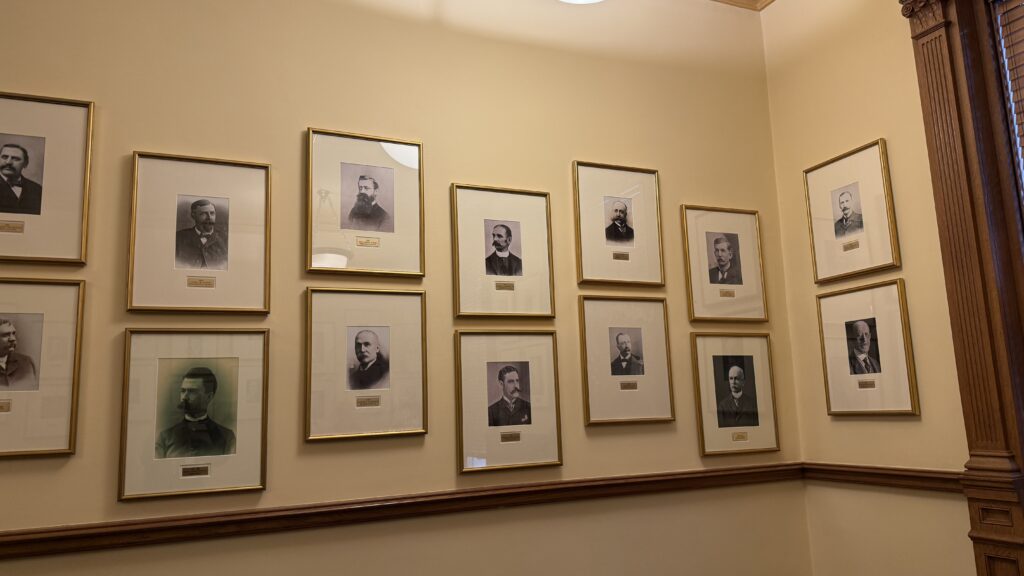
According to our tour guide, younger visitors have pegged this hall the “Room of Epic Mustaches.” Zoom in if you mustache yourself why. 😂 These are portraits of the Speakers of the House. There are 80 assembly members for 40 voting districts.
House of Representatives (General Assembly)
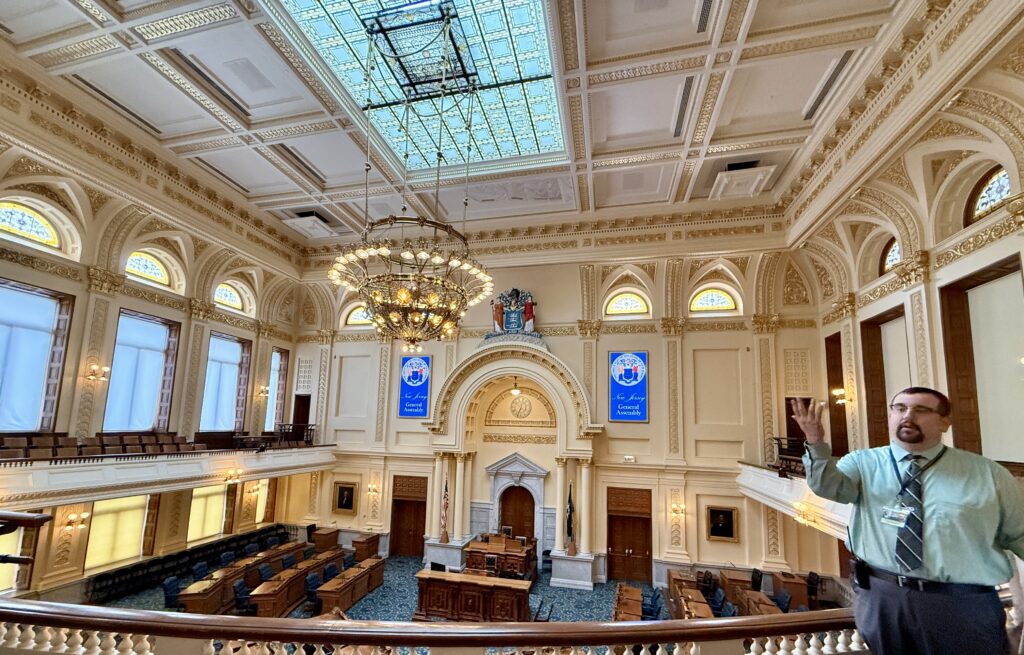
When we stepped into the General Assembly Chamber, it was like taking a trip back in time—right to the moment when Thomas Edison’s Electric Light Company installed a gleaming brass chandelier in 1891. Imagine how exciting that must have been: New Jersey’s Assembly filled with brand-new electric bulbs, like young teenagers at just thirteen years old. Just in case the bulbs fizzled out, the upper wall sconces could switch back to gas light, a clever gesture to remember the old days, or maybe a distrustful nod to the new electric lights. You decide!
Look up and you’ll see stained glass lunettes and a huge skylight, letting sunlight pour in across the hall. The gold-leaf details shimmer over the ornate plasterwork, giving the place a touch of grandeur. Above the Speaker’s dais, there’s a colorful wooden statue of New Jersey’s great seal—hard to miss and impossible not to admire.
Even the carpet gets in on the action, decorated with New Jersey’s state symbols: the Purple Violet, Eastern Goldfinch, Red Oak Tree, and Honey Bee. Blue is my favorite color, so I really like this even though we only saw it from the gallery. I imagine it is a fun detail for anyone walking through, like a hidden scavenger hunt for Garden State pride woven right into the floor.
House of Representatives (General Assembly)
Notable stories from our Tour Guide
Welcome to New Jersey—a state where most folks are packed up north like sardines in a subway car! Seriously, about 70-75% of New Jerseyans call the northern cities home, with hotspots like Paterson, Elizabeth, Newark, and Jersey City buzzing with energy. Central Jersey holds its own with industrial hubs (hello, Trenton!), but venture south and you’ll find sprawling farmland, earning the “Garden State” name with pride.
But let’s talk about southern Jersey, where the legend gets wild. Meet the “Jersey Devil” (or “Leeds Devil,” if you want to sound fancy)—the state’s most infamous cryptid. Picture this: a creature that’s part kangaroo, part horse, part goat, with bat wings, scary claws, and a tail that’s forked like it’s ready for a barbecue. Where does it lurk? In the Pine Barrens, of course—a place so ecologically bizarre that our guide called it a “weird hybrid,” with only one other similar spot on earth, and that’s somewhere in Africa!
The Pine Barrens are pretty much New Jersey’s own enchanted forest—spanning a mind-blowing 1.1 million acres over seven counties. It’s rural, mysterious, and somehow sits close to bustling cities like Philadelphia and New York. If you love botanical oddities, you’ll be thrilled: Venus fly traps snap up unwary insects, cranberries dot the landscape, and who knows—you might just spot the Jersey Devil (or at least a hammerhead bat) soaring overhead!
So whether you’re a city dweller or prefer the quirky wilderness, New Jersey is ready to surprise you with every mile. Pack your bags, keep your eyes peeled, and remember: in the Garden State, even your myths come with wings!
Let’s dive deeper into the wild tale of the Jersey Devil, also known as the Leeds Devil! Picture this: it’s 1735, and Mrs. Leeds—a 25-year-old mother—finds herself expecting her 13th child. Exhausted and overwhelmed, she supposedly exclaims, “Let this one be the devil!” After the baby arrives, everything seems normal—until five minutes later, when it transforms into a winged monster and shoots up the chimney, vanishing into the mysterious Pine Barrens. Since then, more than 700 people claim they’ve spotted the beast, with sightings stretching from the days of Napoleon Bonaparte (yes, he was in New Jersey!) all the way to 2023. Like any good legend, the Jersey Devil’s story keeps evolving with every “encounter.”
Some say the Pine Barrens is filled with wild creatures—including the hammerhead bat, which could easily spook someone into thinking they’ve seen a monster. But honestly, why spoil the fun? Whether you’re searching for the Devil in the woods, or cheering for the Jersey Devils at a hockey game, this state monster keeps New Jersey’s imagination alive!
No act of Congress made it official, but ask anyone in New Jersey—the Jersey Devil is absolutely the state’s monster.
The legend has even more twists: the Leeds family, famous for publishing astrological almanacs back in colonial New Jersey, supposedly had their own run-ins with the Devil. Some say the creature got its bad reputation because the family supported the American Revolution. And with all those bats swooping through the Pine Barrens, it’s easy to see how a hammerhead bat—feeding on mosquitoes by the thousands—could be mistaken for a dinosaur-like beast by anyone wandering the woods at night. So next time you’re in South Jersey, keep your eyes peeled… you never know what you might spot!
Our guide was incredibly knowledgeable and shared plenty of interesting tidbits throughout the tour. Here’s another fun fact: New Jersey’s capitol is the only one in the country where you can look out and see another state. From the building, you can gaze across the Delaware River and spot Pennsylvania.
The Rotunda
Step under the magnificent dome in the rotunda and you’re in for a treat! Our guide pointed out some quirky features, like the mysterious dragons woven into the architecture—no one really knows why, but legend has it these eastern dragons are guardians of humanity. 🐉✨ Over the door, an eagle stands watch where the main entrance used to be, although now the dome sits off-center after years of expansions. And get this: Tim swears the dome towers a whopping 140 feet overhead! Who knew state history could be so whimsical?
If you enjoyed this tour of the New Jersey State Capitol, leave a comment below and let me know your thoughts! Pretty, please! 😁 I won’t hound you. The email you will provide is to prove to AI that you are not, in fact, AI.
À la prochaine…hasta la próxima vez…until next time!
“I am the Lord, who heals you.” ~Exodus 15:26
My relationship with Jesus Christ motivates me to keep blogging. Though I have metastatic breast cancer*, my faith helps me survive, thrive, and feel alive while staying active. Without Him, I couldn’t achieve anything. With His help, well, my accomplishments speak for themselves on my blog. If you’re interested in learning about building a relationship with Jesus, feel free to comment below. I will never sell or share your email.
*Metastatic breast cancer is Stage IV cancer. Metastatic, or metastasis, means the cancer has spread beyond the original location (breast and immediate lymph nodes). In 2016 the doctors found significant metastasis to my bones, skull, liver, and lungs; then in 2018 to the brain. However, with chemo, immunotherapy, gamma knife, and of course my faith in the Lord, it is all undetectable at this point. I continue in treatment every three weeks via infusions, and receive multiple scans on a regular basis. If you or someone you know has metastatic breast cancer, I recommend these organizations for additional support:
Metavivor and Unite for Her (also for ovarian cancer)
This is the third and final part of the New England State Capitols, for a total of six. In this part we took a tour of Rhode Island and Connecticut State Houses. There is a lot more to these State Houses than I remembered. They all seem to run together after a while, but each one has at least two or three unique characteristics worth delving into. History and Government were my two least favorite subjects in high school, but I have grown to love learning about our country and its history in my — eh hem — old age. You may learn something too!
September 16, 2025. Providence, Rhode Island State House
At the turn of the twentieth century, Rhode Island was the wealthiest state per capita, a status reflected in the design of its State House. Constructed from marble quarried in Georgia, the building was among the first major public structures to feature electricity. Its impressive dome ranks as the fourth largest self-supported marble dome in the world, surpassed only by St. Peter’s Basilica, the Minnesota State Capitol, and the Taj Mahal.
On top of the dome is The Independent Man, representing freedom and independence while alluding to the independent spirit which led Roger Williams to settle and establish the Colony of Rhode Island and Providence Plantations. Independent Man is a 1,200-pound, gold-plated bronze sculpture and a proud symbol of the state.
The State House was placed on the National Register of Historic Places in 1970, and much of the interior decoration is original, or closely resembles the original design.
Not only is it opulent, the Rhode Island State House upped their game for visitors compared to some of the other New England States. They have a slick, trifold colorbrochure, from where much of this information was obtained. The first floor houses The Charter Museum, where they recommended we start our self-guided tour (they weren’t offering guided tours the day we went).
Rhode Island Charter Museum
This room was impressive! The museum has on display the original document signed by King Charles II, the Royal Charter of 1663. By the 1650s, Rhode Island’s diverse communities came together to affirm and formalize a shared commitment to religious freedom and democracy. Residents sent a delegation to London to obtain a charter to ensure their rights. It’s challenging to read, with the calligraphy and old English, but quite amazing to witness in person.
This is a replica of the flag that supposedly flew on one of the ships that carried the 1663 Charter from England to Rhode Island. The original is in the collection of the The Redwood Library and Athenacum. Newport, Rhode Island.
Rotunda
I love State Houses with a dome and rotunda. They add to the grandeur and presence of a building. The view changes with each turn you take throughout the building.
Staircase leading to the rotunda.Replica of the DomeBronze Head of the “Independent Man” cast in 1976. Full size replica.Underneath the dome.Looking up at the rotunda.View of the chandelier.Roger Williams and his followers meeting Native Americans.A big rug was covering the state seal, but Tim wanted to verify it was there LOL.View from one side.Cleaning up the dome.View from the other side.
State Reception Room (Governor’s Office)
The brochure calls this “the most ornate room in the building,” with the gilded ceiling, gold-crowned marble pilasters, large fireplaces and crystal chandelier. This is where the Governor holds press conferences and signs bills.
Fun Fact: On Inauguration Day, the Chief Sheriff, dressed in early 19th century garb, walks through the French doors out onto the Governor’s Balcony and reads the Proclamation of Election of the Governor, which is followed by a 19-gun salute on the State House lawn. 🙃
Tim is showing perspective.Reception Room CeilingFull-scale portrait of George Washington
Rhode Island House of Representatives
There was a lot of construction going on while we were in the building, so the Chambers were both in disarray. The House has 75 members; each Rep has their own solid oak desk.
Rhode Island Senate Chamber
The Senate Chamber looks bigger than the House in these pictures, but it’s actually smaller. There are 38 members of the Senate. Inspired by the Pantheon in Rome, this room has been restored to its original colors and finishes. Uniquely, the senate gallery is above the rostrum, meaning those watching from above cannot see the speaker. In all our tours, this was the first Capitol we have seen with that design.
Senate Ceiling.
Rhode Island State Library
My librarian friends may enjoy reading this! This library is part of the Secretary of State’s office, and it is open to the public. The collections date back to 1750, focusing on the legislative history of Rhode Island and the United States. The library ceiling was designed to look like the back of a leather-bound book (can you picture it?). The 16 circles around its perimeter of the ceiling are European printer’s marks from the 15th-17th centuries. The stairways and catwalk supports are iron, painted to look like the rest of its mahogany interior. There is also a special exhibit here from the first manned lunar landing in 1969.
The back is just as opulent as the front, and I loved the sky in this one so I had to include it. Rhode Island.The State House is just a pleasant walk away from downtown Providence, where we enjoyed lunch. This is the view of the State House on the way back. The past couple of centuries have given it a very stately entrance.
September 19, 2025. Hartford, Connecticut State House
Driving into Hartford, we quickly noticed a building that resembles a palace. It is one of the most beautiful state capitols we have seen to date.
We felt like we were going to visit the Queen of England, and we were sorely underdressed.
Hartford, Connecticut. State House.
Beneath the dome in the rotunda stands the Genius of Connecticut on her small dome replica. Original stained glass windows and hand-stenciled 24K gold foil adorn the inside of the dome.
Famous People from Connecticut
Nathan Hale is a Connecticut hero. He was a spy for George Washington during the Revolutionary War, captured and hanged by British soldiers while bravely stating that all-familiar quote, “I only regret that I have but one life to lose for my country.”
The Forlorn Soldier statue is estimated to be 144 to 147 years old, one of the oldest Civil War monuments in the state.
We heard a lot of stories throughout our New England State Capitol tours about fourth graders making requests and having it turned into something monumental, like this bronze statue for instance. In 1995, a group of fourth graders requested Connecticut name Prudence Crandall as the State Heroine, which was granted by an act of the General Assembly. She was the first to admit an African-American into her school. Angry White parents who didn’t want their kids in a bi-racial school removed their children, so she founded a new school for “young ladies and missus of colour,” supported by the anti-slavery society. Unfortunately, it was forced to close after a mob attack. The bronze statue of Crandall and her student Sarah Harris was funded by “Pennies for Prudence” a few years later. Designed to maintain their likeness, the statue was installed in 2008 in a place of prominence in the State House.
Connecticut Senate Chambers
The tour guide was sure to point out some unique attention to details found in this room. The big mahogany doors are ornamental, with the state seal engravings on the hinges and doorknobs. The seal is also in the middle of the senate room, woven into the carpet. This room used to be the library, and was converted into the Senate Chamber in 1913.
The Lieutenant Governor presides from the Charter Oak Chair, carved from the fallen oak tree which hid the self-governing charter given to the colony by King Charles II in 1662. The Charter Oak tree fell in 1856, nearly 200 years after the charter was hidden there. The charter is in the Museum of Connecticut History across from the State Capitol building.
“He who transplanted still sustains.”
Connecticut House of Representatives
This room is also quite magnificent, with carved walnut paneling and ornate stenciling, stained glass windows, multiple state seals on the royal blue carpet, and the original desks of legislators still in use today. The gallery is on the floor above the rostrum, as it is in Rhode Island. Don’t pick your nose up there, or all the legislators will be able to witness it (haha).
Our private tour guide stamped our passport making this our 31st State Capitol. We said good-bye and visited a few other artifacts on our own.
Love the staircasesBeautiful stained glassHotchkiss Revolving Cannon
This model of the “Flagship Hartford” was built by an American naval veteran with only one arm. It took him two and one-half years to complete the model. It was from his command post on the “Hartford” at the Battle of Mobile Bay (Alabama) on August 5, 1864 that Admiral Farragut uttered his historic battle cry: “Damn the torpedos, full speed ahead!”
The actual figurehead from the prow of the “Hartford” is in this glass-enclosed case.
FIRST REGIMENT CONNECTICUT VOLUNTEER CAVALRY, 1865. This beautiful flag was presented to the veterans of the First Regiment Conn. Volunteer Cavalry by Gen. Brayton Ives who was commander of the First Cavalry when he escorted Gen. Ulysses Grant as he went to receive Gen. Robert E. Lee’s surrender.This bed was used by the Marquis de Lafayette, a French citizen who served as a major general under George Washington during the Revolutionary War. The strings on canvas beds had to be drawn taut to prevent the beds from sagging, thereby giving rise to the time-honored saying of “Sleep Tight.”
And on that note, we will say, “sleep tight.” This is the third and final blog for New England state capitols, so I hope you are still with us! “Whew!” We saw a lot, learned a lot, enjoyed some pretty exquisite delicacies and great weather while we traveled through these six states. I hope you have learned something too! Please comment below and let me know what you think.
Bushnell Park, Hartford Connecticut.
À la prochaine…hasta la próxima vez…until next time!
“I am the Lord, who heals you.” ~Exodus 15:26
My relationship with Jesus Christ motivates me to keep blogging. Though I have metastatic breast cancer*, my faith helps me survive, thrive, and feel alive while staying active. Without Him, I couldn’t achieve anything. With His help, well, my accomplishments speak for themselves on my blog. If you’re interested in learning about building a relationship with Jesus, feel free to comment below. I will never sell or share your email.
*Metastatic breast cancer is Stage IV cancer. Metastatic, or metastasis, means the cancer has spread beyond the original location (breast and immediate lymph nodes). In 2016 the doctors found significant metastasis to my bones, skull, liver, and lungs; then in 2018 to the brain. However, with chemo, immunotherapy, gamma knife, and of course my faith in the Lord, it is all undetectable at this point. I continue in treatment every three weeks via infusions, and receive multiple scans on a regular basis. If you or someone you know has metastatic breast cancer, I recommend these organizations for additional support:
Metavivor and Unite for Her (also for ovarian cancer)
*Credits: The tour guides present some great stories which you may or may not catch on your own. They were short-staffed at the Rhode Island State House so we didn’t have a guide. I also obtained historical information from plaques inside the State Houses, tour brochures, Capitol websites, and good ol’ Wikipedia.