

We visited all six capitols in the six New England states within 18 days. Whew, that was a busy time! I’m combining them all into three parts, as we were traveling feverishly between states, and there are some similarities to all six states and capitols. However, there are also some unique factors to each one, which you are sure to notice. The first part will include Vermont and Maine. Part two will cover New Hampshire and Massachusetts; then the third part will showcase Rhode Island and Connecticut. This is the order in which we visited them all.
September 2, 2025. Montpelier Vermont State House
WELCOME TO VERMONT’S STATE HOUSE, featuring the nation’s oldest legislative chambers that are still used by lawmakers in the way they were originally designed and decorated. This historic capitol building showcases many original architectural and decorative finishes, including furnishings and gas chandeliers.
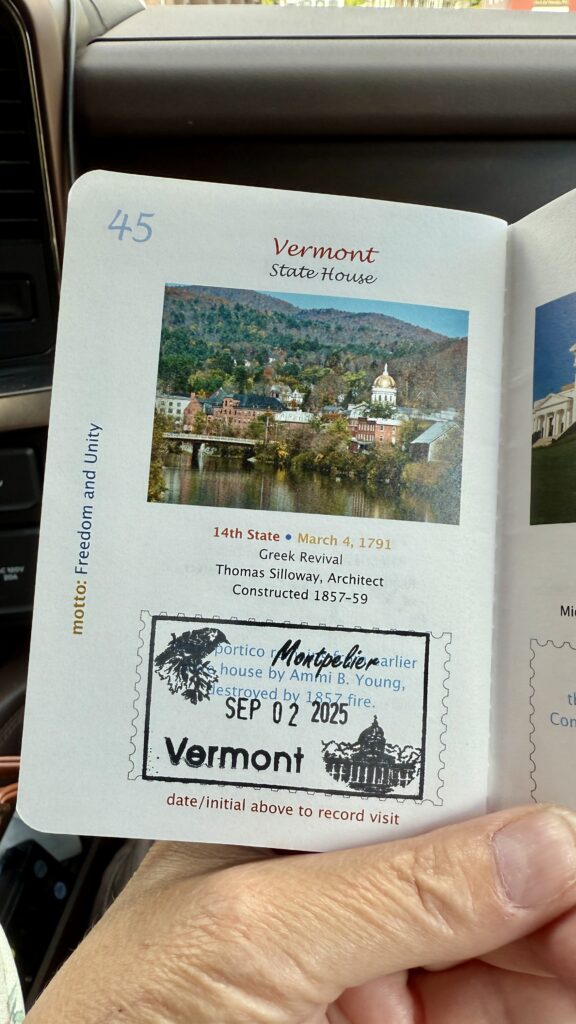
Montpelier is a cute little town. It’s the nation’s smallest capital city, and the only one without a McDonald’s. (Can you imagine??) We visited the State House, which is also very simple and small, got our passport stamped, and learned they conduct tours on the hour. We arrived at 20 past the hour, so we thought we’d miss it, but they weren’t busy so the guide offered to give us a private tour. Our docent took us everywhere, letting us get up close and personal to the desks, chairs, and furnishings in all the rooms we entered. (We stayed in an RV park near there, close to the town of Barre, pronounced “Barry,” also worth visiting.)

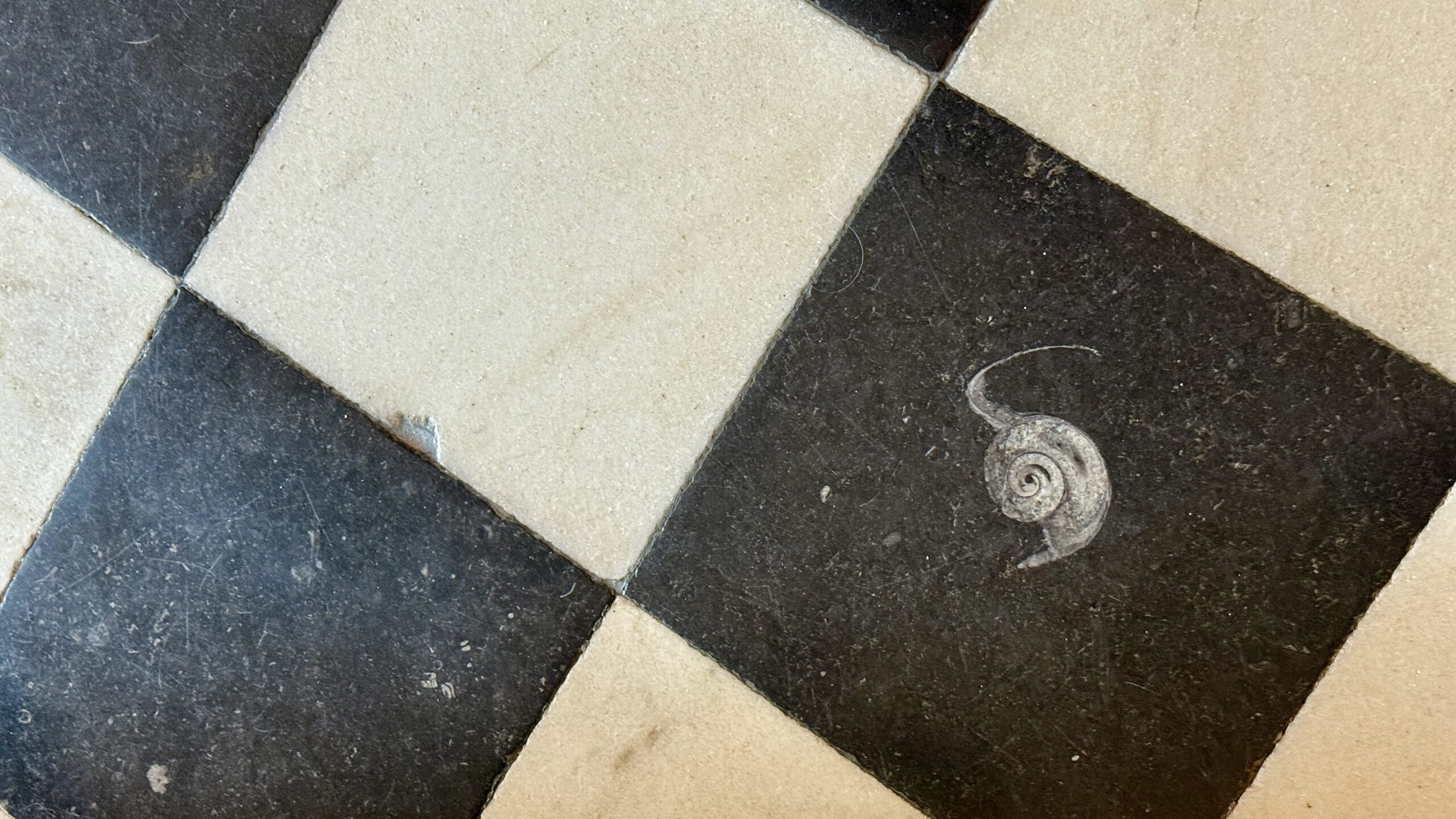
We learned many fun facts about this Capitol, some of which I’ll share in this blog. Like the fossils in the limestone flooring, the 8th grade pages who get to sign their names inside the 24K gilded dome, and the most historic gas chandelier in America.
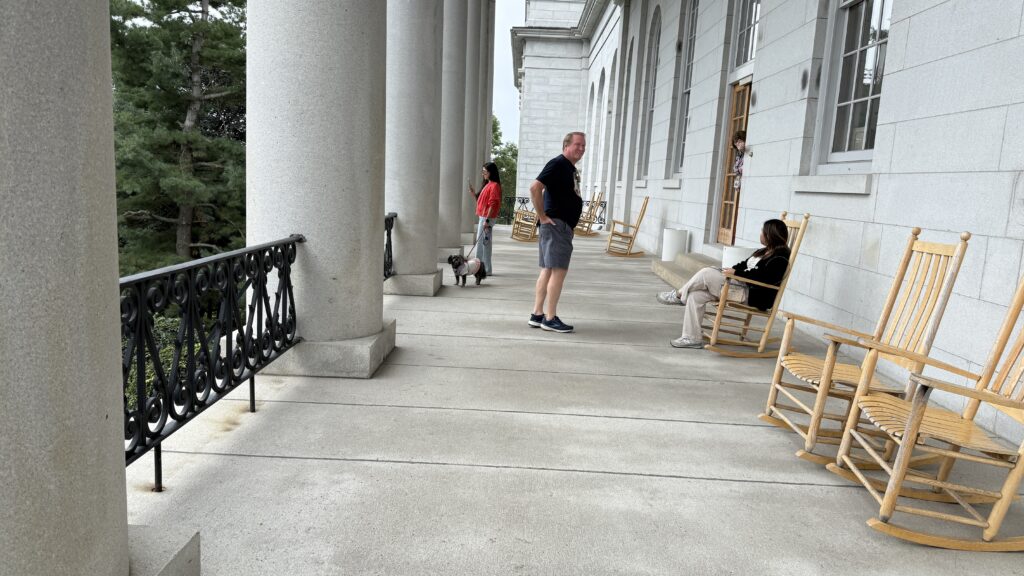
This is the third state house in Vermont, build between 1857 and 1859. Although larger than its predecessor, it was also constructed of granite and a plan that closely resembled the previous building The columns and “porch” you see on the front are made of local granite, which is very durable. This part was salvaged from the fire that burned down the previous State House and reused here. It is the only remaining portion of the earlier Greek Revival State House of the 1830s.
If you step inside the Vermont State House, you’ll find both the House and Senate Chambers, plus the Governor’s office—though the Supreme Court has its own place elsewhere. When it comes to style, the current State House skips the traditional Greek Revival look (think big columns and perfect symmetry) and goes for the trendier (at the time) Italian Renaissance Revival vibe, with fancy details and those classic rounded arches that were all the rage back in the day. Like a lot of old public buildings, the State House has changed along the way, picking up three small additions at the back to help out with things like office space and storing important documents. Fast forward to the 1980s and 90s, and the whole place got a serious makeover—restoring it to its mid-1800s glory. That meant bringing back original carpets and drapes, and sprucing up the best parts of the building, especially the rooms where the action happens, like the legislative chambers and main public areas.
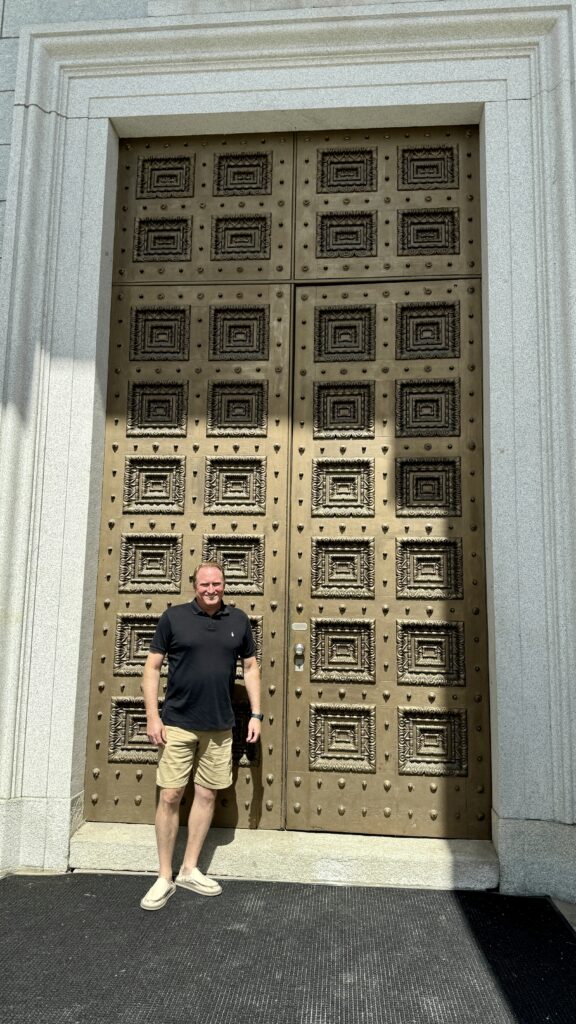
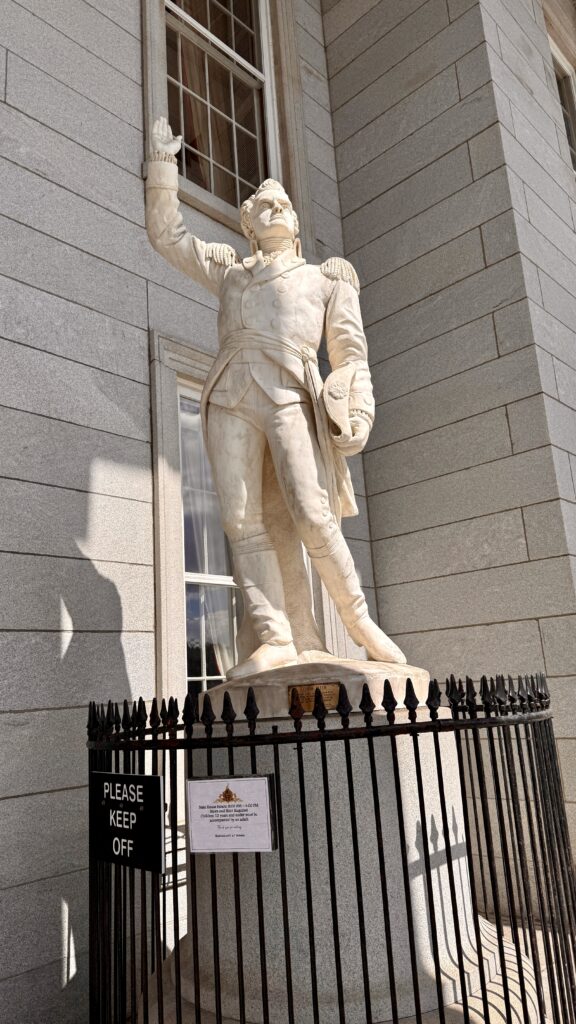
The Golden Dome and Spidermen
Vermont is one of just nine state capitols wearing a dazzling gilded dome. The dome on top of Vermont’s third State House is a striking example of Renaissance Revival style, more ornate than its predecessor but not overly extravagant. Originally made of wood and covered in copper, the dome was painted red to resemble Italian tile and kept that color for nearly 50 years.
In 1906, legislature allocated funds to gild the dome with ultra-thin 23.75 carat gold leaf (as close to pure as possible). How thin is it? It is so thin that 250,000 sheets would stack to just an inch. The gilding process involved sanding the copper, applying coats of lead-based oil paint, and then methodically layering long sheets of gold leaf.
Sergeant-at-Arms C.H. Ferrin refused extra safety spending for “unattractive staging and scaffolding,” so the workers applied the gold while balancing on ladders 150 feet up, entertaining crowds below and showing up in the Vermont Watchman who described them like “spiders in the air.” The dome has been re-gilded several times since, with the process evolving to include more advanced safety measures like scaffolding.
The original statue of Agriculture atop the dome was carved by Brattleboro sculptor Larkin Mead. (Remember his name. It will come back again.) Unfortunately, in 1938 the wooden statue rotted and was in danger of toppling off the dome. Eighty-six-year-old Sergeant at Arms Dwight Dwinell volunteered to carve a new statue with the help of his janitorial staff. It was 14 feet tall and mounted on a six-foot pedestal. In 2018, the dome was again regilded and weatherproofed, and a new wooden statue of Agriculture was added on top.
The Dome’s Interior
The dome is supported by a double truss system, but due to changes in design during construction, the Vermont State House doesn’t feature any interior architectural expression of the dome—meaning you won’t see it from inside, and it doesn’t have a beautiful rotunda like other capitols. Bummer.
Fossils on the Floor
The black and white checkered tiles continue the vintage look throughout. The white tiles are made of granite from Danby Vermont. The black tiles are made of fossiliferous limestone (often mistaken for marble) brought in from Isle La Motte on Lake Champlain. The black tiles contain fossils seen throughout the State House; the fossil pictured below is one of the most prominent seen in the main hallway.
FUN FACT: The black fossiliferous limestone used to be part of the Chazy Reef, which is in modern day Zimbabwe, but it slowly made its way to Lake Chaplain in Vermont over the centuries. Could this be further evidence of the great flood? Things that make you go “hmmm” 🤔.
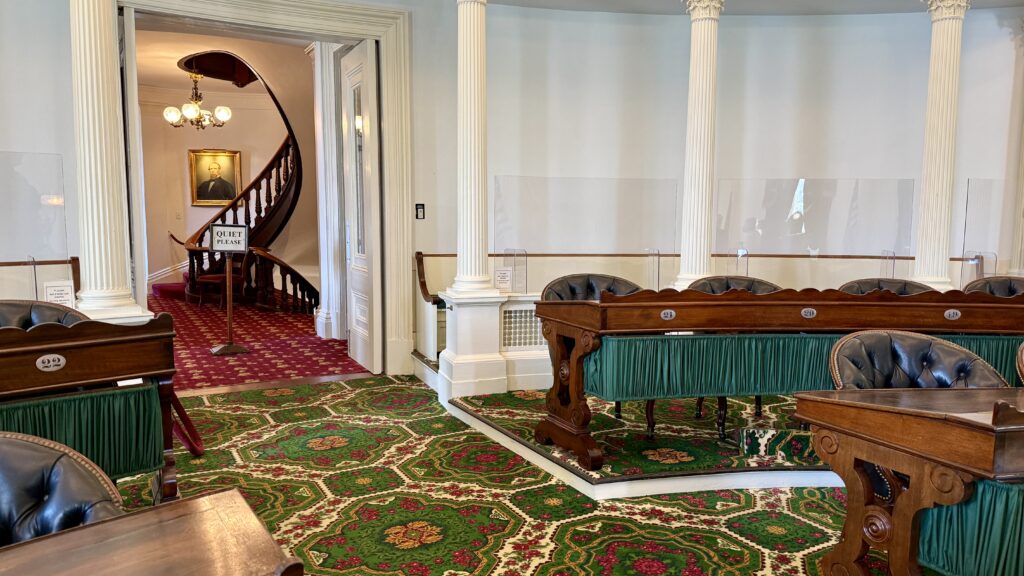
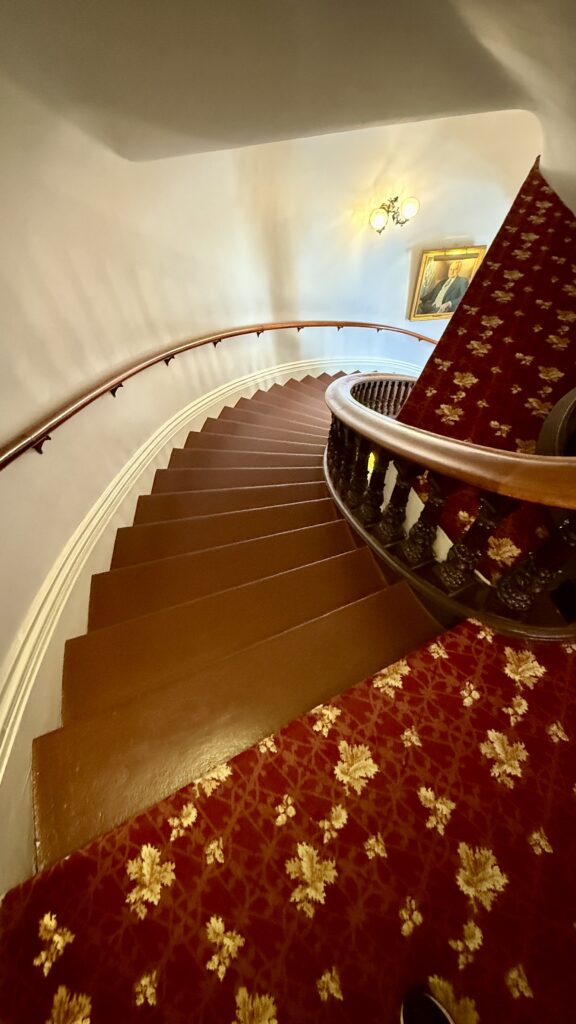
We went up the spiral staircase to see the senate chambers on the second floor. Vermont Statehouse has twin spiral staircases rather than one grand staircase as seen in capitol buildings with large rotundas beneath the dome.
Vermont Senate Chambers
Step into the Senate Chamber and you’re instantly transported back to the mid-1800s—time machine optional! This stunning room has been lovingly restored to its original glory, and almost all the furnishings date back to the 1850s. With just 30 senate members, it’s an unusually cozy space that still manages to feel grand and impressive. Imagine Renaissance meets Rococo Revival, all wrapped in a classically elliptical design, accessible elegance at its finest.
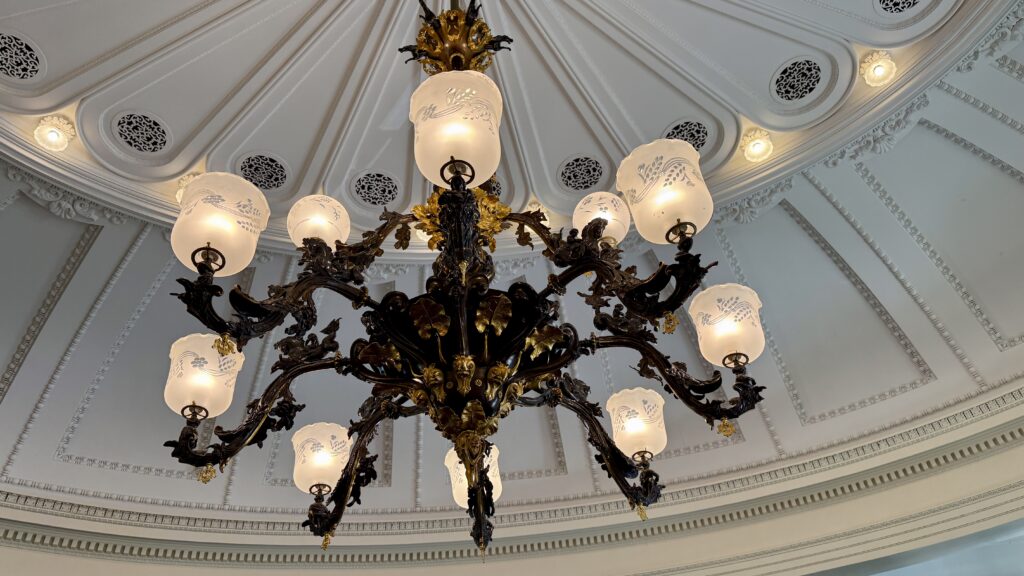
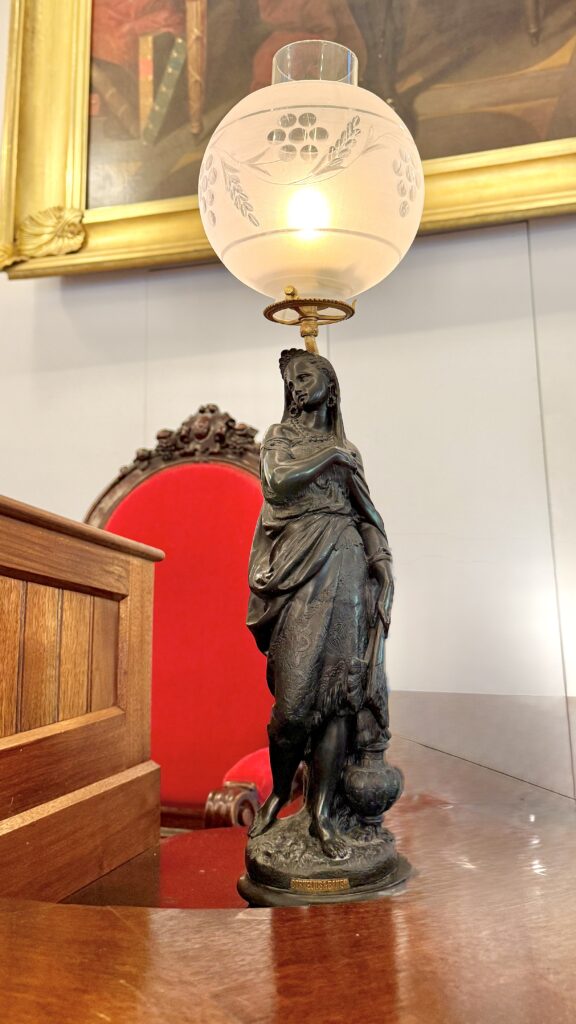
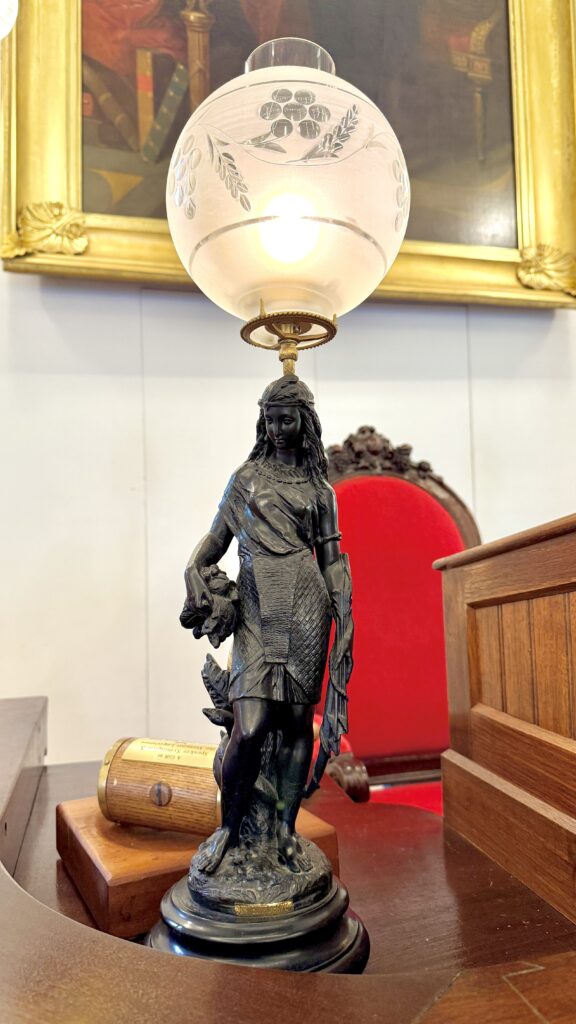
Take a look at the rostrum: it’s a showstopper, hand-carved with Vermont’s Coat of Arms right in the center and topped with gas lamps symbolizing Inspiration and Meditation. And don’t miss the chandelier overhead! It’s evidence that history can be seriously stylish (and maybe even a little bit magical).
FUN FACT: Notice the green carpet. It took the senators 7 years to decide on a pattern during the restoration project.
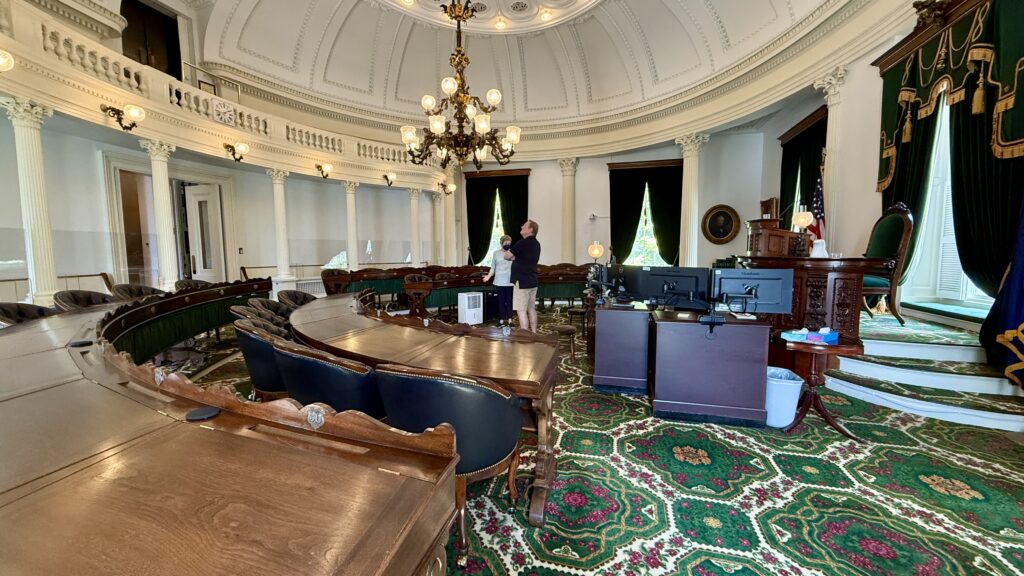
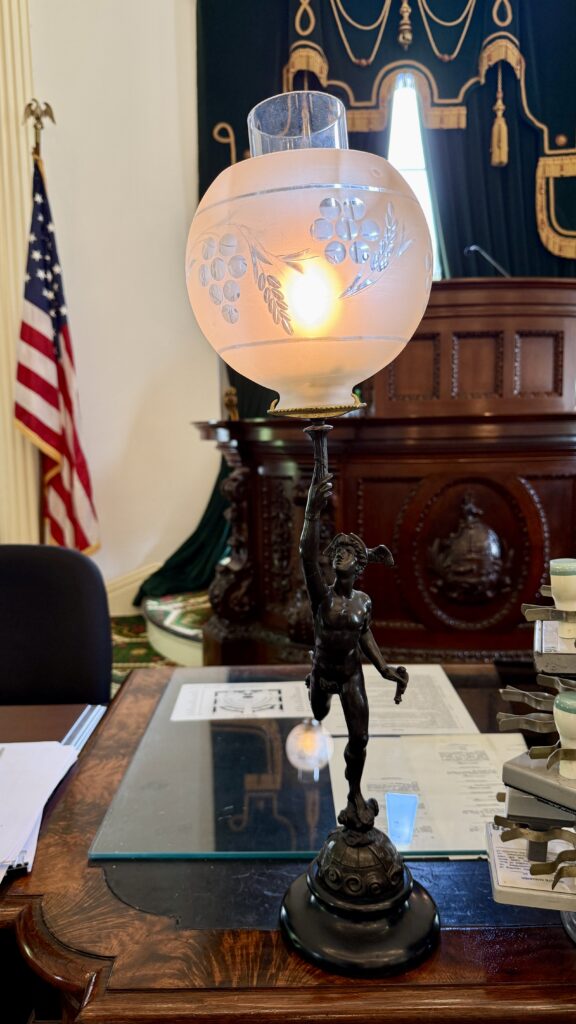
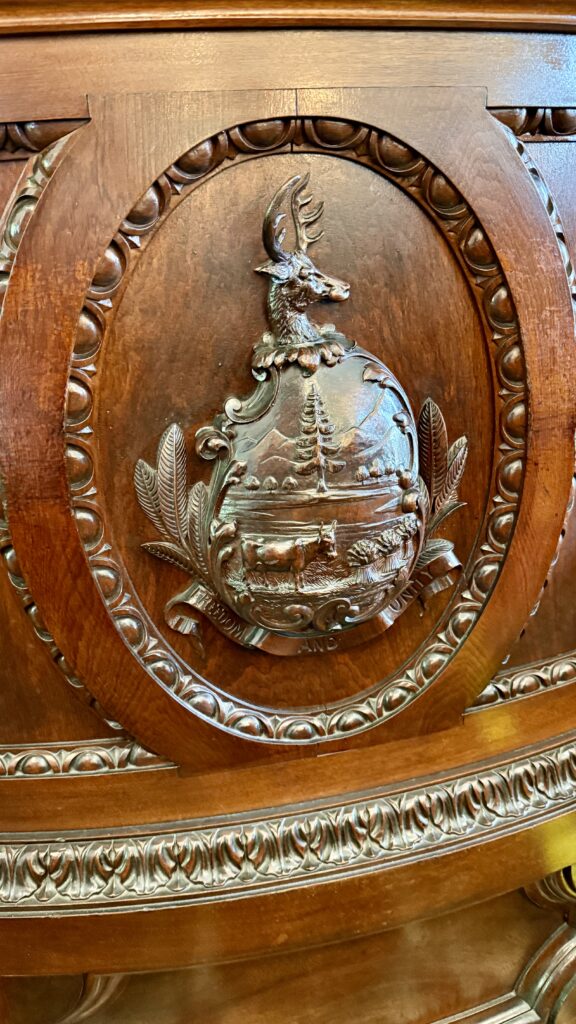
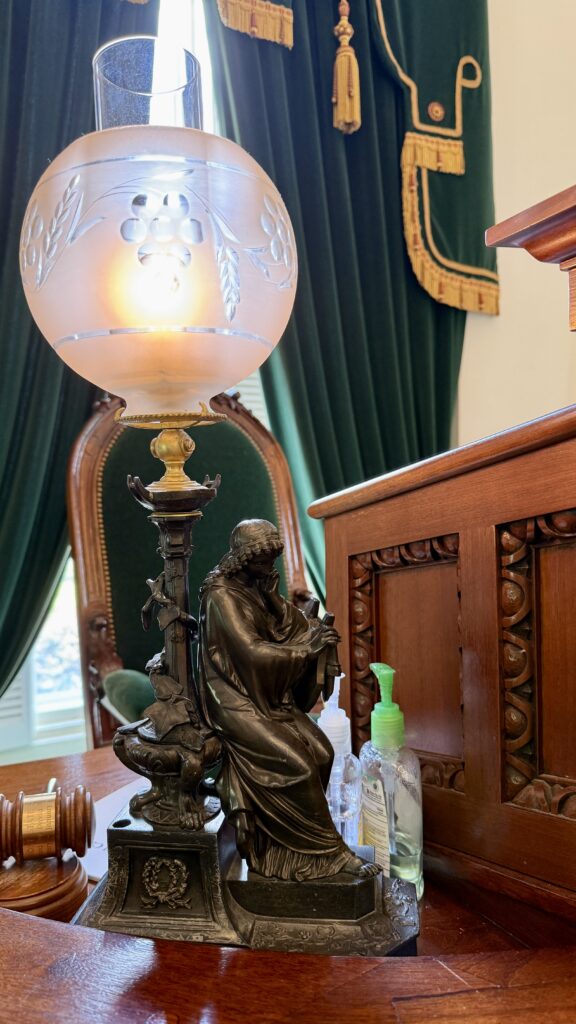
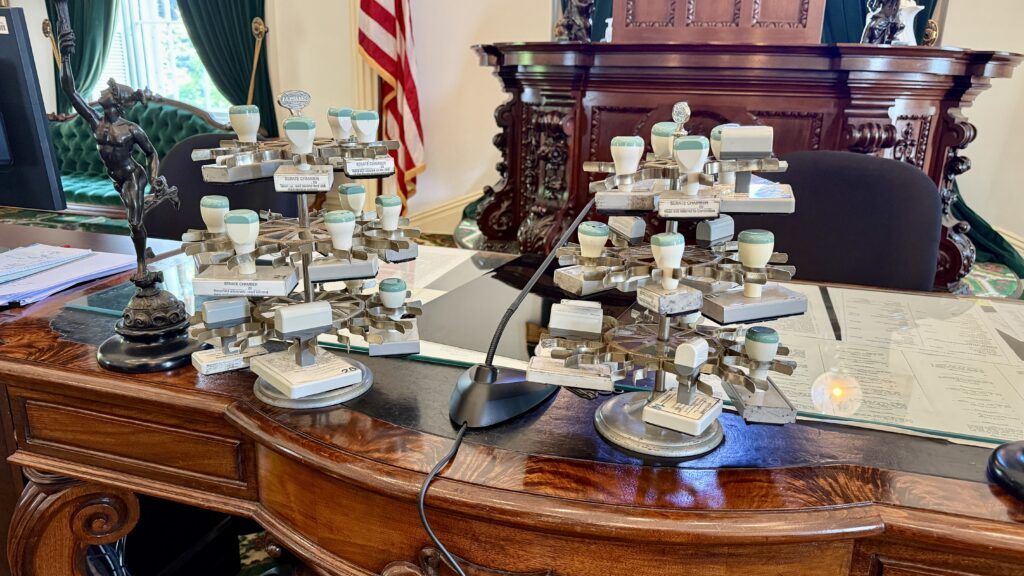
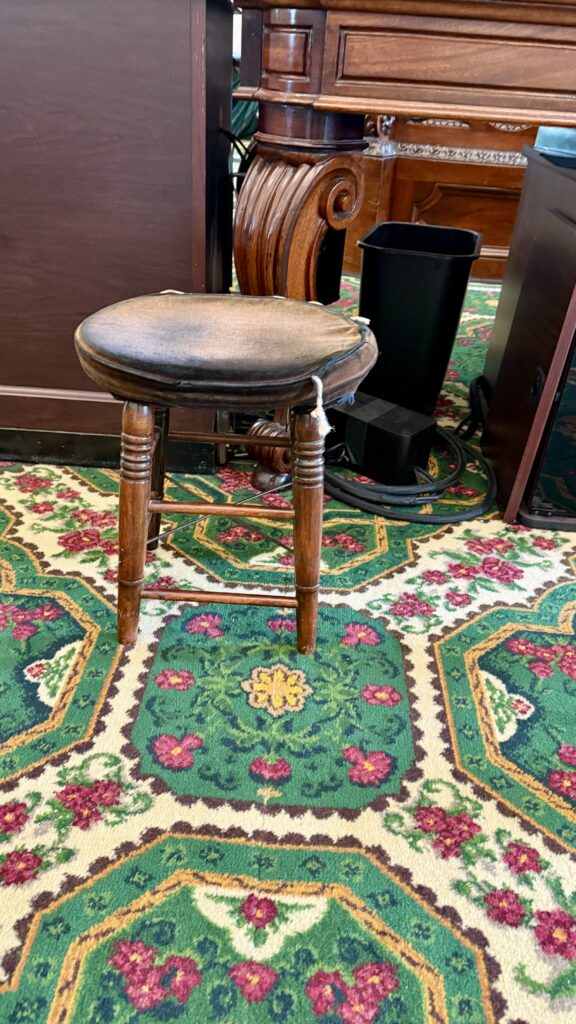
Vermont is where I learned about pages. The Senate is very restrictive. Senators are not permitted to have food or drink in the Chambers. They can’t even have water. They can’t leave or connect with others unless they ask a page. Little stools are for the eighth graders who serve as pages for six-weeks at a time, rotating in and out while sessions run from January through May. Senators will write a note, knock, on their desk, then a page will pick up the note and run in the state house to find the person or thing they need. Pages are there Tuesday through Friday, go to school on Mondays, and do school work in between. It’s a great learning opportunity for these kids!
FUN FACT: At the end of their 6-week term, Vermont pages get to go up into the dome and sign their name! This is a unique privilege as the inside of the dome is typically off-limits.
Vermont House of Representatives
The first thing you notice when you enter this room is the magnificent chandelier. Right in the middle of Representatives’ Hall, you’ll find the original bronze and gilt chandelier in the center of a ginormous lotus flower; it’s a real showstopper. What’s cool is that this isn’t just any old light fixture; it’s actually one of the most significant surviving gas chandeliers in America. They call it a two-tiered electrified gasolier (which basically means it was originally lit by gas), made in Philadelphia by Cornelius and Baker. Take a closer look and you’ll spot allegorical figures representing Prudence, Eloquence, and Science, mixed in with four copies of Hiram Powers’ famous Greek Slave sculpture. The latest thinking is that the inclusion of the Greek Slave was meant as a quiet nod to abolitionism, especially given this was a pre-Civil War building. If you’re curious, there’s a fascinating article about this, which is definitely worth checking out.
The House Chamber has been fully restored to the way it looked when first created in 1859. The carpet, draperies, and upholstered furniture are all just as they were originally.
FUN FACT: Vermont was the first state to abolish slavery, doing so in its constitution on July 2, 1777. This made it the first colony to completely ban the practice before it joined the United States.



The Vermont Governor’s Office and the Constitution Chair
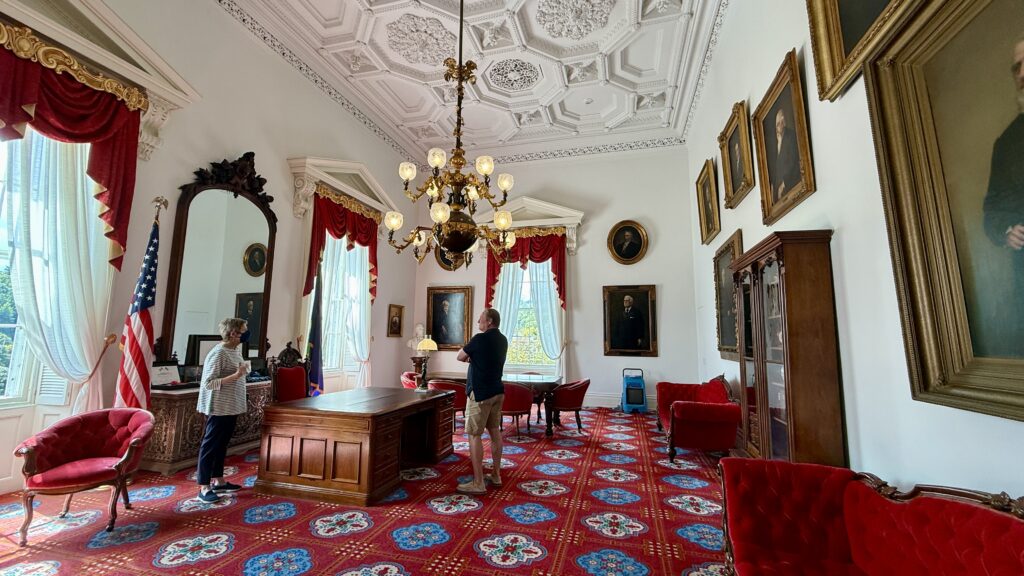
The Governor’s Office is primarily used when the Legislature is in session or for special ceremonial occasions. The Governor does not have a residence here. This office was also meticulously restored to its original look of 1859 by the Friends of the State House in 1984 with replicas of the original carpet, draperies, gaselier, and some furniture. Most intriguing is the Constitution Chair, which has served as Vermont’s Governor’s chair since its presentation to the State in 1858.
A Governor’s Chair with Sea Legs
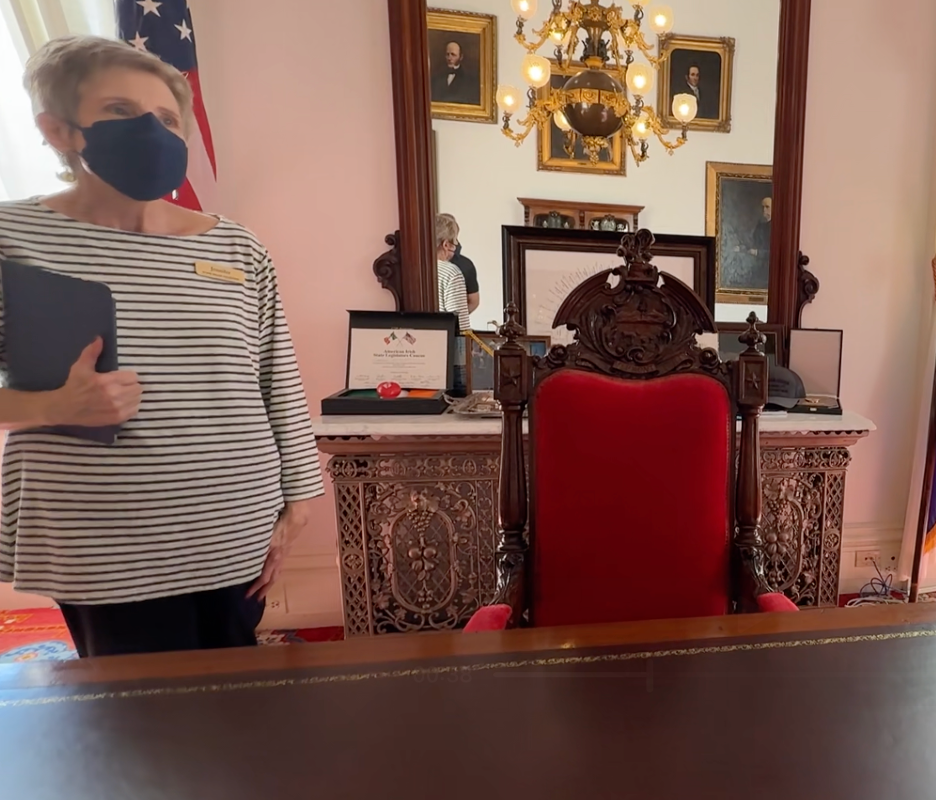
The USS Constitution is the world’s oldest commissioned warship still afloat. Horace Powers, who served aboard the legendary frigate, wasn’t content with just memories. He asked for—and was granted—a special favor: enough wood from “Old Ironsides” to craft a chair fit for Vermont’s governor. That chair isn’t just a seat—it’s a piece of naval history, presented by Powers himself, connecting landlocked Vermont to the high seas with every polished timber. Talk about a chair with serious sea legs (and a whole lot of history).
Sadly, the antlers broke off of the deer in storage, and when they hired someone to restore it during the renovation project, the man who restored it wanted to add the antlers back. He drove to Boston and asked for a little more wood from the USS Constitution so he could restore it properly. This shows the lengths people will go to when they are restoring something back to its original state.
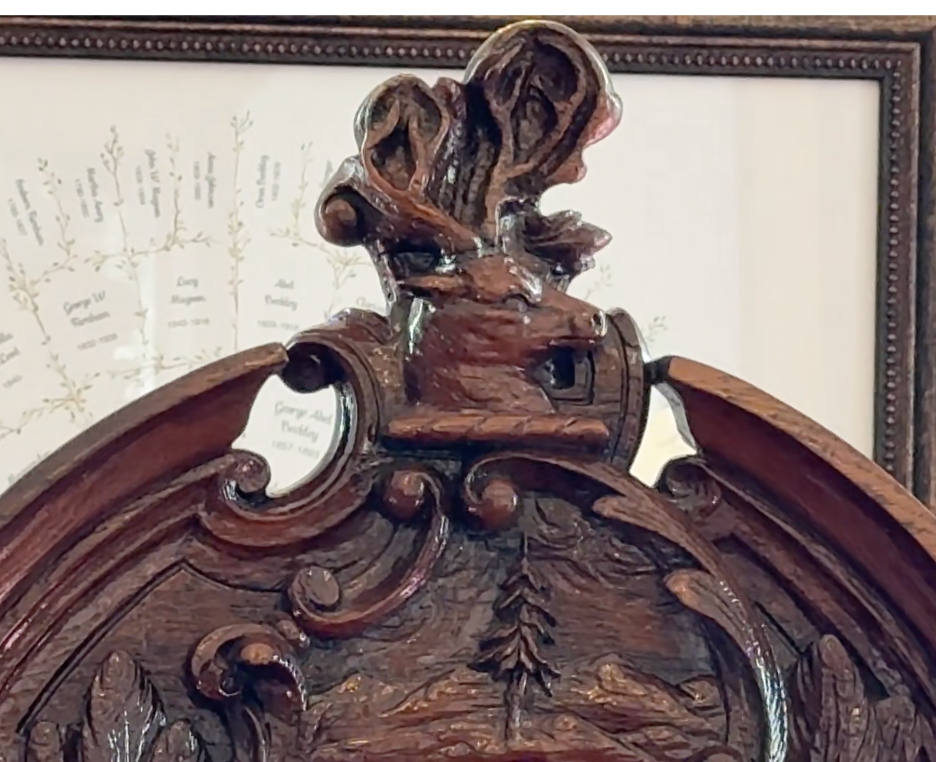
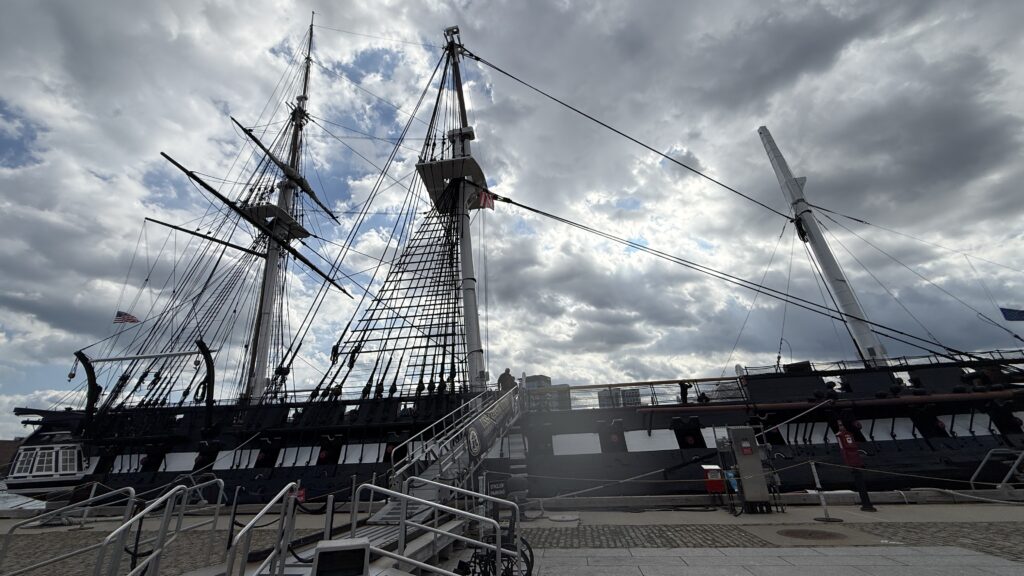
FUN FACT: Ironically enough, we toured the USS Constitution with our friends ten days after we left Vermont, yet I didn’t make the connection until I was posting this blog! She sits at the end of the Freedom Trail in Boston if you ever get a chance to go there.
Check it out: https://en.wikipedia.org/wiki/USS_Constitution Here’s a picture of the frigate.
The Cedar Creek Reception Room.
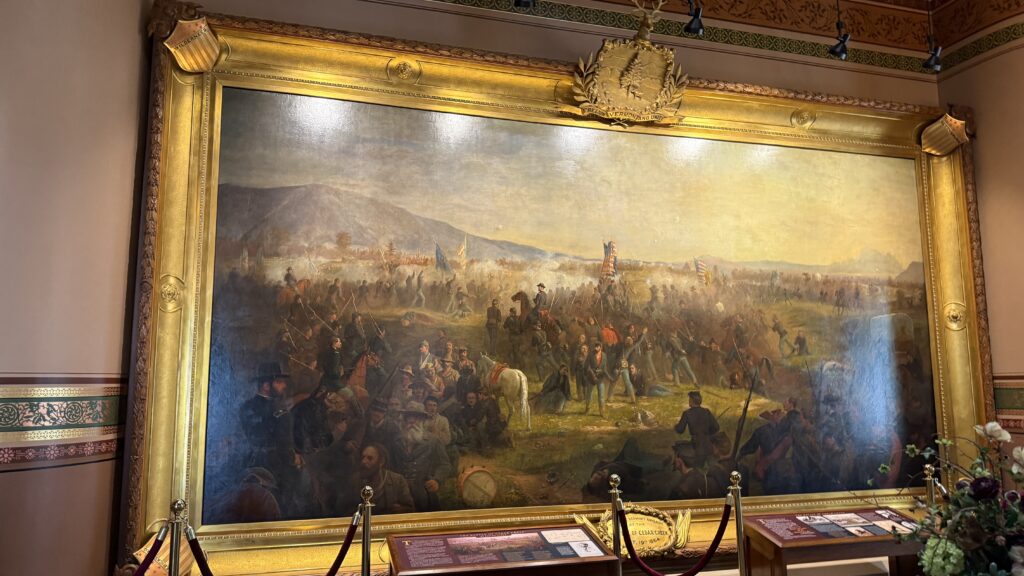
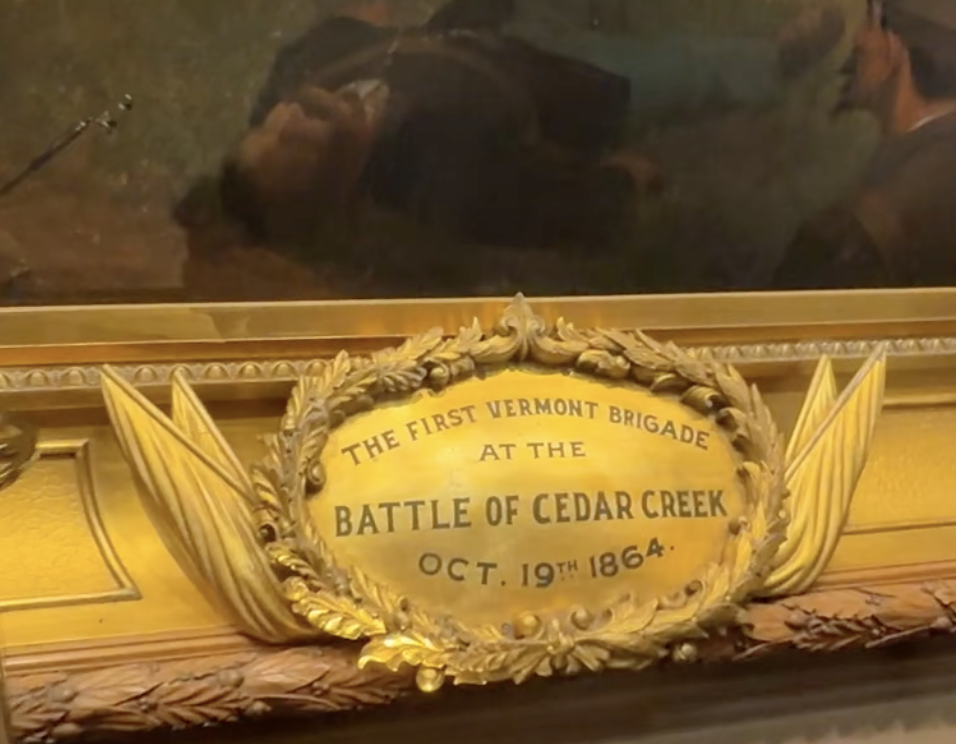
If you wander around on the second floor, you’ll stumble into one of my favorite spaces in the Vermont State House: the Cedar Creek Reception Room. It’s the only room up there that’s been restored to a later chapter of State House history. The star of the show? A jaw-dropping, wall-consuming painting, The Battle of Cedar Creek, stretching a dramatic 20 by 10 feet. This room was once the State Library, lined with shelves and secrets, before it morphed into a Gilded Age reception lounge in 1888. Once the books were evicted, this place got a Gatsby makeover: elaborate wall stencils, brass gas chandeliers that bend and swirl, a lavish Oriental-inspired carpet, and stained glass skylights that throw rainbows across the floor.
But here’s where things get a little Scooby-Doo. When they cleared out the library, they also removed those magical skylights, and nobody seems to remember why. Fast forward. A worker’s crawling through the attic, probably hunting for insulation gremlins, when—crunch—his foot lands on something suspiciously glassy. Lo and behold, he’s uncovered the lost treasure of the Vermont State House: every single piece of those original skylights, just chilling in the attic for decades! They sent the glass shards to a restoration company near Boston, but here’s the kicker: there were zero photos, nada, to show what the skylights used to look like. The restoration team basically had to play the ultimate game of “puzzle without a picture on the box.” Now that’s State House magic at work!
The Artist Behind the Painting.
Let me introduce you to Julian Scott—a true legend with a backstory worthy of a Hollywood blockbuster movie. At just 15, Scott fibbed about his age and signed up for the Union Army in the Civil War. He wasn’t old enough to fight, so they handed him a fife and later made him a drummer boy, sending him into the thick of battle with nothing but rhythm and nerves of steel. Here’s where things get heroic. In the chaos at Lee’s Mills, Julian didn’t hesitate. With bullets flying, he made three daring trips across a creek to rescue wounded soldiers, earning himself the Medal of Honor—even though he was still basically a kid. He is one of the youngest people in the country to have received America’s highest military decoration.
After the war, Scott’s story took a more creative turn. He hopped over to Paris to hone his craft and returned as a top-tier Civil War artist. The Vermont State House tapped him to capture the Battle of Cedar Creek, choosing that moment because it’s where Vermont troops really made their mark. But Julian wasn’t about painting glorified, heroic poses; instead, he focused on the grit and sacrifice—the real, raw side of war. He didn’t actually fight at Cedar Creek himself, so he went full detective mode. He wrote to veterans and their families and asked for photos, eventually collecting images of 21 Vermont soldiers who took part in the action. So, if you’ve got family ties to Cedar Creek, there’s a chance their actual faces are immortalized in Scott’s masterpiece.
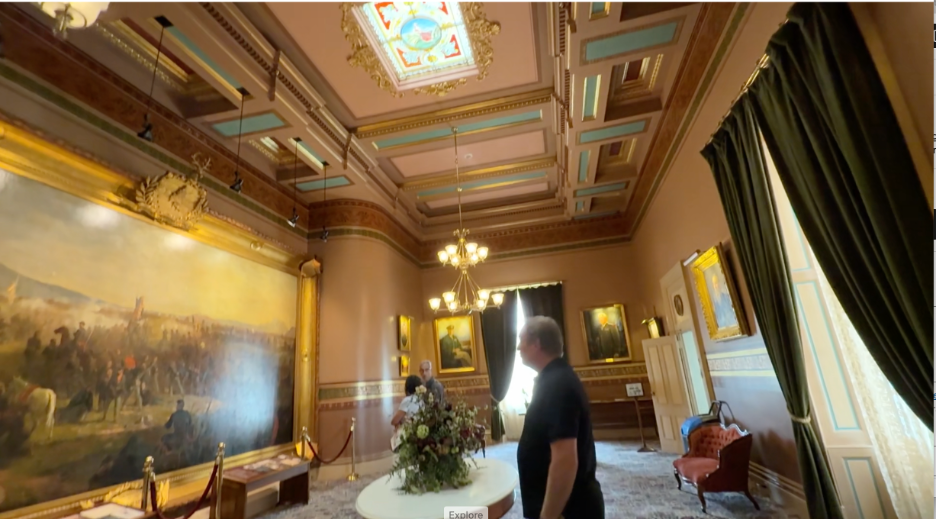
Julian didn’t just stop at the painting. He personally designed the frame, decorating the corners with shields that honor other battles where Vermont’s brigade made history. Every detail is a salute to real people and real stories, a true State House treasure.
More Paintings and a Famous Head
As if that wasn’t enough information overload, our tour guide took us through a few more spaces, sharing stories about various paintings and sculptures. For such a small building, Vermont State House is packed with history! She was not in a hurry, spending plenty of time answering our questions as well as entertaining discussion. For example, after the tour she told us about a local creamery where we could go and buy one of the local favorites. That was worth remembering!
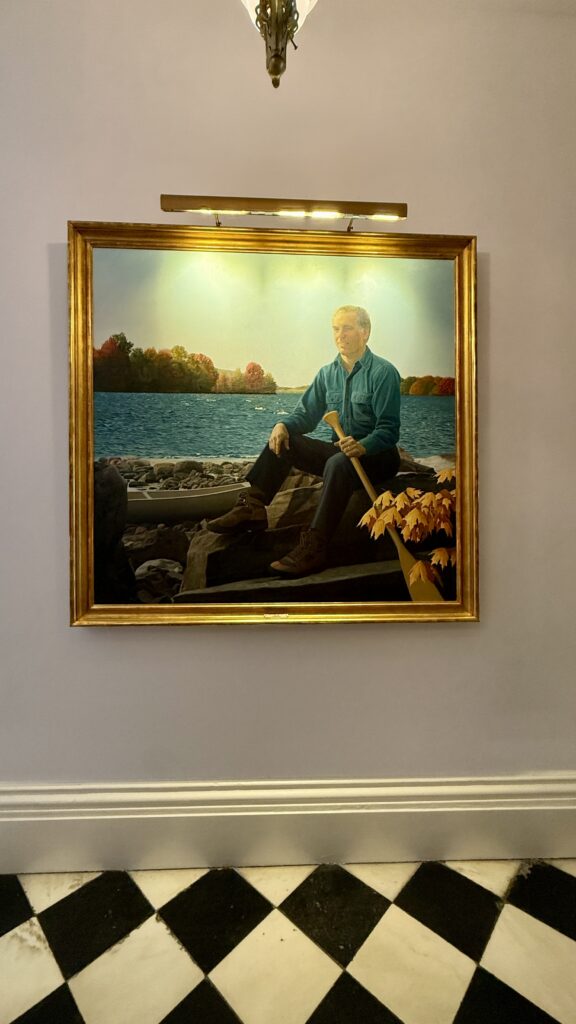
Gov. Howard Dean, M. D., 1991 – 2003, painted by Carroll Jones.
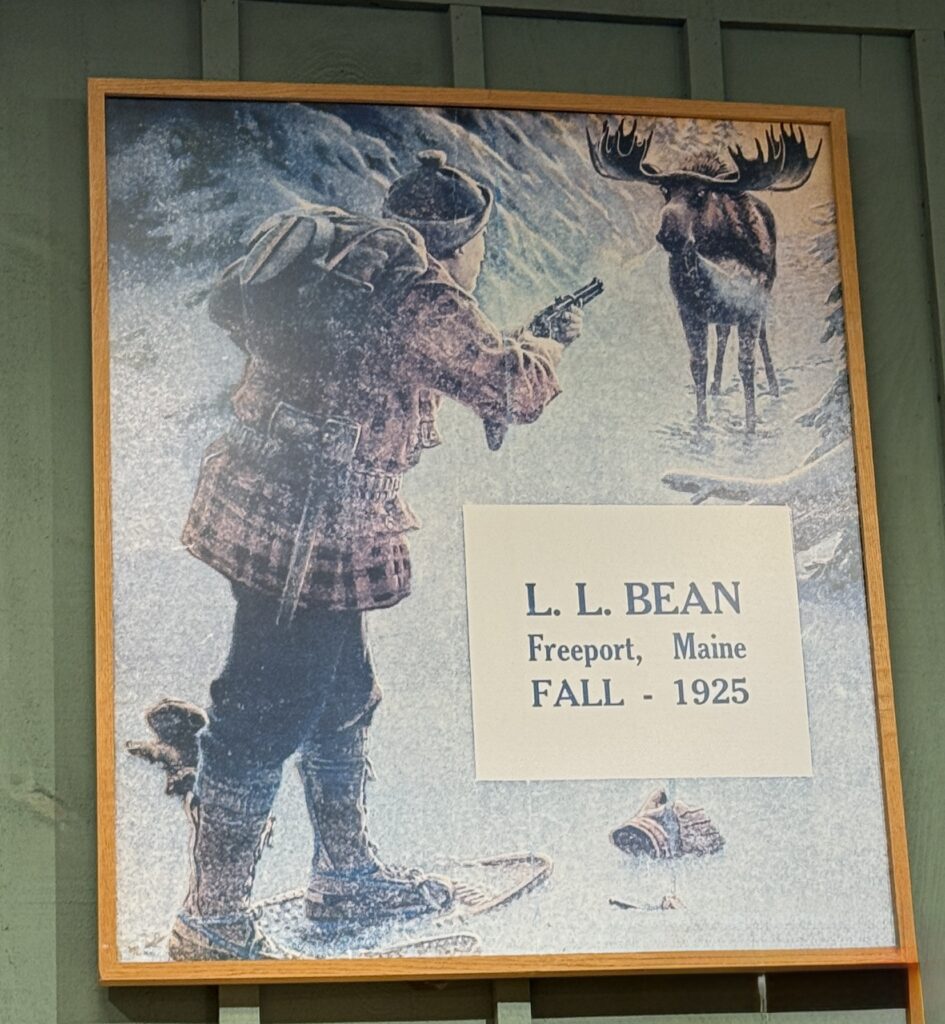
Gov. Dean loved the outdoors, and since governors get to choose how they will be depicted in their portraits, he chose a scene he likely spent a good amount of time in. They pay for it after all, so it’s only right they should get to pick their style. The State House staff lovingly (jokingly) refer to this portrait as the “L.L. Dean.” This could be on a magazine cover for sure!
Bust of Lincoln.
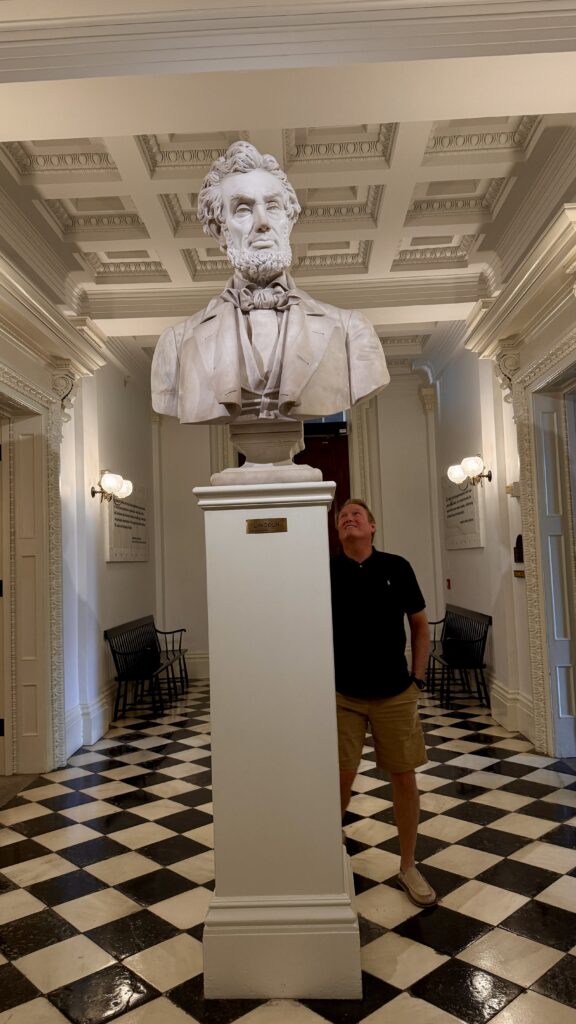
In the main lobby of the State House, she pointed us to the only work of art by Larkin Mead that remains in the Capitol, the marble bust of Abraham Lincoln in the Hall of Inscriptions. This bust was done in preparation for the large bronze statue Mead created for Lincoln’s tomb in Springfield, Illinois. So many condolences were given by Vermonters to Lincoln’s wife when he passed, she gave Vermont the bust of marble which Mead had “practiced” with. Can you imagine practicing with a block of marble?
Mead is the same sculptor who carved the original Agriculture for the top of the dome. The same one who sculpted the original Ethan Allen out of marble.
Vermont Wrap-Up
The Vermont State House stands as a testament to the small state’s values—welcoming, accessible, and community-focused. Unlike the grandiose capitols found elsewhere, Vermont is intimate, blending historic charm with functional beauty. Its modest size means visitors and locals alike enjoy close proximity to lawmakers and the governor, making it easy for citizens to engage directly in the legislative process. More than just a government building, the State House serves as a living museum, proudly shared with guests year-round.
One entertaining form of sharing the building with guests, unique to State Capitols, is the use of the Vermont State House for community gatherings. The Farmers Night Concert Series is a longstanding State House tradition. If you happen to be in Montpelier on a Wednesday during legislative season, you can attend a concert here for free. Artists from around the state, in genres ranging from classical music to bluegrass to barbershop, perform at 7:30 pm in the well of the House Chamber each Wednesday night! And yes, you can sit in the comfy legislative chairs as you enjoy the music.
September 5, 2025. Augusta Maine State House: The Heart of Maine’s Government
Maine State House
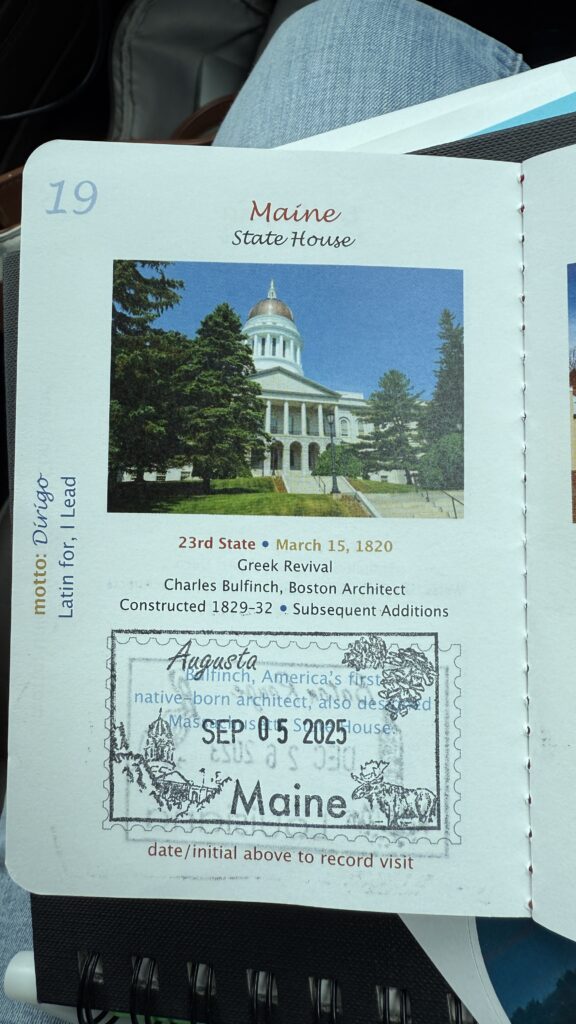
Let’s talk about the State Capitol. After all, that’s what you came for, right? Just so there’s no confusion, we’re in Augusta, Maine, not its southern namesake in Georgia. With a cozy population of around 19,000, Augusta is one of America’s smallest state capitals. Only Pierre, South Dakota and Montpelier, Vermont can claim tinier city vibes.
We stopped on the way from Vermont to our RV Park, not knowing we would pass through this town a few more times on our drive paths.
Maine’s first capital was Portland, but the state quickly realized it needed a spot smack in the middle of the state for everyone’s convenience. Enter Augusta! When the stately State House, built from Hallowell granite and delivered by trusty oxen, was finished in 1832, one year after August was made the capital of Maine.
Originally capped by a cupola, it was replaced by the current dome rising 185 feet. The Lady of Wisdom statue stands 15 feet from toe to torch and was recently restored to her 20th century majesty. The building has grown and changed so much over the years, you might not recognize the original!
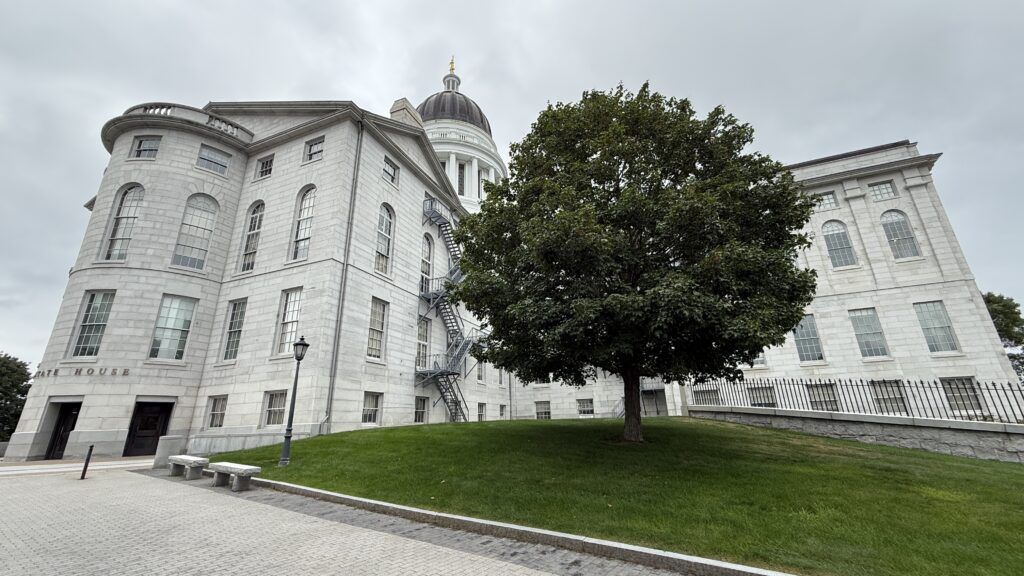
While it may appear to be, the Maine State House does not have a black dome. The dome is made of copper, but it was recently replaced and will initially appear brown. Over time, as the copper oxidizes, it will eventually turn green, similar to many other copper structures.
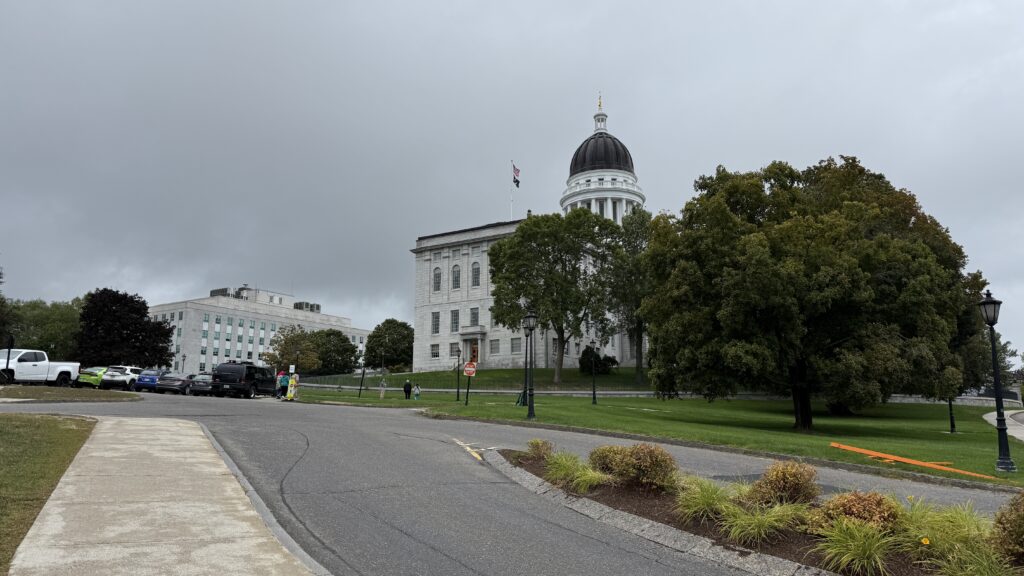
If you read my blog about South Dakota’s dome, which is also made of copper, the only truly black dome is found there (it turned black instead of green due to the perfectly clean air).
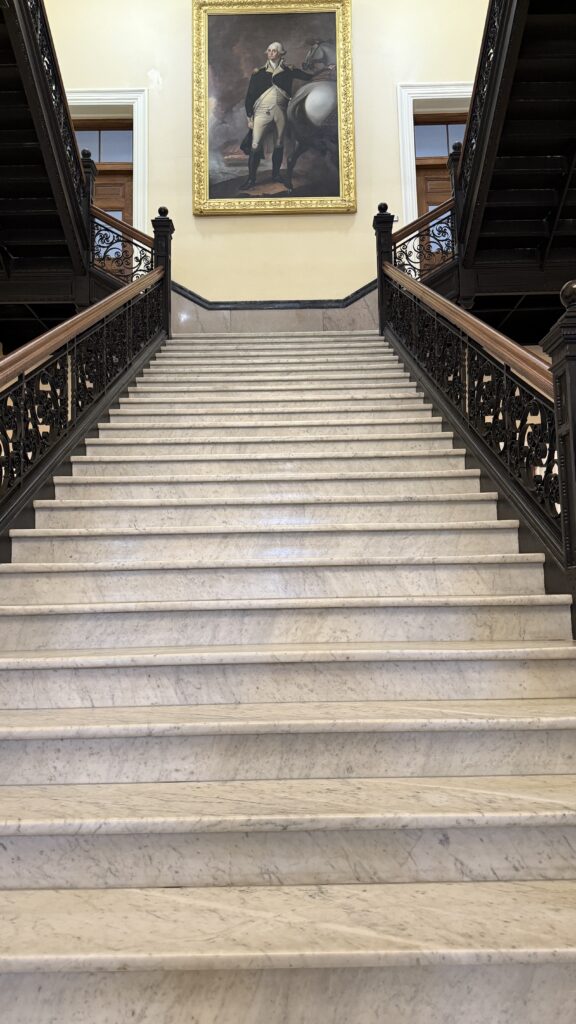
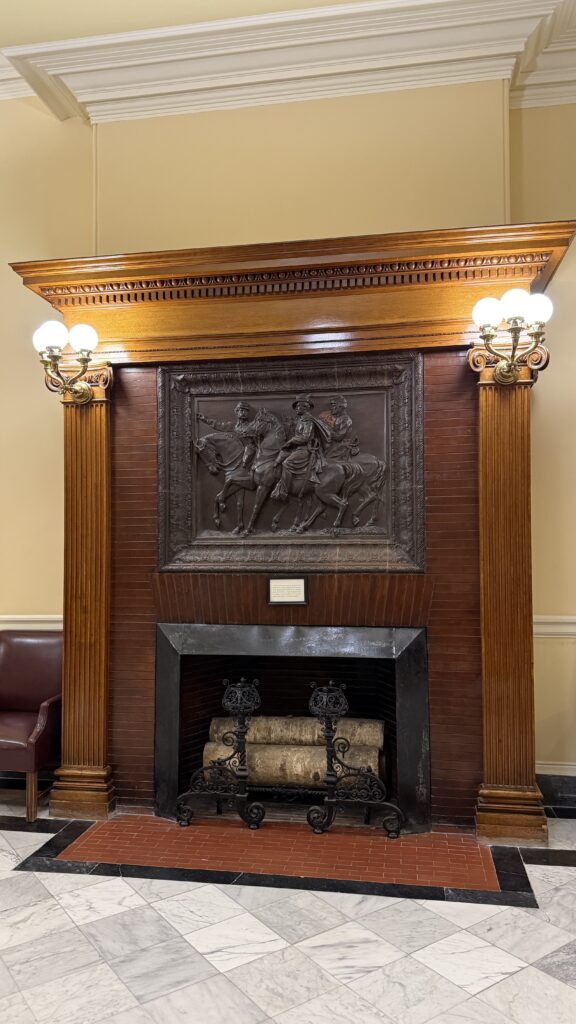
Maine loves celebrating its governors—just flip through the small tour pamphlet to find out! The Hall of Flags is decked out with portraits of legendary Mainers, including the first woman to serve in both houses of Congress and have her name floated for a major party’s presidential nomination. Look around, and you’ll also spot plaques honoring Maine’s brave soldiers from across the ages.
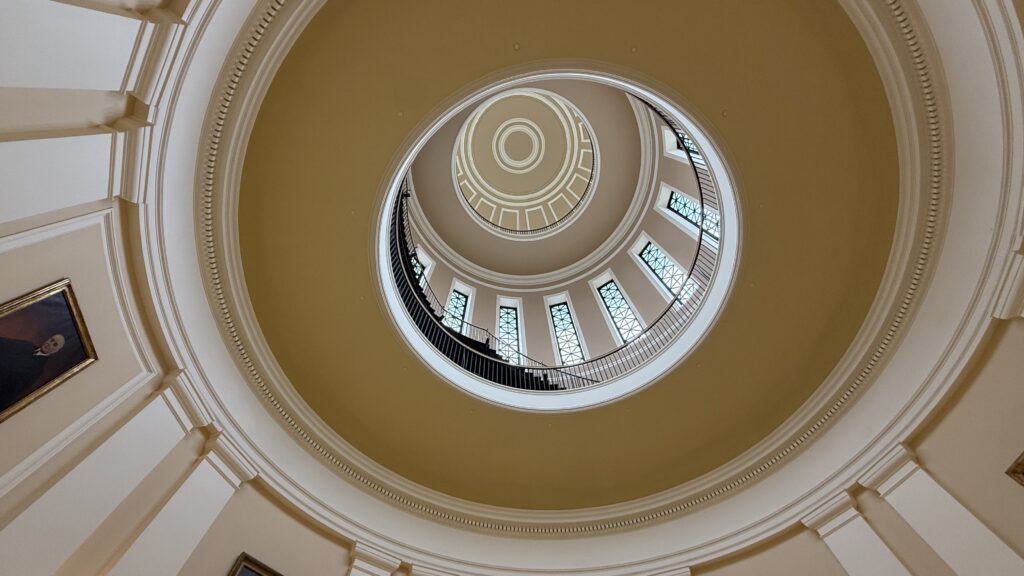
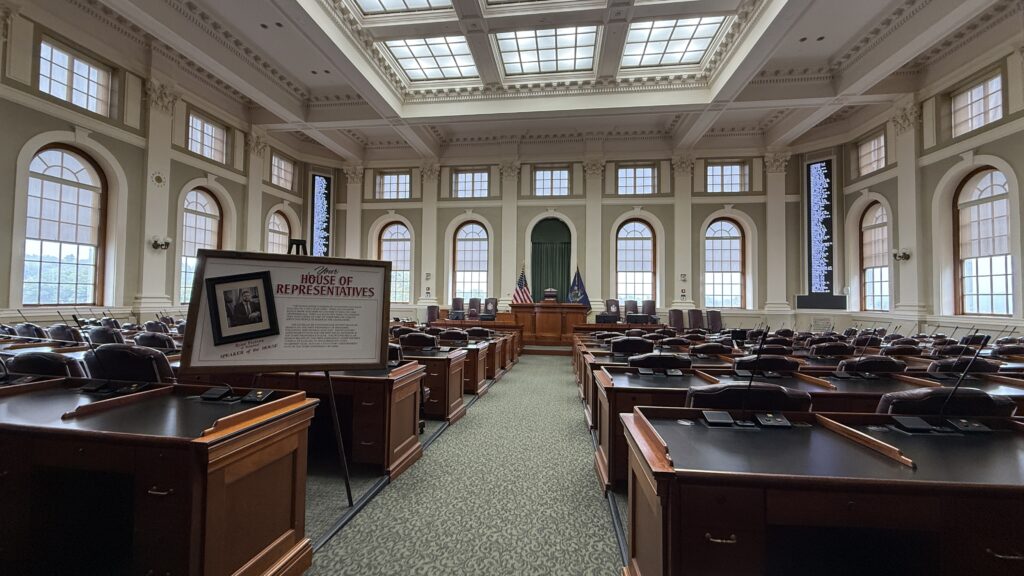
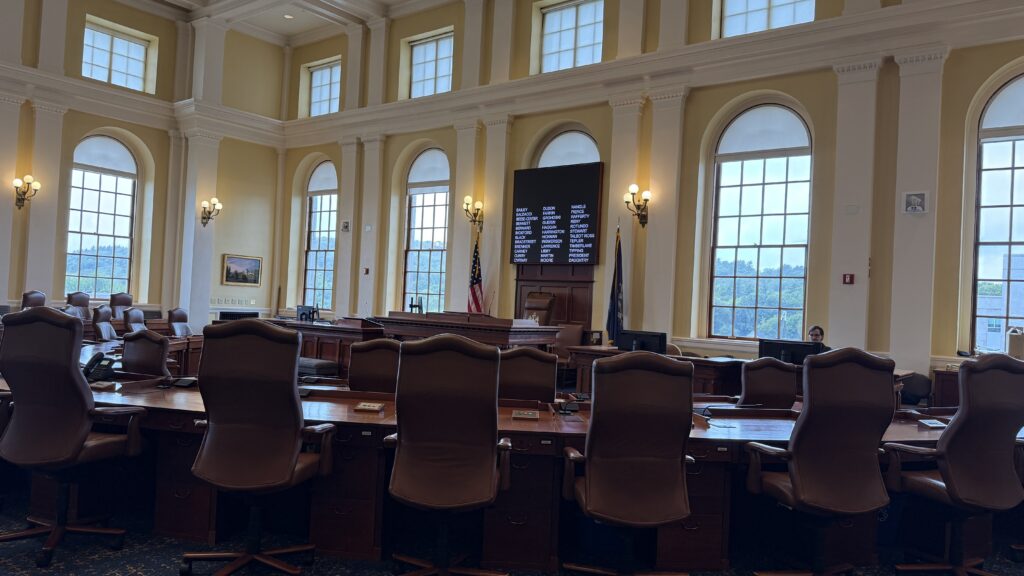
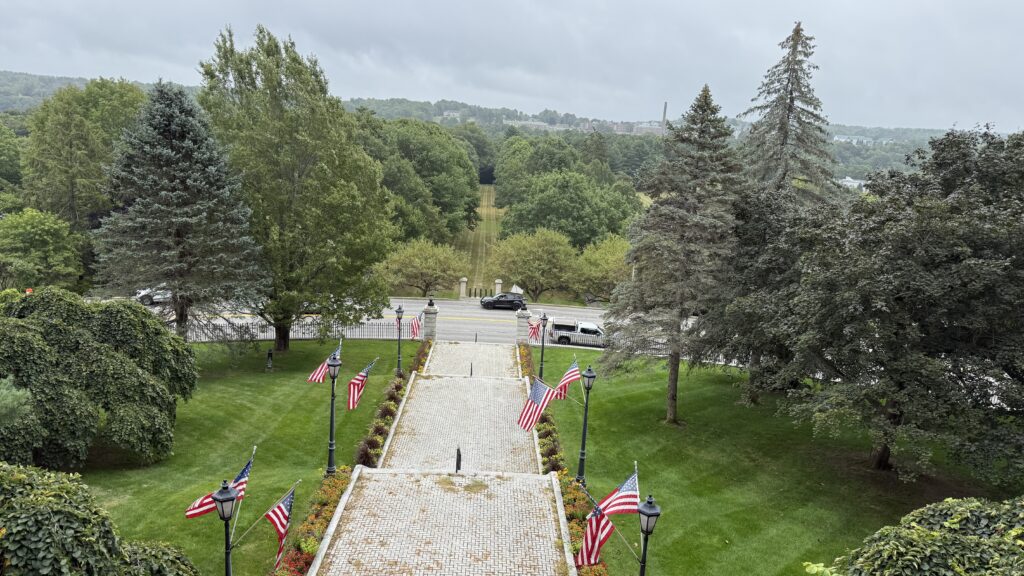
Head to the third floor for government in action: the House of Representatives, Octagon Hall (step outside onto the veranda but before you do, be sure to peek up for a view of the dome!), and the Maine Senate Chambers. For a peculiar touch, check out the West Wing’s black limestone floors. They’re streaked with ancient fossils, just like the ones we saw in Vermont’s State House. History is right underneath your feet!
Government: A Maine Event!
Maine’s political history is full of drama and firsts! The state boasts one of the nation’s oldest constitutions, standing strong since 1819. But did you know Maine was once just a district of Massachusetts? Locals wanted more control over their own destiny (and safety!), so statehood was put to a vote—so close, it squeaked by with a single “yes.” On March 15, 1820, Maine officially became the 23rd state, with Missouri joining the club a year later.
Trailblazers live here: Maine let women vote in school elections way back in 1874, nearly half a century before the rest of the country caught up! The state also played a heroic role in the Underground Railroad, helping those escaping slavery find freedom across the Canadian border. And here’s a fun literary twist for my book club friends: Abolitionist Harriet Beecher Stowe penned her iconic “Uncle Tom’s Cabin” back in 1852 while calling Brunswick, Maine home.
And in true Maine fashion, the state shook up the system in 2016 by being the very first to roll out ranked-choice voting for major elections. When it comes to government, Maine loves to do things its own way.
And now for a few more (or maybe more than a few) FUN FACTS about MAINE. I really should look these up before we visit a state. There is so much to see that we missed on this trip, but at least now we have more than one reason to go back. It’s an amazing state with a more moderate climate than one might think.
Maine: A State of Firsts and Only’s
Did you know? Maine officially joined the United States as the 23rd state on March 15, 1820, a milestone that shaped its unique place in the nation’s story. Step back even further in time to 1641, when York, Maine made history by becoming America’s first chartered town! That’s right, this coastal gem was blazing trails centuries ago.
Maine’s Native American heritage remains strong, with tribes like the Passamaquoddy and Penobscot preserving their traditions. Uniquely, Maine is the only U.S. state with a single-syllable name and borders just one other state (New Hampshire) the rest of its three boundaries meet Canada. As New England’s largest state (almost as big as all the other New England states put together), Maine offers a lot of room for adventure!
Maine dazzles with over 4,000 islands, but only 15 islands have year-round residents. It’s the largest New England state, yet the most rural and least populated east of the Mississippi (approx. 1.4 million), with approximately 44 people per square mile. Living here is pricey. Mainers spend 91% of their income on expenses, well above the national average of 81%. Still, cyclists love Maine’s scenic routes and endless adventure. Whether you’re here to visit or stay, Maine’s wild beauty and outdoor spirit make it largely unforgettable.
Maine knows how to party! From funky local music, quirky accents, and wild charity events to legendary sportfishing, the bone-chilling New Year’s Eve Polar Plunge, the towering Paul Bunyan, and even wife-carrying races, there’s never a dull moment. Explore beyond the top ten cities, and you’ll find epic national and state parks, top-notch ski resorts, the Maine Wine Trail, classic amusement parks with wooden roller coasters, and a Stonehenge replica for good measure.
Nature, Nature, and More Nature
Freeport is famous for L.L. Bean, an outdoor lover’s paradise since 1912. This picture was inside of one of the stores we visited. Freeport is where it all started. This was a smart adventure in a state known for its beautiful natural landscapes. Nicknamed the “Pine Tree State,” it’s a forest wonderland with nearly 90% covered in trees and thousands of lakes, rivers, and streams.
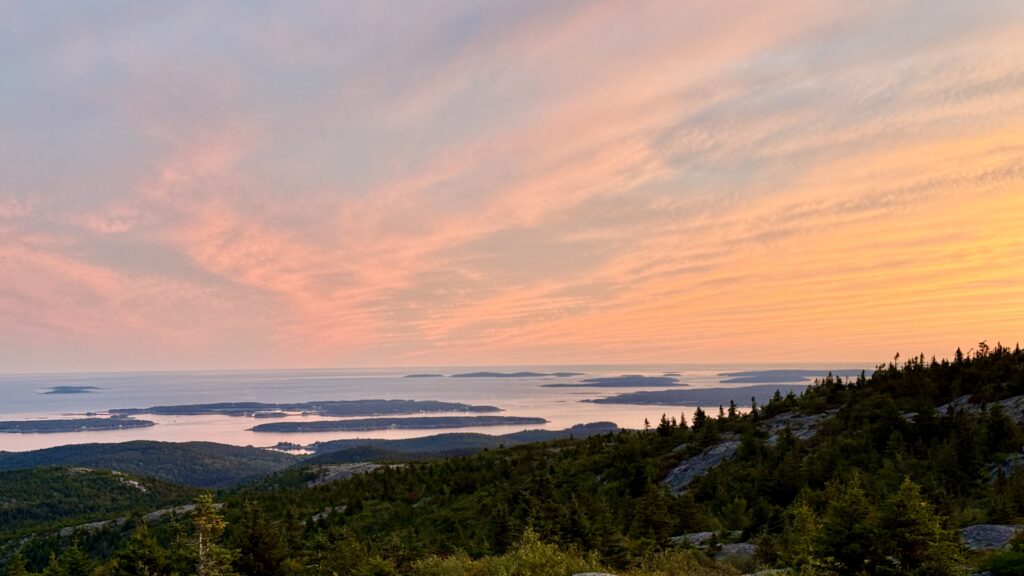
Acadia National Park was the first national park designation east of the Mississippi and now it boasts as the country’s second busiest. We came to Maine primarily to go there (and to eat lobster, and of course to see the Capitol). This park draws almost 4 million visitors per year, with its stunning coasts and wildlife like black bears, bald eagles, and puffins.
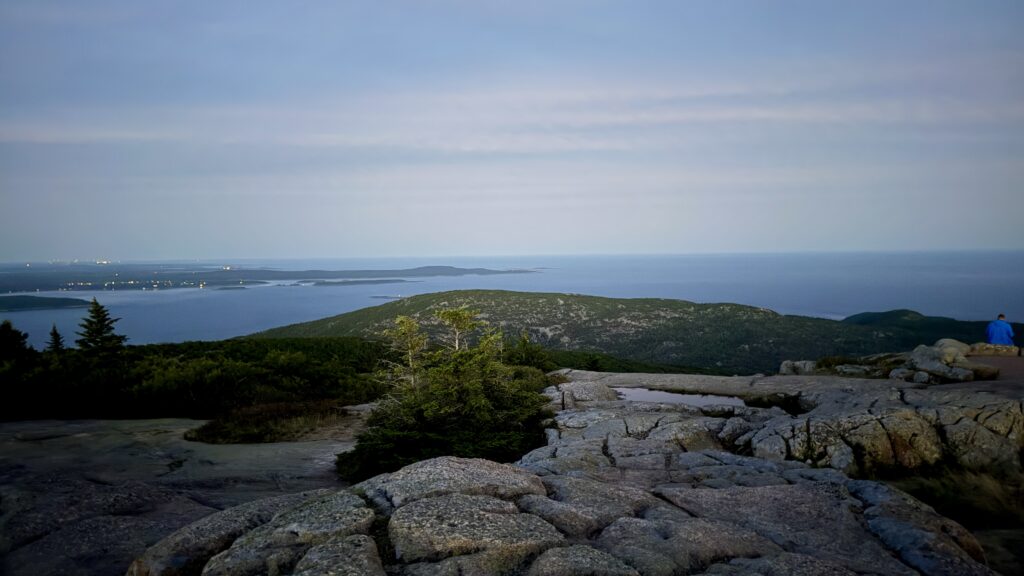
Outside of Alaska, Maine has the largest population of Moose in the United States (we never saw any 😢), which explains its designation as their state mammal. The cheerful black-capped chickadee rules as their state bird (they’re everywhere 😁).
The rocky hills of Acadia, especially around Cadillac Mountain, sport wild shapes like ice cream cones thanks to erosion. Hmmm, Cadillac Mountain must send a subliminal message as our ice cream craving unquestionably increased while we were there. A few hours away, Mount Katahdin rises tall at 5,268 feet, nicknamed the “Greatest Mountain,” and marks the epic finish line of the 2,180-mile Appalachian Trail.
Lighthouses, Islands and Downeast
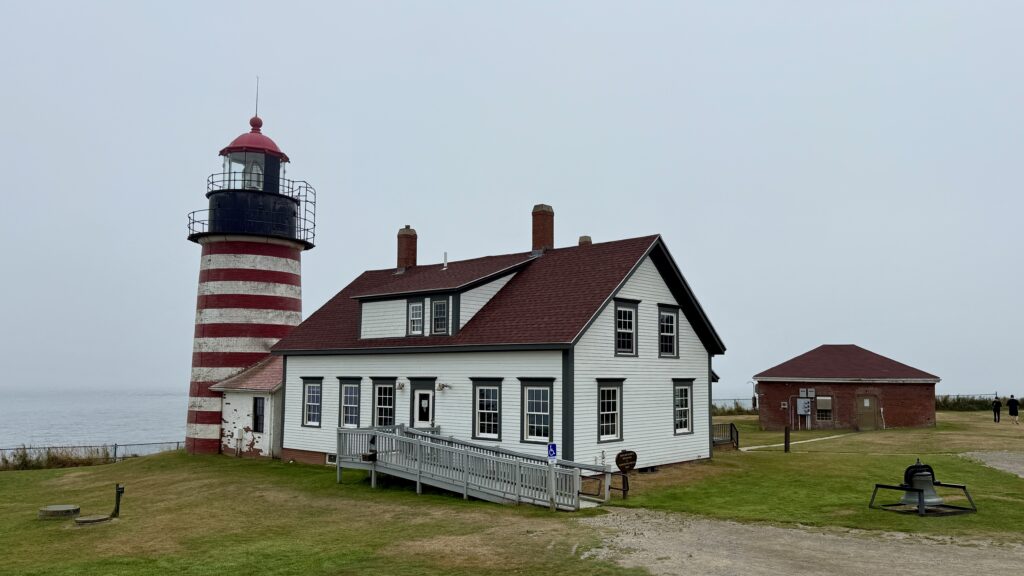
If you’re up for unique sights, check out Lubec, Maine, like we did, where you’ll find America’s only candy cane-striped lighthouse. West Quoddy Head Lighthouse is perched at the easternmost tip of the United States. With its bold red and white stripes, it’s more visible in snow and fog and the very first spot in the country to greet the morning sun. The original lighthouse started guiding ships in 1808, with the current one taking its place 50 years later. Talk about a bright history!
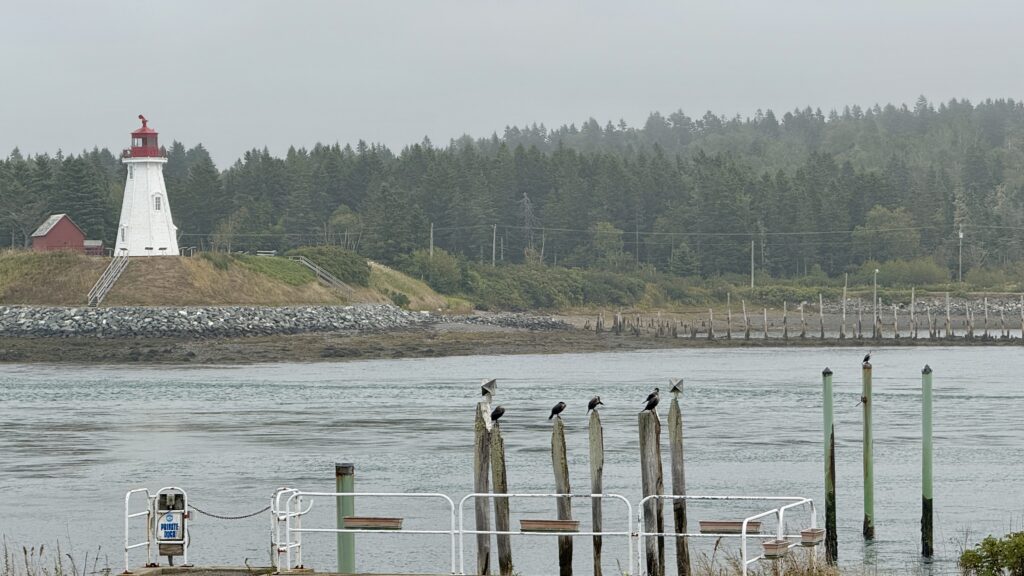
Campobello Island sits just off Lubec, Maine. It is the site of the Roosevelt Campobello International Park, Head Harbour Lighthouse, and Herring Cove Provincial Park. It’s officially Canadian, but the only way to drive there is through Maine! Sitting at the entrance to Passamaquoddy Bay and covering 27 square miles (70 km²), it’s got a quirky passport twist. We spotted this gem during our Lubec trip and took a picture from the mainland, but Tim’s expired passport kept us stuck on the American side—maybe next time!
Commissioned by none other than George Washington in 1791, the iconic Portland Head Light claims the crown as the world’s most photographed lighthouse! After perusing the website, I definitely plan to photograph that one if we go back to Maine’s rugged coastline. I picture another road trip touring all of the state’s 65 history-packed lighthouses, each with its own story to tell.
Ready for some coastline bragging rights set to a quirky title? “Downeast” is synonymous with coastal Maine. People sailing from Boston head downwind to Maine in short, “downeast” (even though it’s technically in the northeast direction). A person from this area may be called a “down-easter.”
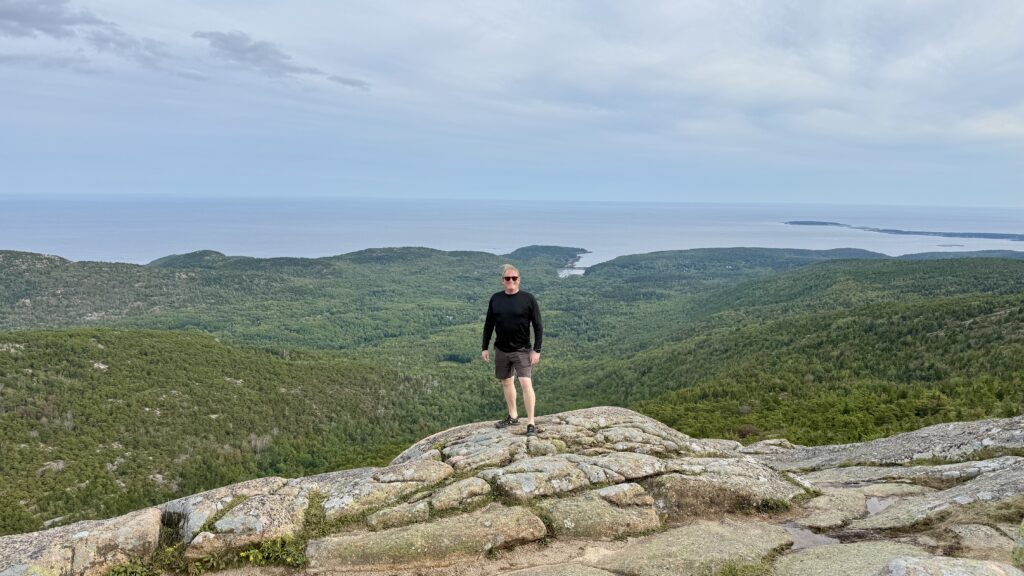
Including all its twisty inlets, islands, and tidal nooks, Maine’s shoreline stretches a whopping 3,478 miles—that’s longer than California’s coast! It’s the fourth longest in the country, and rumor has it, every navy on the planet could anchor in Maine’s deep harbors. Now that’s coastal cool!
Famous Inventions and World’s Largest
Did you know Maine is the birthplace of earmuffs, Lewis’ Arabian Hair Oil, the genius machine that churns out flat-bottomed paper bags, and even the first transatlantic radio transmission? That’s right! Maine’s got your ears cozy, your hair glossy, your lunches secure, and your global messages sent!
And for transit fans, Kennebunkport is home to the Seashore Trolley Museum—the oldest and largest museum devoted to mass transit on the planet. Maybe you’ll run into Sheldon Cooper there. Hop aboard for a trolley trip through time!
Ready for a wild water ride? Meet the Old Sow, the biggest tidal whirlpool in the entire Western Hemisphere, and one of the largest in the world, swirling just off the coast of Eastport, Maine. This natural marvel churns and twirls like nature’s own giant blender. Whatever you do, don’t ever triple-dog dare a friend to dip a toe!
Maine doesn’t just go big with scenery—check out its world-record sculptures! In Strong, you’ll spot a whopping 16-foot-tall wooden toothpick outside the hardware store, honoring the town’s epic run as the “Toothpick Capital,” churning out 75 billion toothpicks a year back in the day. Meanwhile, Rockland boasts the world’s largest lobster sculpture, celebrating Maine’s claim to 90% of the country’s lobster haul and its claw-some place in seafood history. We missed the sculpture, but we did eat an entire lobster in Bar Harbor for my birthday! From mammoth toothpicks to colossal lobsters, Maine knows how to make a giant impression!

Feeling worldly? Head to Yarmouth, Maine and check out Eartha—the planet’s biggest rotating and revolving globe. This mega-map measures over 41 feet across and tips the scales at nearly 5,600 pounds. It took two years just to build this whopper, and yes, it totally outshines that 33-foot-wide globe in Italy!
A Few State Favorites
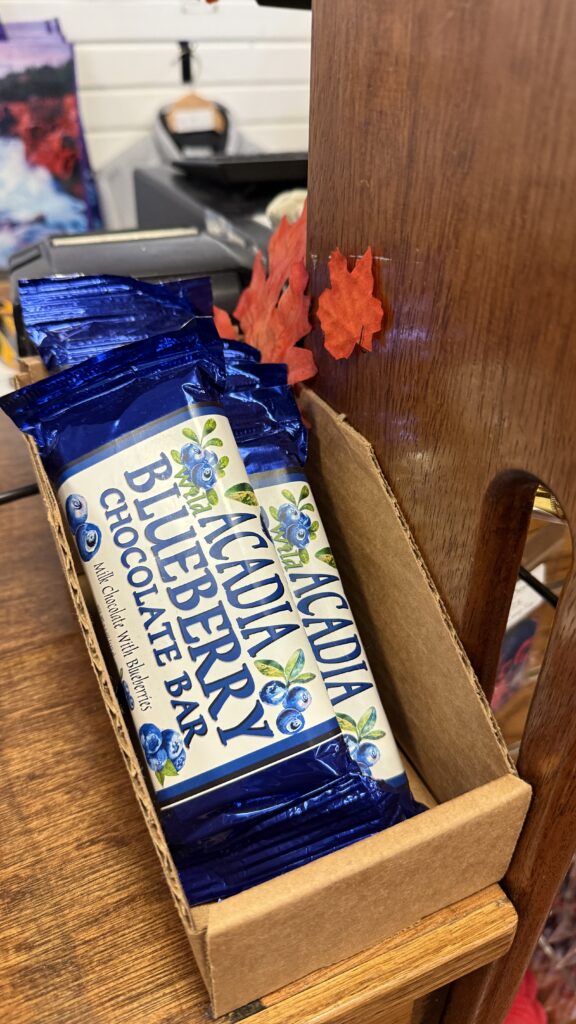
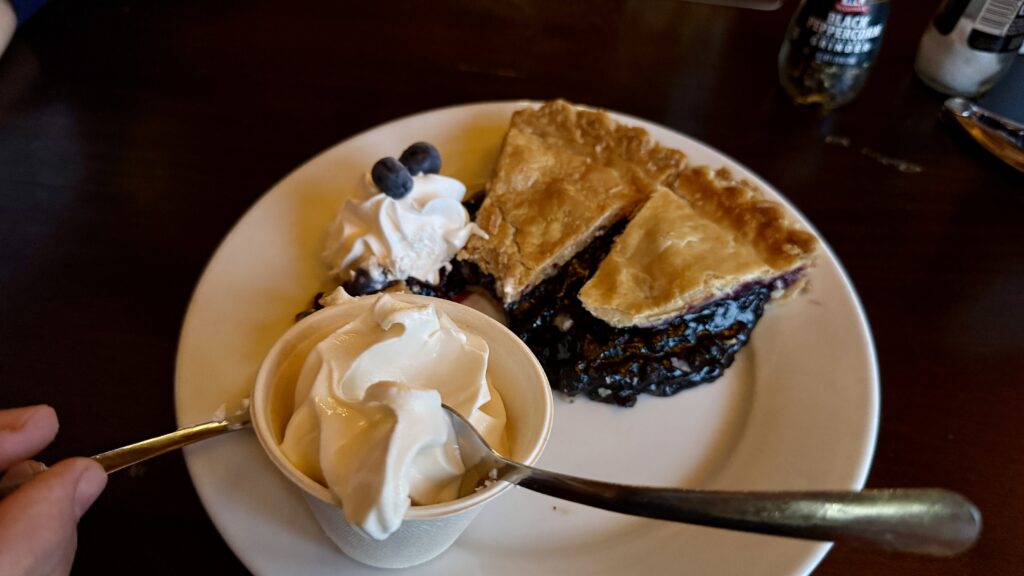
Antioxidants anyone? Maine is the largest producer of blueberries in the U.S., contributing to 99% of the nation’s yield. Did you catch that? Locals use these delightful berries to make blueberry pies, pancakes, oatmeal scone, gelato, syrup, muffins, ketchup, cake, chocolates, and more. When in Maine, eat blueberry pie. We did…twice!!

Can you give me a “whoopie?!” The Whoopie Pie was designated the state treat of Maine in 2011. “Mainers” love it so much they hold an annual Whoopie Pie Festival, featuring the best creations by local bakers. We had one of these as well and, yes, they are delish!
Cat lovers, listen up! Maine has a designated state cat! The Maine coon is a smart and fluffy giant that can grow up to 48.5 inches (wow 😳) and behaves a lot like dogs. Dogs that like to be in control, that is. Coon cat, anyone? Believe it or not, this is one of the oldest natural cat breeds in the US. I had to Google it just to see what they looked like, and I imagine you will want to do the same. I’m pretty sure we saw more than one of these crossing a road, and we thought it was a bobcat. They are HUGE!
Maine Wrap-up
From savoring farm-fresh produce at the historic Portland Farmers’ Market to exploring Augusta’s unique role as Maine’s state capital, this blog captures the state’s vibrant blend of tradition and innovation. Maine’s rich political history highlights its early strides in democracy, from adopting one of the oldest constitutions to pioneering ranked-choice voting and supporting women’s suffrage well ahead of the curve. The State House stands as a testament to Maine’s evolving identity, filled with tributes to trailblazers and reminders of the state’s enduring commitment to independence and community. Whether you’re a history buff or a curious traveler, Maine’s legacy of doing things its own way shines through every story, site, and tradition explored in this journey.
Pop on over to New England Part 2, where you will read about New Hampshire and Massachusetts State Capitols.
À la prochaine…hasta la próxima vez…until next time!
“I am the Lord, who heals you.”
Exodus 15:26
*Credits: The tour guides present some great stories which you may or may not catch on your own. I also obtained historical information from plaques inside the State Houses, tour brochures, Capitol websites, and good ol’ Wikipedia. There is also an excellent document written by the Vermont Sergeant at Arms and Capitol Police, which I assume they give to legislators to inform about the building as well as provide rules for conduct and usage of the Vermont State House. Maine fun facts were collected from a variety of sources including this one.